Brisket & Bark

The Best Cooler for Holding Brisket

A brisket finishes when it finishes, which is almost never when you planned. An insulated box turns that unpredictability into a schedule — and a long hot hold makes brisket better, not merely later.

By Stephen V.Last updated How we pick

The hold is the least glamorous part of brisket and one of the most useful. Wrap a finished packer, put it in a pre-warmed insulated box, and it will sit safely hot for hours — which means you can pull it whenever it is genuinely ready rather than whenever dinner is, and it means the muscle gets an extended period above serving temperature to finish relaxing. Barbecue joints do this deliberately, in commercial Cambro carriers. The backyard version is a cooler, and it is known as the faux Cambro for exactly that reason.

Understand what an insulated box does before you buy one: it slows heat loss and nothing else. It has no heat source. It cannot warm a brisket up, it cannot rescue one that has already cooled, and it will not hold a single small brisket in a mostly-empty 70-quart box for very long. The performance you get depends far more on how you pack it than on which one you own, which is why the buying criteria here are unusual: interior dimensions and lid seal matter, and the marketing figures on the box — all of which are about ice — do not translate to the hot side at all.

None of the makers below publishes a hot-hold figure, so we do not quote one. Where a spec is unpublished we say “Not published” rather than inventing a number. What we can tell you is which boxes physically fit a wrapped packer and which ones seal.

How this is funded: we earn a commission if you buy through our links, at no extra cost to you. It never changes which product we recommend, and we’ll tell you plainly when we’d skip one. Full disclosure.

Quick picks

Ranked on the published specs and how each one fits a brisket cook. Select a row to jump to the full write-up. We have not run this gear in a lab — here is exactly what we do instead.

#ProductBest forPrice
1
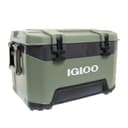
Igloo BMX 52 QT Cooler

Igloo BMX 52 QT Cooler

The sensible middle of this list. Thick blow-molded walls, rubber T-latches that actually pull the lid down onto the seal, and a size that swallows a wrapped brisket plus towels — for a fraction of what a rotomolded cooler costs.

Best overall
2
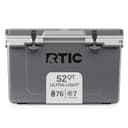
RTIC 52 QT Ultra-Light Hard Cooler

RTIC 52 QT Ultra-Light Hard Cooler

The one on this list whose published interior dimensions tell you the answer up front: 21.25" x 12" x 12". A wrapped whole packer fits, which is more than you can say for most 45-quart coolers, and it carries up to 3 inches of foam.

Best interior dimensions
$206.10 · View on Amazon

$229.0010% off

Price as of September 6, 2026. #ad How we’re funded

3
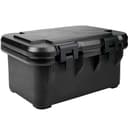
Cambro S-Series Camcarrier Food Pan Carrier, 8" Deep

Cambro S-Series Camcarrier Food Pan Carrier, 8" Deep

The real thing — the rotomolded, gasketed, latching carrier that sits in commercial kitchens and behind competition trailers. If you hold brisket often enough that the hold has become part of your plan rather than an emergency, this is the piece of kit that stops being an extravagance.

Best purpose-built carrier
$282.17 · View on Amazon

Price as of September 6, 2026. #ad How we’re funded

4
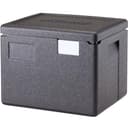
Cambro GoBox Insulated Food Pan Carrier, 8" Deep

Cambro GoBox Insulated Food Pan Carrier, 8" Deep

The catering box the phrase "faux Cambro" is borrowed from, at a fraction of the price of the steel-latched S-Series. It takes a full-size 8"-deep hotel pan, which is the right shape for a wrapped brisket, and it weighs almost nothing empty.

Best value purpose-built
$54.58 · View on Amazon

Price as of September 6, 2026. #ad How we’re funded

5
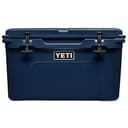
YETI Tundra 45 Hard Cooler

YETI Tundra 45 Hard Cooler

Thick insulation and a gasketed lid are exactly what a long hot hold wants, and this is the cooler most likely to already be in the garage. Note the naming: YETI states capacity in cans, not quarts, so measure before you assume a full packer fits.

Best dual-purpose
$325.00 · View on Amazon

Price as of September 6, 2026. #ad How we’re funded

6
Coleman Classic Series 70-Quart Cooler

Coleman Classic Series 70-Quart Cooler

The honest budget answer. A plain 70-quart Coleman, pre-warmed with hot water and packed tight with towels, will hold a wrapped brisket safely for the couple of hours most cooks actually need — and it costs less than the brisket.

Best budget
$94.99 · View on Amazon

Price as of September 6, 2026. #ad How we’re funded

The picks in full

#1Best overall

Igloo BMX 52 QT Cooler

The sensible middle of this list. Thick blow-molded walls, rubber T-latches that actually pull the lid down onto the seal, and a size that swallows a wrapped brisket plus towels — for a fraction of what a rotomolded cooler costs.

Strengths

  • Rubberized T-latches clamp the lid onto the seal, which matters for a hold
  • Extra-thick foam walls and insulated lid (stated)
  • 52 QT swallows a wrapped packer plus the towels around it

Trade-offs

  • Blow-molded, so thinner walls than a rotomolded cooler at the same size
  • Igloo's 5-day figure is ice retention at 90°F — not a hot-hold claim
Fuel / powerNot published
TypeBlow-molded hard cooler
Stated capacity52 QT / up to 83 cans
Ice retention5 days at 90°F (stated, controlled test)
ClosureRubberized T-latches (stated)
Hot hold timeNot published

Specs read from the manufacturer listing, on August 11, 2026. “Not published” means the maker does not state that figure.

#2Best interior dimensions

RTIC 52 QT Ultra-Light Hard Cooler

The one on this list whose published interior dimensions tell you the answer up front: 21.25" x 12" x 12". A wrapped whole packer fits, which is more than you can say for most 45-quart coolers, and it carries up to 3 inches of foam.

Strengths

  • Interior stated at 21.25" x 12" x 12" — a wrapped packer lies flat
  • Up to 3 in. closed-cell foam and a freezer-style gasket (stated)
  • Stated up to 30% lighter than comparable rotomolded coolers

Trade-offs

  • Lighter build means it scuffs and flexes more than a rotomolded box
  • Still a cold-side product — no hot-hold figure is published
Fuel / powerNot published
TypeHard cooler, injection-molded
Stated capacity52 QT / 76 cans (no ice)
Interior dimensions21.25" x 12" x 12" (stated)
InsulationUp to 3 in. closed-cell foam (stated)
Hot hold timeNot published

Specs read from the manufacturer listing, on August 11, 2026. “Not published” means the maker does not state that figure.

#3Best purpose-built carrier

Cambro S-Series Camcarrier Food Pan Carrier, 8" Deep

The real thing — the rotomolded, gasketed, latching carrier that sits in commercial kitchens and behind competition trailers. If you hold brisket often enough that the hold has become part of your plan rather than an emergency, this is the piece of kit that stops being an extravagance.

Strengths

  • Rotomolded body with a gasketed, latching lid built for hot food
  • Takes a full-size 8" deep pan (stated) — a whole packer, wrapped
  • Designed to be washed, stacked and abused in a commercial kitchen

Trade-offs

  • Costs more than most people's smoker accessories combined
  • Single-purpose — it is not a cooler you also take camping
Fuel / powerNot published
TypeTop-load insulated food pan carrier
Pan depth8 inches (stated)
MaterialRotomolded polyethylene, foam insulated
Hot hold timeNot published
CapacityOne full-size food pan (stated)

Specs read from the manufacturer listing, on August 11, 2026. “Not published” means the maker does not state that figure.

#4Best value purpose-built

Cambro GoBox Insulated Food Pan Carrier, 8" Deep

The catering box the phrase "faux Cambro" is borrowed from, at a fraction of the price of the steel-latched S-Series. It takes a full-size 8"-deep hotel pan, which is the right shape for a wrapped brisket, and it weighs almost nothing empty.

Strengths

  • Takes a full-size 8" deep food pan (stated) — the right footprint for a packer
  • Lightweight EPP construction that one person can carry loaded
  • Costs less than most 50-quart coolers

Trade-offs

  • Foam body dents and scuffs far more easily than a hard cooler
  • You need a hotel pan (sold separately) to use it properly
Fuel / powerNot published
TypeTop-load insulated food pan carrier
Pan depth8 inches (stated)
MaterialMolded EPP foam
Hot hold timeNot published
CapacityOne full-size food pan (stated)

Specs read from the manufacturer listing, on August 11, 2026. “Not published” means the maker does not state that figure.

#5Best dual-purpose

YETI Tundra 45 Hard Cooler

Thick insulation and a gasketed lid are exactly what a long hot hold wants, and this is the cooler most likely to already be in the garage. Note the naming: YETI states capacity in cans, not quarts, so measure before you assume a full packer fits.

Strengths

  • Up to 3 inches of pressure-injected insulation (stated)
  • Rotomolded body and gasketed lid seal heat in as well as cold
  • Genuinely dual-purpose — the hold costs you nothing extra

Trade-offs

  • "45" is a model name, not quarts — stated capacity is 26 cans
  • Expensive for a job a $60 cooler does nearly as well
Fuel / powerNot published
TypeRotomolded hard cooler
Stated capacity26 cans (no ice)
InsulationUp to 3 in. PermaFrost (stated)
Hot hold timeNot published
Interior dimensionsNot published

Specs read from the manufacturer listing, on August 11, 2026. “Not published” means the maker does not state that figure.

#6Best budget

Coleman Classic Series 70-Quart Cooler

The honest budget answer. A plain 70-quart Coleman, pre-warmed with hot water and packed tight with towels, will hold a wrapped brisket safely for the couple of hours most cooks actually need — and it costs less than the brisket.

Strengths

  • 70 QT is big enough for a packer and a deep towel nest
  • Stated to keep ice up to 5 days — the same insulation works hot
  • Cheap enough to buy purely for the hold

Trade-offs

  • Loose-fitting lid with no gasket — pack towels to fill the air space
  • Thin walls mean the hold drops off faster than a rotomolded box
Fuel / powerNot published
TypeBlow-molded hard cooler
Stated capacity70 QT
Ice retentionUp to 5 days (stated)
ClosureHinged lid, no gasket
Hot hold timeNot published

Specs read from the manufacturer listing, on August 11, 2026. “Not published” means the maker does not state that figure.

The two specs that decide a holding cooler

Interior dimensions, not quarts. Quart ratings describe volume, and volume tells you nothing about whether a rigid 20-inch object fits. A trimmed whole packer is roughly 20 inches long, so you want an interior length of at least 20 inches — RTIC, unusually, publishes theirs at 21.25 inches, which is why it wins that award above. Coolers that are deep and short will force you to fold the brisket, and folding a rested brisket cracks the bark and squeezes out rendered fat. Cambro-style carriers sidestep the problem entirely by taking a full-size hotel pan, which is 12 by 20 inches by design.

How the lid seals. This is the difference between a two-hour hold and a five-hour one. A gasketed lid pulled down by latches makes a genuine seal; a cheap hinged lid that rests on a lip lets warm air escape continuously. It is also the spec that separates the categories: purpose-built food carriers and rotomolded coolers have gaskets and latches, and inexpensive blow-molded coolers mostly do not. You can compensate for a poor seal by filling every void with towels, and you should regardless.

What you can safely ignore is the ice-retention claim on the box. “Keeps ice five days” is measured in controlled cold-side conditions and is not a hot-hold specification. Insulation works in both directions, so a better-insulated cooler does hold hot food better — but the published number is not a figure you can convert, and nobody publishes the hot-side equivalent.

How to hold a brisket properly

Pre-warm the box. This is the step people skip and it matters more than the cooler you bought. A cold plastic cooler is a heat sink that will pull energy out of your brisket for the first thirty minutes. Fill it with hot tap water, close the lid, leave it fifteen minutes, then dump the water and dry it just before the brisket goes in.

Let the brisket vent first. Do not go straight from a 203°F pit into a sealed box. Rest the wrapped brisket on the counter until the internal temperature drops to roughly 170-175°F, which usually takes thirty to sixty minutes. Going in too hot means it carries on cooking in the box and can overshoot into mushy. Our resting and holding guide covers the timing in detail.

Fill the space. Air is the enemy. Wrap the brisket in a couple of old towels, pack more towels around and above it until nothing shifts, and close the lid. A tightly packed small cooler outperforms a half-empty large one every time.

Keep it above 140°F, and know the clock. The USDA identifies 40-140°F as the range where bacteria multiply fastest, and the standard guidance for hot holding is to stay above 140°F. Leave a probe in the meat during the hold so this is a measurement and not a hope. A well-packed, pre-warmed cooler holding a whole packer will typically stay above that line for hours — but hours is not a number you should guess at, which is exactly why the probe stays in.

Cooler or a real Cambro?

A commercial food pan carrier is purpose-built for exactly this: rated for hot food, shaped for a full-size pan, gasketed and latched. If you cook brisket often enough that the hold is part of your plan rather than an occasional improvisation, it is the better tool, and the smaller GoBox-style carriers cost less than a mid-range cooler.

For most people, though, a cooler is the right answer for an unsentimental reason: you probably already own one, and a cooler that also holds brisket costs nothing extra. The performance gap between a well-packed decent cooler and a commercial carrier over a three-hour hold is small enough that packing technique closes most of it. Buy the carrier if you are holding weekly. Use the cooler if you are holding for a party.

What a long hold does to the brisket

It improves it, within limits. An extended period between roughly 145 and 165°F gives connective tissue that finished converting late in the cook time to settle, and it lets rendered fat and juices redistribute instead of running out the moment you cut. Briskets held for two to four hours are frequently better than the same brisket sliced straight off the pit — not a compromise, an improvement.

The limit is at both ends. Go in too hot and the brisket keeps cooking and turns pasty. Hold too long and it dries out as moisture continues to evaporate through the wrap; the surface texture softens and the bark you worked twelve hours for goes slack. If you know in advance that the hold will be long, wrap in butcher paper rather than foil and accept some bark softening as the cost. And if the brisket is going to be eaten tomorrow rather than tonight, do not hold it at all — chill it properly and reheat it, which is a different technique with different rules.
Frequently asked questions

How long can you hold a brisket in a cooler?

In a pre-warmed, tightly packed cooler, a whole packer commonly stays above the USDA's 140°F hot-holding line for several hours. The exact time depends on the brisket's starting temperature, its size, how well the box is insulated and how completely you have filled the empty space with towels — which is why you leave a probe in the meat rather than relying on a rule of thumb. Once it drops below 140°F, food safety guidance says it should be reheated or refrigerated.

What temperature should a brisket be when it goes in the cooler?

Let it come down to roughly 170-175°F first, which usually takes thirty to sixty minutes of resting on the counter in its wrap. Going straight from a 203°F pit into an insulated box means the brisket carries on cooking in there — carryover in a large cut is substantial — and it can push past tender into mushy. The vent-then-hold sequence is what separates a good hold from an overcooked one.

Do you need a Cambro, or is a regular cooler fine?

A regular cooler is fine for occasional holds and is what most backyard cooks use — the technique of pre-warming and packing with towels matters more than the box. A commercial Cambro-style carrier is purpose-built for hot food, takes a full-size hotel pan, and seals better, which makes it the right tool if you hold brisket regularly. The performance gap over a two to three hour hold is smaller than the price gap suggests.

Should I wrap the brisket in towels?

Yes, and pack more towels around it too. Air is what carries heat away, so the goal is to eliminate empty space inside the box. Wrap the still-wrapped brisket in a couple of old towels, then fill every remaining void with more towels until nothing can move. A small cooler packed tight will outperform a large cooler that is half empty, every time.

Can I hold a brisket overnight in a cooler?

No. A cooler cannot keep food above 140°F indefinitely, and an overnight hold takes the brisket through the temperature range where bacteria multiply fastest for hours at a time. If the brisket is being eaten the next day, chill it quickly and properly instead, then reheat it — sliced or whole, wrapped, with a little liquid, at a low oven temperature. That produces a genuinely good result and is the safe route.

Does holding dry out a brisket?

A long one can. Moisture continues to migrate and evaporate through the wrap while the brisket sits, so a five-hour hold will cost you more moisture than a two-hour one. Wrapping in foil rather than paper slows that loss but softens the bark further. In practice a two to four hour hold usually improves brisket — juices redistribute and late-converting collagen settles — while much longer holds start trading moisture and bark texture for schedule convenience.

Sources

Keep reading