How to Smoke a Brisket Flat
Most supermarket brisket is a flat, so most first briskets are flats — which is unfortunate, because it is the harder cook. Everything that makes a whole packer forgiving is the part you did not buy.
How this is funded: we earn a commission if you buy through our links, at no extra cost to you. It never changes which product we recommend, and we’ll tell you plainly when we’d skip one. Full disclosure.
Here is the awkward truth about brisket in most supermarkets: what is on the shelf is usually a flat, because a flat is neat, rectangular and easy to price. So a great many people cook a flat as their first brisket, follow a guide written for a whole packer, and conclude that they are bad at barbecue.
They are not. The flat is genuinely the harder cook, and it is harder for reasons that have nothing to do with skill.
What you are missing, precisely
A whole packer has two muscles. The point sits on top of one end of the flat, and it is the fatty one. Across ten hours it renders and that fat runs down through the meat below it, while the point’s own bulk physically shields the flat from radiant heat.
Buy a flat on its own and you have removed all of that. What is left is:
- Less intramuscular fat — so less internal rendering to lubricate the fibers.
- Less thickness — so it heats through faster and has less thermal buffer.
- No shielding — the lean muscle is directly exposed for the whole cook.
- Often, a trimmed cap — retailers frequently cut the fat close for the display case.
Each one of those individually narrows your margin. Together they explain essentially every dry brisket complaint that starts “I did everything the guide said”.
The seven adjustments
1. Trim almost nothing. The standard advice to take the fat cap to a quarter inch assumes a packer with an inch of cap to spare. Many retail flats arrive already at or below a quarter inch, and the correct response is to trim nothing at all beyond obviously hard deckle fat. Every millimeter of cap is protection you cannot get back.
2. Seriously consider injecting. On a whole packer injection is optional and we generally say so. On a lone flat it is the most effective single intervention available, because it puts moisture and salt inside a muscle that has very little of its own. The injection recipe has the ratios — and if you inject, cut the salt in your rub, or you will end up here.
3. Run at 250°F, not 225°F. This is the adjustment people resist hardest. The instinct with a lean cut is to go gentler, and it is wrong: lower temperature means a longer cook, and every additional hour is another hour of evaporation from a muscle with no reserve. Get it to tender sooner. The full argument is in 225 vs 250.
4. Fat side up, thin end away from the fire. Whatever cap survives goes between the heat and the meat. And a flat tapers — that thin end will be done long before the thick end, so put it in the coolest part of the chamber. On an offset that means well away from the firebox.
5. Wrap earlier. Around 160-165°F, as soon as the surface has set enough to be worth protecting. On a packer we argue for wrapping late to preserve bark. Here moisture outranks bark, and that is a straightforward trade rather than a compromise. Butcher paper still beats foil unless you are content to lose the crust entirely — see paper vs foil.
6. Start probing at 190°F. The doneness window on a flat is narrow — it can go from resisting the probe to falling apart inside an hour, which on a packer would take two or three. Do not wait for a number. Check early, check often, and pull the moment the probe slides in with no resistance. What you are feeling for is described in what temp is brisket done.
7. Rest, but do not hold for hours. Vent to around 165-170°F and rest for about an hour. A long cooler hold is a genuine tool on a packer, where there is fat to spare. On a flat, hours in an insulated box cost you more moisture than the extended rest returns.
Slicing matters even more here
A flat has one grain direction running consistently along its length, which makes it simpler to slice than a packer — and raises the stakes if you get it wrong, because there is no fatty point to disguise a chewy slice.
Cut across the grain, about the thickness of a pencil, and only slice what you are serving now. Cut slices dry out quickly, and this is the cut that can least afford it. See slicing a brisket.
When to just buy the packer
If a flat is what your shop stocks and a whole packer means a special order, cooking flats well is a completely reasonable skill to build — the adjustments above genuinely work.
But if you bought a flat because it was smaller and you assumed smaller meant easier, buy the packer next time. It costs more at the till, it demands more trimming, and it is substantially more forgiving on the day. If the reason was that a twenty-inch packer will not fit your cooker, the better fix is to separate the point and the flat yourself — you keep both muscles, and you can still cook them together.
What a flat-only cook leans on
A packer forgives a lot. A flat forgives very little, so the margin has to come from somewhere else. Prices are live and refresh daily.
The thermometer
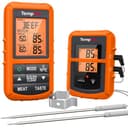
TempPro TempSync CORE TP20B Wireless Dual-Probe Thermometer (the ThermoPro TP20)
A flat passes through the doneness window fast. On this cook more than any other, an alarm on the internal temperature is what saves it.
See thermometer picksThe wrap
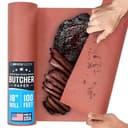
Bryco Goods Pink Butcher Paper 18" x 100 ft
A lean flat benefits from wrapping earlier than a packer would. Unwaxed pink paper protects moisture without steaming the bark flat.
See paper picksThe injection
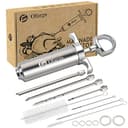
Ofargo Stainless Steel Meat Injector Syringe Kit
Injecting is optional on a packer and genuinely worth considering on a lean flat — this is the cut it was invented for.
$27.99 · View on AmazonSee injector picksPrice as of October 22, 2026. #ad How we’re funded
Frequently asked questions
Can you smoke just a brisket flat?
Yes, and plenty of good barbecue is made from flats — it is simply a less forgiving cook than a whole packer. The flat is the lean muscle, so it has less intramuscular fat to render, it is thinner so it heats through faster, and it has lost the fatty point that would otherwise sit above it shielding it from heat. Adjust for all three and it works. Cook it exactly as you would a packer and it usually comes out dry.
How long does it take to smoke a brisket flat?
A 5 to 7 lb flat commonly runs 6 to 9 hours at 250°F, which is considerably shorter than a whole packer — but treat that as a planning figure only. Thickness drives the timeline more than weight does, and flats vary a lot in how evenly they taper. Start probing well before you expect it to be ready, because the window between done and overdone is much narrower on this cut.
Should you wrap a brisket flat?
Yes, and earlier than you would wrap a packer — around 160-165°F rather than waiting for a fully hardened bark. On a whole packer the argument for wrapping late is bark quality, and the point protects the flat in the meantime. Cooking a flat alone, moisture retention outranks bark, so wrap as soon as the surface has set enough to be worth protecting. Butcher paper rather than foil, unless you are willing to lose the crust entirely.
What temperature should you cook a brisket flat at?
250°F. The instinct is to drop to 225°F to be gentle with a lean cut, and it is the wrong instinct — a lower temperature means a longer cook, and a longer cook means more total hours of evaporative moisture loss from a muscle with no fat reserve. Running at the higher end of the normal range gets the flat through to tender sooner and holds more moisture in it.
Should you inject a brisket flat?
It is the single strongest case for injection in brisket cooking. A flat has little intramuscular fat, so there is nothing much inside it to render and lubricate the fibers — adding salted broth to the interior genuinely compensates. If you do inject, cut the salt in your surface rub back substantially, because injection plus a full rub is the standard route to salty brisket.
Why does my brisket flat come out like pot roast?
Usually because it was cooked past the point of tenderness rather than to it. A flat has a narrow doneness window, and pushed beyond it the fibers give up their remaining moisture and lose structure — the meat shreds instead of slicing and reads as stringy or pasty. Start probing at 190°F, pull the moment resistance disappears, and do not hold it in a cooler for hours afterwards.
Sources
- USDA FSIS — Beef From Farm to Table — USDA on safe handling, cooking and resting of beef, including brisket (accessed July 22, 2026)
- ThermoWorks — Smoked Brisket: A How-To Primer — ThermoWorks on brisket internal temperature, probe tenderness and the stall (accessed July 22, 2026)
- USDA FSIS — Doneness Versus Safety — USDA on the difference between a safe temperature and the temperature that makes tough cuts tender (accessed July 22, 2026)
Keep reading
Chuck Roast vs Brisket
The cheaper cut that behaves a bit like a flat, compared honestly.
Read the comparisonWhat Is a Packer Brisket?
What you did not buy, and why it matters so much.
Read the guideBrisket Point vs Flat
The two muscles side by side — why the flat behaves as it does.
Read the comparisonWhy Is My Brisket Dry?
The failure a lone flat is most prone to, diagnosed properly.
Read the diagnosisInjecting a Brisket
Optional on a packer, genuinely useful here.
Read the guide