Can You Leave Brisket in a Cooler Overnight?
The backyard answer is yes, people do it all the time. The food-safety answer turns on a single number that a cooler cannot hold for eight hours and cannot report to you. Here is the honest version, and the two ways to hold a brisket all night that we would actually use.
How this is funded: we earn a commission if you buy through our links, at no extra cost to you. It never changes which product we recommend, and we’ll tell you plainly when we’d skip one. Full disclosure.
No, not as a plan. A cooler is insulation with no heat source, so a brisket inside one is only ever cooling — and the number that matters is 140°F, the top of the USDA danger zone. A preheated, towel-packed cooler is an excellent two-to-four-hour hold. Eight to ten hours is a different claim, and not one any cooler maker makes. If you need a brisket held all night, hold it in an oven on its lowest setting with a probe in the meat, or — better — start the cook later so you do not need to.
This answer is unpopular, so it is worth being precise about what is and is not being claimed here. Plenty of people have done an overnight cooler hold and been fine. That is not evidence the practice is safe; it is evidence that food safety is probabilistic. What follows is what the numbers are, what the equipment actually publishes, and what we would do instead.
The one number the whole question turns on
The USDA danger zone is 40°F to 140°F. Between those temperatures, bacteria multiply fastest; above 140°F, hot-holding is safe essentially indefinitely.
So “how long can I hold a brisket” is the wrong question, and asking it is why this topic generates so much confident nonsense. The right question is: is the meat above 140°F?If yes, the hold is fine and the only remaining issue is quality. If no, you are on a clock that started whenever it crossed the line — and in an unheated cooler you have no way of knowing when that was.
That reframing has a useful consequence. It means the single most valuable thing in this entire discussion is not a better cooler. It is a thermometer, because it converts the question from an argument into a measurement.
What coolers actually publish — and what they do not
We went through the specification on every cooler and carrier in our registry looking for a hot-hold figure. There is not one. Not from YETI, not from RTIC, not from Igloo, not from Coleman, not even from Cambro, which makes the professional equipment.
| YETI Tundra 45 | Cambro GoBox 8" | |
|---|---|---|
| Type | Rotomolded hard cooler | Top-load insulated food pan carrier |
| Stated insulation | Up to 3 in PermaFrost (stated) | Molded EPP foam |
| Stated capacity | 26 cans, no ice (stated) | One full-size food pan, 8 in deep (stated) |
| Stated hot-hold time | Not published | Not published |
| Has a heat source? | No | No |
Figures are the maker’s or the listing’s own, read on the dates in each product’s spec table. “Not published” means we could not find the maker stating it, and here the absence is the finding: every published cooler specification in this category is a cold-side claim about ice retention. YETI states capacity in cans rather than quarts, which tells you plainly what the product is designed around.
That gap matters because it is the figure every article confidently supplies. If a page tells you a particular cooler holds a brisket above 140°F for ten hours, ask where the number came from. It came from one cook, in one ambient temperature, with one brisket, one set of towels and one packing arrangement — which is not a specification, and not something you can plan a dinner around.
What the faux cambro is genuinely for
We are not against the technique. It is in our resting and holding guidefor good reason — it solves two real problems extremely well.
It extends the rest. A brisket benefits from a long rest, and a cooler lets you give it two to four hours instead of one without the meat going cold. That is the single most useful thing it does.
It buys you schedule slack. Briskets finish when they finish. A cooler turns a cook that was ready at 3pm into a dinner at 6pm without drama. This is its real job.
It moves the brisket. Getting a hot packer across town is exactly what a well-insulated box is for, and the transport guide covers it.
The technique itself is worth doing properly, because all of it is about slowing the descent: preheat the cooler by filling it with hot water for a few minutes and pouring it out, keep the brisket wrappedrather than loose, and pack towels into every bit of remaining air space — air is what the box has to keep warm, and a brisket in a half-empty cooler cools much faster than one in a full one. Put a probe in before you close the lid so you can read it later without opening it.
None of that turns a cooler into a heated cabinet. It slows the slide; it does not stop it.
The two things to do instead
1. Finish later rather than holding longer. This is the real answer and it is a planning answer, which is why people do not like it. If dinner is at six, work the schedule backwards and start the brisket so it comes off at three or four. Our start-time guide does exactly that arithmetic, including the padding a brisket needs because it will not respect your timeline. The hold you then need is two or three hours, which is precisely what a cooler is good at.
If the reason you wanted an overnight hold is that you cooked overnightand the brisket finished at 6am for a 6pm dinner, then the fix is not a better cooler — it is starting the cook twelve hours later and letting it run through the day.
2. Hold it hot, in something with an element.An oven on its lowest setting is a warming cabinet you already own. Wrapped brisket, in a pan, probe in the meat, oven as low as it goes — most home ovens sit somewhere between 150°F and 170°F at minimum, which is above the line and gentle enough to hold for hours.
One verification step before you trust it: set the oven to its lowest setting with nothing in it, put a probe on the rack, and see what it actually holds. Some ovens run considerably hotter at minimum than the dial claims, and eight hours at 200°F will dry a brisket out even wrapped. Find out with a probe rather than with the brisket.
What to do if you have already done it
Measure the brisket before you do anything else. That is the whole decision.
Above 140°F:the hold was safe. Check the texture — a very long hold can take a brisket past probe-tender into mushy, and the bark will have softened under the wrap — but you have no safety problem.
Below 140°F: you have meat that has spent an unknown number of hours in the danger zone, and the honest position is that we cannot tell you it is fine. The reason this is harder than it feels is that smell and appearance are poor guides here, which our spoilage pagegoes into properly — the organisms that make you ill are not the ones that make food smell bad.
A brisket is expensive and throwing one away is genuinely painful. It is less painful than the alternative, and that is the same conclusion our leftovers guide reaches about the three-to-four-day refrigerator window. The rule that makes all of this easy to live with is the one at the top: plan the cook so you never need to ask.
What to use for a hold, and what to measure it with
Every figure below is the maker’s or the listing’s own, read on the date in each product’s spec table — and the most important entry in both cooler spec tables is the row that says “Not published.” Prices are live and refresh daily.
What the cooler hold is genuinely good for
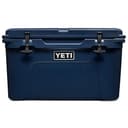
YETI Tundra 45 Hard Cooler
A rotomolded cooler is an excellent 2-4 hour hot hold and the reason the faux cambro exists. YETI states up to 3 in of insulation on the Tundra 45. Note what it does not state, and what no cooler maker states: a hot-hold time. Every published cooler figure is a cold-side claim.
$325.00 · View on AmazonSee cooler picksPrice as of October 20, 2026. #ad How we’re funded
The purpose-built alternative
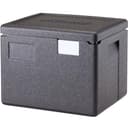
Cambro GoBox Insulated Food Pan Carrier, 8" Deep
A top-load insulated food pan carrier is the equipment the catering trade uses for exactly this job, and it is the cheapest honest hot hold we carry: molded EPP foam, stated to take one full-size 8 in deep food pan. It is still not a heated cabinet, so it is still not an eight-hour answer on its own.
$52.43 · View on AmazonRead the transport guidePrice as of October 20, 2026. #ad How we’re funded
The thing that actually settles it
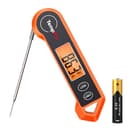
TempPro TempSwift PLUS TP19H Instant-Read Thermometer (the ThermoPro TP19H)
Every sentence on this page comes back to one measurement: is the meat above 140°F or not. An instant-read states ±0.9°F accuracy and a 1-second response, so you can check the brisket through a hold without standing there with the lid open. Holding a brisket overnight without one is guessing.
See thermometer picks
Frequently asked questions
Can you leave a brisket in a cooler overnight?
Not safely, as a plan. A cooler is unheated insulation - it slows heat loss and nothing more - so a brisket in one is on a one-way trip downward through the USDA danger zone, which runs from 40 degrees F to 140 degrees F. A well-packed rotomolded cooler is a genuinely excellent hold for two to four hours. Eight to ten hours is a different proposition, because for most of that time the meat will be below 140 degrees F, and the cooler cannot tell you when it crossed. People do it and most of them are fine. We are not going to call that a method.
What temperature does brisket need to stay above while holding?
140 degrees F. The USDA danger zone is 40 degrees F to 140 degrees F, and the whole holding question is whether the meat stays on the right side of that line. Above it, bacteria do not multiply meaningfully and you can hold for a long time. Below it, you are on a clock. The practical consequence is that the useful question is never 'how long can a cooler hold a brisket' but 'what is the brisket's internal temperature right now' - which is a measurement, not an estimate.
What is a faux cambro?
Using an ordinary cooler as a substitute for a Cambro, which is the brand of insulated food pan carrier the catering trade uses to hold hot food. You preheat the cooler with hot water, pour it out, put the wrapped brisket in with towels packed around it to fill the air space, and close the lid. It works well for the job it is actually for: resting and holding a brisket for a few hours, and moving it somewhere. The name is honest about what it is - a stand-in, not the real equipment.
How long will a cooler hold a brisket hot?
No cooler maker publishes a figure, and that is worth knowing rather than guessing around. We checked the specs on every cooler in our registry: YETI states up to 3 inches of insulation on the Tundra 45, RTIC publishes interior dimensions, Cambro states pan capacity - and the hot-hold row is 'Not published' on all of them. Every published cooler specification is a cold-side claim about ice retention. Treat any specific hot-hold number you read online as somebody's single cook, because that is what it is.
What should I do instead of an overnight cooler hold?
Two things work. The better one is to finish the cook later: start the brisket so it comes off a couple of hours before you need it and do a normal rest, which is what our start-time guide is for. The other is a heated hold - an oven or warming cabinet set as low as it will go, with the brisket wrapped and a probe in it, which keeps the meat above 140 degrees F indefinitely. Most home ovens will sit somewhere between 150 degrees F and 170 degrees F, which is exactly right for this.
Can I hold a brisket in the oven overnight?
Yes, and it is the honest version of what people are trying to do with a cooler. Wrap the brisket, put it in a pan, set the oven as low as it goes, and leave a probe in the meat so you can see the temperature rather than hope. The one thing to verify is what your oven's lowest setting actually holds - set it, put a probe on the rack, and check it before you trust it with a brisket. Some ovens run considerably hotter at their minimum than the dial suggests, which will dry the meat out over eight hours.
Is it safe if the brisket was over 200 degrees F when it went in?
It helps and it does not settle it. Starting hot buys you time above 140 degrees F, which is the entire benefit of preheating the cooler and packing out the air space with towels. But a cooler has no heat source, so the only question is how long the descent takes - and over eight to ten hours in an unheated box, the answer for most setups is that it finishes well below the line. If you want to know rather than assume, put a probe in the brisket and look at it. The number is the answer.
What if I already left one in overnight?
Measure it before you do anything else. If the brisket is still above 140 degrees F, it was held safely and you are fine. If it is below, you are in the position of having food that has been between 40 degrees F and 140 degrees F for an unknown number of hours, and the look-and-smell test is not a reliable guide - our spoilage page explains why. That is a judgement call we cannot make for you, but we would not serve it to guests, and brisket is less expensive than the alternative.
Sources
- USDA FSIS — "Danger Zone" (40°F - 140°F) — USDA: bacteria multiply fastest between 40°F and 140°F — the food-safety basis for the 4-hour rule (accessed July 22, 2026)
- USDA FSIS — Leftovers and Food Safety — USDA: refrigerate leftovers within 2 hours of cooking or of removal from a warm-holding appliance (1 hour above 90°F); keep 3 to 4 days refrigerated or 3 to 4 months frozen; reheat to 165°F measured with a food thermometer (accessed October 5, 2026)
- USDA FSIS — Beef From Farm to Table — USDA on safe handling, cooking and resting of beef, including brisket (accessed July 22, 2026)
- USDA FSIS — Doneness Versus Safety — USDA on the difference between a safe temperature and the temperature that makes tough cuts tender (accessed July 22, 2026)
Keep reading
Resting and Holding a Brisket
The rest done properly, including how long is useful and what the cooler hold is really for.
Read the guideBest Cooler for Holding Brisket
Six coolers and carriers on published insulation and interior dimensions.
See the roundupWhen to Start a Brisket
The schedule worked backwards from dinner - the real fix for an overnight hold.
Read the guideHolding and Reheating Brisket
The two problems a long hold creates, and the 165°F reheat figure that governs the second.
Read the guideHow to Transport a Cooked Brisket
Getting a hot packer somewhere else without crossing the line this page is about.
Read the guideIs My Brisket Spoiled?
If the hold went wrong - and why look-and-smell is less reliable than people believe.
Read the guide