How to Smoke a Brisket on a Pellet Grill
A pellet grill takes the hardest part of brisket — holding a fire steady for twelve hours — and does it for you. What it hands back are two different problems: a very clean burn and a very dry convection current.
How this is funded: we earn a commission if you buy through our links, at no extra cost to you. It never changes which product we recommend, and we’ll tell you plainly when we’d skip one. Full disclosure.
Pellet grills are the most common way people cook brisket at home now, and the reason is not mysterious: the hardest skill in barbecue is holding a fire at 250°F for twelve hours, and a pellet grill simply does that. An auger feeds compressed sawdust into a fire pot, a fan keeps it burning, and a controller meters the fuel to hit the number on the dial. Everything the fire demanded of you is now the machine’s problem.
What is left is a cook that is genuinely easier and slightly different. The underlying method does not change — the meat does not know what is heating it — but two characteristics of this cooker shape every decision below: the burn is very clean, and the convection is very dry.
What changes, and what doesn’t
| On a pellet grill | |
|---|---|
| Fire management | Automated. Set a temperature and the controller holds it. |
| Smoke intensity | Lighter than charcoal or an offset. A clean burn makes less aromatic smoke. |
| Chamber humidity | Dry, with fan-driven airflow. Bark sets earlier than in a still cooker. |
| Fuel planning | Roughly 1-2 lb of pellets an hour; about one 20 lb bag per brisket. |
| Failure modes | Empty hopper, ash-clogged fire pot, power cut. Not a dying fire. |
| The brisket itself | Unchanged. Same trim, same rub, same temperatures, same rest. |
That last row matters more than the others. There is no pellet-specific trim, no pellet-specific rub, and no pellet-specific doneness temperature. If you have read the selection, trimming and seasoning guides, all of that carries over unaltered. What follows is only the part that is specific to this machine.
1. Prep the grill before you prep the brisket
Empty the fire pot and the grease tray. Ash builds up in the burn pot and a full pot is the usual reason a grill fails to light, or lights and then flames out four hours in. Vacuum it cold. Scrape the deflector and empty the grease bucket while you are there — twelve hours of rendering brisket fat is a lot of grease, and a grease fire under a packer ends the cook.
Fill the hopper completely. At one to two pounds an hour you will burn most of a 20-pound bag on a single brisket, and more in cold weather because the controller works harder against heat loss. Have a second bag open and ready. An overnight cook that runs out of fuel does not fail gracefully: the fire goes out, the controller keeps trying, and you wake up to cold meat that has been sitting warm for hours.
Use pellets you chose deliberately. On a pellet grill the fuel and the smoke wood are the same object, so the bag is the flavor. A single-species oak or a filler-free hardwood blend is worth the small premium here in a way it is not on a charcoal cooker, where the wood chunk does the flavoring and the charcoal is just heat. The differences are laid out in the pellets roundup.
2. The temperature schedule
Most pellet grills have a low setting variously called smoke, super smoke or P-setting, which runs the fire cooler and cycles the auger differently to produce more visible smoke. It is worth using, with realistic expectations.
Hours 0-3: the lowest temperature the grill will hold. Often 180-200°F. Smoke deposits best on a cool, damp surface, and this is the window where you get most of whatever smoke flavor the cook is going to have. The brisket climbs slowly during this phase, which is fine — you are buying flavor, not progress.
Hour 3 to the wrap: 250°F. Step it up. At this point the surface has dried and taken most of the smoke it will take, and the remaining job is rendering fat and converting collagen, which is about time at temperature. 250°F rather than 225°F removes hours from the cook for a difference in the finished brisket that is genuinely hard to detect.
After the wrap: hold 250°F to the finish. Nothing pellet-specific happens here. Run to probe tenderness.
3. Where to put the brisket
A pellet grill is not evenly heated. The fire pot sits at one end or in the center under a deflector plate, and the area directly above it runs hotter than the far corners — on a long barrel-shaped grill, noticeably so. Put the thickest part of the brisket, the point, toward the hotter zone and the thin end of the flat toward the cooler one, and rotate the whole packer 180 degrees once during the cook, most conveniently when you wrap.
If your grill has an upper rack, the main grate is usually the better place for a brisket: the upper shelf tends to be hotter and drier, and a packer needs the space. Do not crowd the chamber. Airflow around the meat is how a convection cooker works, and a brisket wedged against the wall cooks unevenly on that side.
4. Run your own probes
This is the most useful habit on any thermostatic cooker. The controller has a temperature sensor, and it is doing its job faithfully — but it reports the temperature at its own location, which may be several inches and a good many degrees away from your brisket. Grate temperature varies across a large chamber, and the difference between the readout and the air next to the meat is routinely more than you would guess.
Run two probes: one in the thickest part of the flat, inserted from the side, and one clipped at grate level beside the brisket. Now you know what the meat is doing and what the air around it is doing, and if the grill’s own display disagrees with your grate probe, believe the probe next to the brisket. For an overnight cook, a wireless probe with a low-pit alarm is what turns an unattended cook into a safe one — the alarm that matters is the one telling you the fire has gone out.
5. The stall and the wrap
The stall arrives here the same way it arrives everywhere, somewhere around 150-170°F, and for the same reason: evaporative cooling. Fan-driven convection tends to make it arrive a little sooner and hit a little harder, because moving air evaporates surface moisture faster than still air does.
The same airflow means bark sets earlier on a pellet grill than on a water-pan bullet smoker, so the usual advice to wait for a firm, dark, set bark before wrapping is typically satisfied a bit earlier in the cook. Check by touch rather than by the clock: when the bark does not smudge under a fingertip, it is ready. Butcher paper keeps that crust firmer than foil does, which matters more here precisely because the bark you built was hard-won on a light-smoke cooker. The trade-offs are in butcher paper vs foil.
One genuine trade-off to weigh: wrapping stops smoke deposition completely. On a cooker that produces modest smoke to begin with, wrapping late buys you flavor at the cost of time. If you have the hours, hold off.
6. Finish, rest, hold
Take the brisket to about 203°F in the thickest part of the flat and confirm with feel: a probe should slide in with essentially no resistance. That number is a landmark, not a rule — one brisket is ready at 198°F and another is still firm at 205°F.
Then let it come down to roughly 170°F on the counter before it goes anywhere sealed, and rest it at least an hour — or hold it in a pre-warmed cooler for several hours, keeping it above 140°F. A brisket that finishes early is a solved problem; a brisket that finishes late is not, which is why holding is the schedule tool rather than guessing at the timing.
Getting more smoke, briefly
This is the one complaint every pellet cook eventually has, and it has a short answer: run cool early, use a single-species pellet, wrap late, and add a pellet smoke tube. Those four stack into a real improvement. None of them changes the underlying physics — a clean burn makes less smoke — so if maximum smoke is the whole point for you, the honest answer is a different cooker, and pellet vs charcoal and offset vs pellet go through that decision properly.
The five ways this cook actually goes wrong
The hopper runs dry. Overwhelmingly the most common failure, and always overnight. Fill it, and check it before bed.
The fire pot is full of ash. Causes failed startups and mid-cook flame-outs. Five minutes with a shop vacuum before a long cook prevents it.
Trusting the controller readout as gospel. It is accurate about its own sensor. Your brisket is somewhere else.
Opening the lid to look. A convection cooker recovers from an open lid more slowly than you expect, and there is nothing to see. If you want to fuss with the brisket, spritzing is at least a technique with a mechanism behind it.
Expecting an offset. A pellet grill makes excellent brisket — tender, juicy, properly rendered, with real smoke flavor. It does not make Central Texas stick-burner brisket, and a cook who spends every attempt chasing that will be disappointed by a series of very good briskets.
The gear this specific cook depends on
Three things, and only three, are pellet-grill specific. Prices are live and refresh daily.
The grill
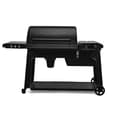
Traeger Woodridge Pro Wood Pellet Grill
A controller that holds 225-250°F for twelve hours and a hopper big enough to get through the night.
$1,149.99 · View on AmazonSee the best pellet smokersPrice as of October 20, 2026. #ad How we’re funded
The pellets
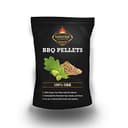
Lumber Jack 100% Oak BBQ Grilling Pellets
A single-species oak pellet, so the wood you chose is the wood that is actually burning.
See the best pelletsThe probes
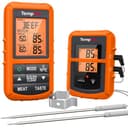
TempPro TempSync CORE TP20B Wireless Dual-Probe Thermometer (the ThermoPro TP20)
One probe in the flat and one clipped at grate level, because the controller reads its own sensor and not your brisket.
See the best thermometers
Frequently asked questions
How long does it take to smoke a brisket on a pellet grill?
The same as anywhere else: roughly one to one and a half hours per pound at 225°F, so a 13-pound packer is commonly 12 to 16 hours including the stall, plus the rest. Running 250°F instead brings that down significantly. A pellet grill does not cook faster than another smoker at the same temperature — the automation saves your attention, not the clock. Plan by probe tenderness and hold the finished brisket rather than trying to time it to the minute.
What temperature should I set a pellet grill for brisket?
250°F for the main cook. It finishes hours sooner than 225°F, produces brisket most people cannot distinguish in a blind taste, and shortens the window in which something can go wrong overnight. If your grill has a dedicated smoke or super-smoke setting, run two to three hours there first — usually 180-200°F — because the surface takes smoke best while it is cool and damp, then step up to 250°F for the rest.
Why doesn't my pellet grill brisket taste smoky?
Because pellets burn very cleanly, and clean combustion produces fewer of the aromatic compounds we perceive as smoke. It is inherent to how the machine works rather than a fault with yours. The fixes that help are running the lowest temperature your grill holds for the first few hours, using a single-species or filler-free pellet, wrapping later rather than earlier, and adding a pellet smoke tube. Stacked together they narrow the gap; none of them closes it against an offset.
How many pellets does a brisket use?
Roughly one to two pounds an hour at brisket temperatures, so plan on about one 20-pound bag for a full cook and keep a second bag on hand. Cold and windy weather pushes consumption up sharply because the controller runs the auger harder to hold temperature. Running out of pellets at 3 a.m. is the single most common way a pellet-grill brisket fails, and it is entirely avoidable by starting with a full hopper.
Should I use a water pan on a pellet grill?
It is worth trying. Pellet grills move hot air with a fan, which dries the surface faster than a still chamber does, and a shallow pan of water raises the humidity enough to slow that down — the same job spritzing does, without opening the lid. It will lengthen the cook slightly, because the added evaporation is a cooling effect. Some cooks find it improves bark texture noticeably; others see no difference on their machine.
Do I need a separate thermometer if my grill has one built in?
Yes. The built-in sensor tells the controller what to do about its own location, which is not where your brisket is — grate temperature varies by a substantial margin across a large cooking chamber, usually running hotter over the fire pot. Use one leave-in probe in the thickest part of the flat and one clipped at grate level next to the meat. If the grill's readout and your grate probe disagree, believe the one next to the brisket.
Sources
- USDA FSIS — Smoking Meat and Poultry — USDA on safe smoking practices, thermometer use and approved smoker materials (accessed July 22, 2026)
- ThermoWorks — Smoked Brisket: A How-To Primer — ThermoWorks on brisket internal temperature, probe tenderness and the stall (accessed July 22, 2026)
- USDA FSIS — Safe Minimum Internal Temperature Chart — USDA safe minimum internal temperatures, incl. 145°F for beef cuts plus a 3-minute rest (accessed July 22, 2026)
Keep reading
Do You Need a Water Pan?
The cooker where a water pan does least, and what actually helps instead.
Read the guideBest Pellet Smoker for Brisket
The grills that hold a low temperature for twelve hours.
See pellet picksBest Wood Pellets for Brisket
On a pellet grill the bag you buy is the smoke you get.
See pellet picksPellet vs Charcoal for Brisket
The honest trade between a thermostat and a fire.
Read the comparisonSmoking a Brisket Overnight
The unattended cook a pellet grill is best at.
Read the guideTraeger Woodridge Pro Review
One pellet grill assessed for exactly this job.
Read the review