How to Separate the Point and the Flat
There is a thick seam of fat between the two muscles of a packer, and it runs at an angle you cannot see from the outside. Find it and the muscles come apart almost by themselves. Guess at it and you cut through the point.
How this is funded: we earn a commission if you buy through our links, at no extra cost to you. It never changes which product we recommend, and we’ll tell you plainly when we’d skip one. Full disclosure.
A whole packer is not one piece of meat. It is two muscles — the pectoralis profundus, which everyone calls the flat, and the pectoralis superficialis, the point — joined by a thick layer of fat. Separating them is one of those jobs that sounds like butchery and is mostly just knowing where to put your hands.
People come to this task for three different reasons, and the right answer depends on which one you have: a grate too small for a whole packer, a plan to make burnt ends, or the simple wish to slice both muscles correctly. The technique is the same. The timing is not.
Find the seam before you pick up a knife
Put the brisket fat side down. This is the opposite of how you probably trimmed it, and it matters: the seam is broadly visible from the meat side as a band of hard white fat, and essentially invisible through the fat cap.
Now find where the point sits. It is the thicker, more rounded muscle occupying one end of the brisket, riding on top of the flat rather than beside it. Run your hand across the surface and you will feel the underside of the point change firmness where the fat layer begins.
The single most important fact about this seam: it is not horizontal. It runs on a diagonal and climbs as it travels. A cut made level with the board will start in the seam and end up straight through the middle of the point. Everything below is about chasing the fat rather than cutting a line.
Use your fingers first
Push your fingers into the fat layer at the thick end where the seam is widest, and work them along it. On a cooked brisket the muscles come apart almost entirely by hand — the fat has rendered and the connection is barely holding. On a raw one it takes more persuasion, but far less than people expect.
Let your hands do as much as they will. Every inch you open by feel is an inch you cannot cut wrong.
Then follow the fat with the blade
Where the muscles will not part by hand, a flexible boning knife is the tool — five or six inches, enough flex to ride a contour. Hold it almost flat, angled slightly into the fat rather than into either muscle, and free the connections a few inches at a time while your other hand lifts the point and keeps tension on the seam.
The diagnostic is simple and worth repeating: if you can see red meat on both sides of your blade, you have left the seam. Back the knife out, re-find the fat, and carry on. Leaving a bit of fat behind on either muscle costs you nothing — you will trim the faces afterwards. Cutting into either muscle costs you meat you do not get back.
Timing: raw, mid-cook, or after the rest
After the rest is the default, and it is what we would recommend to most people most of the time. Cooking the packer whole keeps the fatty point sitting over the lean flat, where its rendering fat genuinely shields the muscle that dries out. That protection is a real part of why a whole packer eats better than a flat cooked on its own. Separate once it has rested, purely so you can turn each muscle independently and slice both across the grain.
At the end of the main cook is the burnt-ends answer. When the whole packer probes tender, separate, cube the point, and put the cubes back on. Doing this earlier to speed things up trades a better flat for slightly sooner burnt ends, which is a bad trade.
Raw is for when you have no choice — a kettle grate that will not take twenty inches of packer, or a deliberate plan to run the two muscles at different temperatures. Accept that the flat will finish sooner and drier than it would have under the point, and consider leaving a slightly heavier fat cap on it to compensate.
Mark the grain while you can still see it
This is the part people skip and regret. The two muscles run their grain at roughly ninety degrees to one another. While they are separated and before a bark has formed over everything, the direction is obvious on both faces.
Note it. Some cooks cut a small notch into one corner of each muscle parallel to the grain; others just remember the orientation and keep the pieces the same way round. Either works. What does not work is trying to read the grain through a finished bark at serving time, which is how properly cooked brisket ends up tough and stringy on the plate for reasons that have nothing to do with the cook. The consequences are covered in full in slicing a brisket.
Tidying the faces
Separated, both muscles have a broad exposed face of soft fat. What you do with it depends on where each piece is going.
Point heading for burnt ends: leave it. That fat is the entire point of burnt ends and it renders down in the second cook. Flat going back on the smoker raw: trim the face back to about a quarter inch, the same standard used in trimming. Either muscle going straight to the board: trim as much as looks unappetizing and no more, because fat you cut off at the board is flavor you already paid twelve hours for. Trimmings are also worth keeping — rendered into tallow they are useful on the next cook.
What this job actually needs
Mostly your hands. But the three things below are what the rest of the job runs on. Prices are live and refresh daily.
The long blade
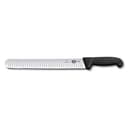
Victorinox Fibrox Pro 12" Granton Slicing Knife
Once the muscles are apart you are slicing two separate pieces, both of which want a long Granton blade in one pull.
$86.99 · View on AmazonSee knife picksPrice as of October 22, 2026. #ad How we’re funded
The board
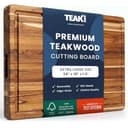
Teakhaus Carving Board with Juice Groove, XL 24" x 18"
Separating a packer needs more board than a kitchen usually owns, and a juice groove you will be grateful for.
$119.99 · View on AmazonSee board picksPrice as of October 22, 2026. #ad How we’re funded
The gloves
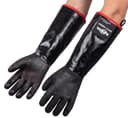
RAPICCA 932°F BBQ Grill Gloves, 17"
If you separate after the cook you are opening a seam in fifteen pounds of 200°F meat with your hands.
See glove picks
Frequently asked questions
Where is the seam between the point and the flat?
It is a broad layer of hard fat running diagonally through the brisket, thickest at the end where the point sits highest and tapering as it travels toward the thin end of the flat. Crucially it is not level — it rises as it runs, which is why cutting horizontally through the brisket does not follow it. Work fat side down so you can see the fat band from the meat side, and feel for where the point's underside firmness changes.
Should you separate the point and flat before or after cooking?
After, for most purposes. Cooking the packer whole keeps the point sitting over the flat, where its rendering fat shields the leaner muscle from direct heat — that protection is a real part of why whole-packer brisket eats better than a flat cooked alone. Separate before cooking only when you have a specific reason: a grate too small for a whole packer, or a deliberate plan to cook the two muscles differently.
When do you separate for burnt ends?
Once the whole packer has finished the main cook and the probe slides freely — typically around 195-203°F — rather than partway through. Separate then, cube the point, and return the cubes to the smoker. Separating early to get burnt ends sooner means the flat loses the point's protection for the longest and most punishing part of the cook, and you generally end up with better burnt ends and a worse flat.
What knife do you use to separate a brisket?
A flexible boning knife is the right tool — a five or six inch blade with enough flex to ride the contour of the seam. A long slicing knife is too stiff and too long to steer through fat, and a stiff chef's knife will cut straight lines through a seam that is not straight. That said, on a cooked brisket your hands do most of the work and the knife is only freeing the last connections.
Do the point and flat have different grain directions?
Yes, and it is the single most useful thing to notice while they are apart. The grain of the two muscles runs at roughly a right angle to each other, which is why a whole packer cannot be sliced correctly in one direction across its whole length. Note the direction on each muscle before cooking, or immediately after separating, because a finished bark hides the grain almost completely and slicing with it produces stringy, chewy meat from a perfectly cooked brisket.
Is it worth separating if I am not making burnt ends?
Often, yes — mainly for slicing. Handling two separate muscles, each with a known grain direction, is far easier than trying to slice a whole packer correctly through the region where the grains change. Many cooks separate after the rest purely so they can turn each piece to the board independently and cut every slice across the grain. It costs nothing at that stage and it improves every slice you serve.
Sources
- USDA FSIS — Beef From Farm to Table — USDA on safe handling, cooking and resting of beef, including brisket (accessed July 22, 2026)
- ThermoWorks — Smoked Brisket: A How-To Primer — ThermoWorks on brisket internal temperature, probe tenderness and the stall (accessed July 22, 2026)
Keep reading
Brisket Point vs Flat
What each muscle is, how they cook differently, and what each is best for.
Read the comparisonBrisket Burnt Ends
The main reason to separate mid-cook, done properly.
Read the guideSlicing a Brisket
Why the grain direction you noted here decides every slice.
Read the guideTrimming a Brisket
The job immediately before this one, if you are separating raw.
Read the guide