How to Smoke a Brisket on a Gas Grill
It works, and the result is better than you would guess — but a gas grill has two hard limits a smoker does not, and knowing what they are before you start is the difference between a decent brisket and a long disappointing Saturday.
How this is funded: we earn a commission if you buy through our links, at no extra cost to you. It never changes which product we recommend, and we’ll tell you plainly when we’d skip one. Full disclosure.
Yes, and the setup is simple: light one burner at one end on its lowest setting, put the brisket at the far end, and add smoke from a lit pellet tube or a foil packet of wood chips. You are turning the grill into a convection oven with a smoke source, which is more or less what an electric cabinet smokeris, and the result is comparable — decent bark, real tenderness, a lighter smoke flavor than a fire would give you.
Two limits are worth knowing before you commit a fourteen-pound brisket to this, because neither is something you can fix mid-cook.
The first is temperature. Most gas grills will not hold 225°F with a burner lit. One burner on its minimum setting under a closed lid is often 275°F or more at the far end of the grate, and the usual workaround — propping the lid open an inch — trades the temperature you wanted for instability and a lot of wasted propane. The better plan is to find out what your grill actually holds, accept it, and treat the cook as a deliberate hot-and-fast one rather than fighting the machine all day.
The second is that propane makes no smoke. Burning gas cleanly produces almost none of the aromatic compounds we taste as barbecue, and none of the nitric oxide that makes a smoke ring. Whatever smoke the brisket gets, you are supplying from a separate source. That is entirely doable, and it is the single most important addition to this cook.
One more thing to say plainly: we carry no gas grill in our product registry, so this page recommends no cooker. It is written for the grill you already own.
Setting the grill up
One burner, at one end, on minimum. Everything else off. If your grill has three burners, use the one on the far left or far right. If it has two, you have less separation to work with and should expect a hotter cook. If it has a dedicated side burner or a sear station, ignore those entirely.
Find the real temperature before the meat goes near it. Close the lid, clip a probe at the grate where the brisket will actually sit, and let it settle for fifteen or twenty minutes. The number you get is the temperature you are cooking at, and it has very little to do with the dome gauge — which reads the air directly over the burners, at the top of the lid, in the hottest part of the grill. On an indirect setup the dome gauge is not slightly wrong, it is measuring somewhere else.
Use a drip pan, and consider a water pan.Most gas grills funnel grease toward the center or the back, not toward the cold end, so put a tray under the brisket. And a pan of water between the lit burner and the meat is more useful here than on most cookers — a gas grill is a thin, poorly insulated box with an uneven heat source, which is exactly the situation a water pan improves. Our water-pan guide is clear that it will not add moisture to the meat; what it will do is even out the heat the brisket sees.
Fat side toward the heat.Not up, not down — toward the lit burner. The rule from our fat-side page is to put the fat between the meat and your heat source, and on a sideways-indirect grill the strongest radiant heat is coming horizontally.
Where the smoke comes from
A pellet smoke tube is the better option.Light it, let it flame for a minute, blow it out so it smolders, and stand it on the grate near the lit burner. It burns independently of your burners, runs for hours, and — the part that matters most on a gas grill — you can relight or top it up without moving the brisket or changing the burner setting. Our smoke tube roundup makes the case that run time matters less than the listings suggest, because smoke only deposits before the wrap anyway.
A foil packet of chips is the free option. A double layer of foil, a handful of wood chips, sealed into a flat parcel with four or five holes punched in the top, laid directly on the flame tamer over the lit burner. It will start producing smoke in ten or fifteen minutes and run for perhaps forty-five. You will be replacing it several times, and each replacement means opening the lid.
Chips, not chunks. This is the one place a gas grill differs from every other cooker we write about. A chunkneeds a bed of embers to keep it smoldering for hours; a gas burner will either ignite it or ignore it. Chips are the right fuel size for a packet, and pellets are the right fuel for a tube. Which species matters less than people think — our post oak against pecan comparison covers the realistic choices for beef.
And stop supplying smoke at the wrap.Once the brisket is wrapped, smoke stops depositing entirely — our smoke-flavor page is explicit about it. Continuing to burn chips after that point is pure waste.
Running the cook
Rotate the brisket end for end every couple of hours. A gas grill is less even than almost any purpose-built smoker, because the heat is coming from one side rather than being circulated around a chamber. The end nearer the burner will run hotter all day. If you do nothing about it you will get the problem our uneven-cook page describes.
Watch the grate probe, not the clock and not the lid. Our time-and-temperature figures assume a stable chamber; a gas grill at the mercy of wind and ambient temperature is less stable than that. Wind in particular matters more here than on an insulated cooker, because you are heating a thin box with a small flame.
Expect the stall, and do not panic about it. The stall is evaporative cooling and it happens on a gas grill exactly as it does anywhere else. The wrap is what ends it.
Have a spare propane tank. A burner on low for twelve hours is a long steady draw and it is entirely possible to run a tank dry mid-cook. Check or weigh the tank before you start rather than discovering the answer at hour nine, in the dark.
Do not leave it running overnight. This is the one firm instruction on the page. An unattended propane grill with a live gas supply, hose and regulator is a different risk from a charcoal smoker going out, and brisket is not worth it. Start early and plan the handover below.
The oven handover, which is not cheating
The most useful thing on this page: once the brisket is wrapped, move it to the kitchen oven.
The logic is airtight. After the wrap the brisket takes on no further smoke, so the only thing the cooker is supplying is a steady temperature — and a domestic oven holds a steady temperature far better than a propane grill in a breeze, at a fraction of the running cost, with no tank to run dry and nothing to leave burning outside while you sleep. Our oven-finish guide covers the handover properly.
That splits the cook sensibly: the gas grill does the part only it can do — smoke on a cold damp surface, bark forming in dry heat — and the oven does the part where the cooker’s identity stops mattering.
What you actually get, honestly
| Gas grill | Charcoal or offset | |
|---|---|---|
| Tenderness | The same — this is time and temperature | The same |
| Bark | Good, with a dry early phase and enough rotation | Better, more evenly |
| Smoke flavor | Noticeably lighter, even with a tube | Full |
| Smoke ring | Thin or none | Pronounced |
| Lowest stable temperature | Usually 250–275°F | 225°F or below |
| Evenness | Poor — rotate every couple of hours | Good to very good |
| Effort | Low, apart from the rotation and the chip packets | Higher on an offset, similar on a pellet grill |
This table is our editorial comparison, reasoned from how each cooker supplies heat and smoke. It is not a measurement, and no part of it comes from a test — our methodology page sets out exactly what we do and do not do.
The summary: a gas grill brisket will be tender, because tenderness is a matter of time and temperature and a gas grill supplies both perfectly well. What it will not be is smoky in the way a stick-burner brisket is smoky. That is a real difference and worth naming rather than glossing over — but it is the same compromise an electric cabinet makes, and plenty of people are happy with it. If you find you are not, the cheapest real smoker costs less than most people expect.
The three things this cook needs that a gas grill does not have
A gas grill supplies heat and a lid. For brisket you have to add a smoke source and real temperature measurement, because neither comes in the box. We carry no gas grill in our product registry, so there is no cooker pick on this page — these are the three additions that turn the one you own into a smoker. Prices are live and refresh daily.
The smoke source, because propane is not one
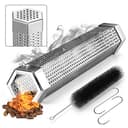
Realcook 12" Hexagonal Pellet Smoker Tube
A gas grill has no fire to put wood on, so smoke has to come from somewhere else. A lit pellet tube sitting on the grate beside the brisket is the most controllable option and the only one you can top up without disturbing the cook.
$9.99 · View on AmazonSee smoke tube picksPrice as of October 20, 2026. #ad How we’re funded
The cheaper smoke source
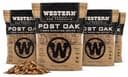
Western Post Oak BBQ Smoking Wood Chips
Chips in a sealed foil packet with a few holes punched in it, laid over the lit burner, is the no-equipment version. Chips rather than chunks: there is no bed of coals here to keep a chunk smoldering.
$27.49 · View on AmazonSee wood picksPrice as of October 20, 2026. #ad How we’re funded
Because the lid gauge is lying to you
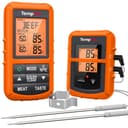
TempPro TempSync CORE TP20B Wireless Dual-Probe Thermometer (the ThermoPro TP20)
A gas grill's dome thermometer reads the air under the lid directly over the burners, which on an indirect setup is nowhere near the brisket. One probe at the grate beside the meat and one in the meat is the whole control system.
See thermometer picks
Frequently asked questions
Can you smoke a brisket on a gas grill?
Yes, and it works better than most people expect. Light one burner at one end on its lowest setting, put the brisket at the far end, add smoke from a pellet tube or a foil packet of wood chips, and run the grill as an oven with a smoke source. The two limits to plan around are that most gas grills will not hold 225°F with a burner lit — 250 to 275°F is realistic — and that propane produces no smoke of its own, so you have to supply it.
What temperature should you smoke a brisket at on a gas grill?
Whatever the lowest stable temperature your grill will actually hold is, and for most grills that is 250 to 275°F rather than the 225°F a dedicated smoker manages. A single burner on its minimum setting under a closed lid is often more heat than a brisket wants, and fighting it by propping the lid open costs you temperature stability and fuel. The better answer is to accept the higher number and treat it as a deliberate hot-and-fast cook.
How do you get smoke flavor on a gas grill?
Two options. A pellet smoke tube, lit and placed on the grate, is the more controllable: it runs for hours, you can top it up without disturbing the brisket, and it does not depend on where your burners are. The cheaper option is wood chips sealed in a foil packet with a few holes punched in it, laid directly over the lit burner — chips rather than chunks, because there is no bed of coals to keep a chunk smoldering. Expect a lighter smoke flavor than a charcoal or stick cook either way.
Will you get a smoke ring on a gas grill?
A thin one at best, and often none. The ring forms when nitric oxide from burning wood reacts with myoglobin at a cool, damp meat surface, and a gas burner produces very little of it. A lit smoke tube improves this because it is genuinely burning wood, but the quantity is small compared with a firebox. Keep the brisket cold going on and the surface damp to give yourself the best chance, and judge the result on tenderness and bark rather than on a pink band.
How much propane does smoking a brisket use?
More than a tank holds, in some cases, and it is the logistical point that catches people out. A single burner on low for twelve hours is a long, steady draw, and running out at hour nine in the dark is a genuinely bad outcome. Have a full spare tank before you start, and weigh or check the one on the grill rather than guessing. This is also the strongest argument for finishing the wrapped brisket in the kitchen oven, which costs a fraction as much to run.
Should you use a water pan on a gas grill?
It is more useful here than on most cookers, for the same reason it helps on a thin-steel offset: a gas grill is a poorly insulated box with an uneven heat source, and a pan of water placed between the lit burner and the brisket acts as both a radiant shield and a thermal buffer. It will not add moisture to the meat — nothing does — but it will even out the heat the brisket sees. Our water-pan guide covers what the pan does and does not do by cooker type.
Can you leave a gas grill on low overnight for a brisket?
We would not, and this is the one place on this page where we are unambiguous. A propane grill running unattended overnight is a different risk proposition from a charcoal smoker: you have a live gas supply, a regulator and a hose involved, and the failure modes are worse than a fire going out. Start early in the morning instead and plan to finish the wrapped brisket in the oven, or read our overnight guide and use a cooker designed for it.
Is it better to just use the oven?
For the second half of the cook, genuinely yes. Once a brisket is wrapped it is no longer taking on smoke — the wrap stops smoke deposition entirely — so everything after that point is simply a question of holding a steady temperature, and an oven does that better and far more cheaply than propane. The gas grill's contribution is the first phase, where the smoke source and the dry surface are doing the work. Use the grill for that, then move it inside.
Sources
- USDA FSIS — Smoking Meat and Poultry — USDA on safe smoking practices, thermometer use and approved smoker materials (accessed July 22, 2026)
- USDA FSIS — Grilling Food Safely — USDA guidance on safe outdoor cooking, thawing and holding (accessed July 22, 2026)
- USDA FSIS — "Danger Zone" (40°F - 140°F) — USDA: bacteria multiply fastest between 40°F and 140°F — the food-safety basis for the 4-hour rule (accessed July 22, 2026)
- ThermoWorks — Smoked Brisket: A How-To Primer — ThermoWorks on brisket internal temperature, probe tenderness and the stall (accessed July 22, 2026)
Keep reading
How to Smoke Brisket
The full method, step by step — everything on this page is an adaptation of it.
Read the pillarBrisket on a Charcoal Grill
The same improvisation with a fire instead of a burner, and a much better result.
Read the guideFinishing a Brisket in the Oven
The post-wrap handover this page recommends, done properly.
Read the guideBest Smoke Tube for Brisket
The accessory that makes a gas grill into a smoker, and why run time matters less than it looks.
See the picksBest Budget Smoker for Brisket
What a real smoker costs, if this turns out to be something you want to do again.
See the picksDo You Need a Water Pan?
More useful on a gas grill than on most cookers, and for a specific reason.
Read the guide