Should Brisket Be Room Temperature Before Smoking?
No. Put it on cold, straight from the refrigerator. The habit of resting meat on the counter first comes from steak, where it is also mostly a myth — on a twelve-hour cook it saves you almost nothing, costs you smoke flavor, and breaks a food-safety rule for no return.
How this is funded: we earn a commission if you buy through our links, at no extra cost to you. It never changes which product we recommend, and we’ll tell you plainly when we’d skip one. Full disclosure.
Take the brisket out of the refrigerator, trim it, season it, and put it on the cooker. Do not leave it on the counter for an hour first. The practice comes from steak cookery, where it is already a weak idea, and transplanted onto a twelve-hour brisket cook it is simply wrong: it changes the finish time by a rounding error, it costs you smoke flavor during the hours when the brisket is most receptive to it, it makes the fat harder to trim, and it starts the clock on a food-safety rule you are getting nothing in exchange for.
Why it saves almost no time
Do the arithmetic once and the argument is finished. A brisket out of the refrigerator is somewhere around 38°F. You are taking it to roughly 203°F, so that is about 165 degrees of climb. An hour on a counter might move a nine-pound brisket’s interior a few degrees — large dense objects warm slowly, which is the whole reason a brisket takes twelve hours in the first place. You have shaved a tiny fraction off a climb whose total duration varies by hours between one brisket and another.
And that variation is the real point. Brisket cook time is not governed by starting temperature; it is governed by the stall— evaporative cooling that can park a brisket at 150-170°F for hours — and by when its particular collagen decides to give up. Two identical-looking packers from the same case can finish two hours apart. Trying to manage a cook that variable by pre-warming the meat is like setting your watch by a sundial.
The correct way to handle the uncertainty is the one in our start-time guide: work backwards from when you want to eat, start earlier than you need to, and absorb the slack in a long hold at the end. A brisket holds beautifully for hours. That is your buffer, not an hour on the counter.
Why a cold start is actively better
Cold, damp surfaces take smoke. This is the strongest argument and it is the one nobody mentions. Smoke compounds deposit on a meat surface that is cool and moist; as the surface warms and dries and the bark sets, deposition slows sharply, and it stops altogether once you wrap the brisket. So the first few hours are where almost all of your smoke flavor comes from — which is why our smoke tube page argues that a three-to-five hour tube covers essentially the whole useful window. Putting the brisket on cold extends that window. Putting it on warm shortens it.
The smoke ring forms in the cool outer layer. Nitric oxide from the fire reacts with myoglobin near the surface, and the reaction stops once that layer heats through. A colder brisket stays in the receptive range for longer. Our smoke ring pageis deliberately dismissive about chasing the ring — it is cosmetic, and plenty of superb brisket has a thin one — but if you like it, a cold start is free.
Cold fat trims properly. The most practical benefit. Firm fat cuts cleanly; warm fat smears along the blade, clogs it, and makes it very hard to judge how much you are taking off. Our trimming guideis a twenty-minute job that changes how the whole cook renders, and it is easier on a cold brisket. Some people put the packer in the freezer for twenty or thirty minutes before trimming for exactly this reason — the opposite of letting it warm up. A thin flexible boning knife is the right tool, and it is at its best on firm fat.
The food-safety rule, plainly
The USDA’s limit for perishable food at room temperature is 2 hours, and 1 hour when the surrounding temperature is above 90°F. The reason is the danger zone— bacteria multiply fastest between 40°F and 140°F — and a brisket left out long enough to genuinely reach room temperature is well inside it.
Two things worth knowing about how that applies here. First, the limit is cumulative: the twenty minutes you spend trimming, the time it waits seasoned while the cooker comes up, and anything else it spends out of the refrigerator all count toward the same two hours. In practice a cold-start cook never gets close, and a deliberate warm-up starts eating into it before you have lit anything.
Second, the long low-temperature cook that follows is not the problem people sometimes assume. A brisket spends hours below 145°F and that is fine, because what matters is the cumulative lethality of time at temperature rather than any single instant — the principle the USDA sets out in its cooking guideline for meat and poultry. What that reasoning does notcover is the meat sitting at 70°F on a counter beforehand. Starting from a safe cold surface is part of why a brisket cook works.
Where the myth comes from, and why it does not travel
The steak version of this advice has a real argument behind it, even if it is overstated. On a thick steak cooked hot and fast, the worry is a gray overcooked band between the sear and a cold center, and a warmer starting temperature theoretically narrows it. Even there the effect of an hour on the counter is small, because a steak does not warm through in an hour either.
None of that transfers to brisket. There is no sear. There is no thin cut. There is no gradient to protect, because the entire brisket is going to around 203°F over many hours — the finished article is uniformly cooked through by design. The only thing a brisket shares with the steak case is the shape of the advice, which is how it survived.
What the question usually turns out to be
| What you were actually asking | The answer |
|---|---|
| “Can I cook a brisket straight from frozen?” | No — thaw it properly first, and the only safe methods are the refrigerator, cold water changed every 30 minutes, or the microwave. A whole packer takes days in the fridge. |
| “Is my brisket thawed all the way through?” | Probe the thickest part with an instant-read. A partly frozen core will cook unevenly, which is a real problem rather than an imagined one. |
| “Should I season it now or the night before?” | Either works, and both wait in the refrigerator. Overnight gives the salt time to work into the surface. |
| “Will a cold brisket wreck my cooker’s temperature?” | It will drop it and the cooker will recover. Preheat longer and let it stabilize before the meat goes on — do not warm the meat to spare the cooker. |
| “How do I make the cook finish on time?” | Start earlier and hold at the end. Nothing you do at the front of the cook controls a stall you have not met yet. |
Safe thawing methods and the 2-hour room-temperature limit are the USDA’s, cited below. The rest of this table is our reading of which question people are usually asking when they ask this one.
The one legitimate version of the worry
There is a real effect hiding behind the myth, and it belongs to the cooker rather than the meat. A fourteen-pound block of refrigerator-cold beef is a serious heat sink, and dropping it into a lightly built cooker will pull the chamber temperature down and keep it there for a while. On a thin-steel offset in winter that can mean a long, sluggish first hour — which is exactly the effect our cold-weather guide tells you to preheat around, and the reason two briskets at once takes longer than the arithmetic suggests.
The fix is still not the counter. Preheat the cooker thoroughly and let it hold your target for a while before the meat goes on, so the metal is saturated with heat rather than just the air inside it. That solves the problem at the cooker end, where it belongs, instead of trading a cooker inconvenience for a food-safety risk and a weaker smoke window.
The two tools a cold start actually implies
Nothing on this page needs buying to be true. These are the two things that follow from it — you trim a cold brisket, and you verify temperatures rather than estimating them. Prices are live and refresh daily.
Because you trim it cold
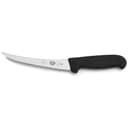
Victorinox Fibrox Pro 6" Curved Flexible Boning Knife
The practical consequence of the answer on this page: cold fat is firm fat, and firm fat is what a thin flexible boning knife can actually cut cleanly. Warm fat smears.
See trimming knivesBecause you check, not guess
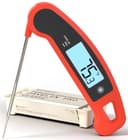
Lavatools Javelin PRO Duo Instant-Read Thermometer
The only way to know whether a brisket has been sitting out too long is to read its surface and its refrigerator. An instant-read settles both in two seconds.
$43.99 · View on AmazonRead the reviewPrice as of October 20, 2026. #ad How we’re funded
Frequently asked questions
Should I let a brisket come to room temperature before smoking it?
No. Take it from the refrigerator, trim it, season it and put it on the cooker. On a twelve-hour cook the hour or two you would spend warming it on the counter changes the finish time by a small fraction of the total, and a brisket left out long enough to genuinely reach room temperature has broken the USDA's 2-hour rule for perishable food. You also give up the thing a cold surface does for you, which is take smoke.
How long can a raw brisket sit out at room temperature?
Two hours, per the USDA, and one hour if the ambient temperature is above 90°F — which is a realistic number on a summer morning next to a lit smoker. That limit covers everything cumulatively: the time it spends on the counter while you trim it, the time it sits seasoned waiting for the cooker to come up, and any time in a warm kitchen. Trim it cold, season it, and get it on, and you will never come close to the limit.
Does a cold brisket take longer to cook?
Marginally, and nothing like as much as people assume. The difference between a brisket at 38°F and one at 55°F is a fraction of the total temperature climb to around 203°F, and it is absorbed in the first hour or two of a cook whose total length varies by hours anyway depending on the individual brisket. Cook time on a brisket is governed by the stall and by when the connective tissue gives up, not by the starting temperature. Plan the cook off a finish time with a hold at the end, which is what our start-time guide is for.
Why do people say to let meat rest at room temperature first?
It comes from steak, where the argument is that a cold center and a seared crust mean a gray overcooked band in between — and even there the effect of an hour on the counter is small, because a steak barely warms up through in that time. Transplanted to brisket it makes no sense at all: there is no sear, no thin cut, and no risk of an overcooked band, because the entire brisket is going to around 203°F over twelve hours regardless of what temperature it started at.
Does a cold brisket give a better smoke ring?
It helps, yes. The smoke ring forms when nitric oxide from the fire reacts with myoglobin near the surface of the meat, and that reaction happens in the cool outer layer before the meat heats through — so a colder surface stays receptive for longer. A cold, damp surface also takes smoke compounds better in general, which matters more than the ring does. That said, the ring is cosmetic and we deliberately de-emphasize it; the flavor benefit of a cold start is the real argument.
Should I trim the brisket cold or warm?
Cold, firmly. Cold fat is firm and cuts cleanly; fat that has warmed up is soft and smears across the blade, which makes it much harder to see what you are doing and to take an even layer off. Most people find trimming a brisket straight out of the refrigerator noticeably easier, and some put it in the freezer for twenty or thirty minutes first for exactly that reason. A thin flexible boning knife is the tool, and it works far better on firm fat.
What about seasoning — should the brisket warm up after I rub it?
No warming needed, and the timing question is a different one. You can season a brisket and put it straight on, or season it and leave it in the refrigerator overnight so the salt has time to work into the surface — our seasoning guide covers the trade. Either way the brisket stays in the refrigerator rather than on the counter. If you seasoned it the night before, it goes from the fridge to the cooker in the morning.
Is there any case for taking a brisket out early?
One, and it is about the cooker rather than the meat: a very large cold mass going into a small or lightly built cooker will drag the chamber temperature down a long way and take a while to recover, and that effect is worse in cold weather. Even then the answer is to preheat the cooker thoroughly and let it stabilize rather than to warm the brisket on the counter — you are solving a cooker problem by creating a food-safety problem. Give the cooker longer, not the brisket.
Sources
- USDA FSIS — "Danger Zone" (40°F - 140°F) — USDA: bacteria multiply fastest between 40°F and 140°F — the food-safety basis for the 4-hour rule (accessed July 22, 2026)
- USDA FSIS — Beef From Farm to Table — USDA on safe handling, cooking and resting of beef, including brisket (accessed July 22, 2026)
- USDA FSIS — Smoking Meat and Poultry — USDA on safe smoking practices, thermometer use and approved smoker materials (accessed July 22, 2026)
- ThermoWorks — Smoked Brisket: A How-To Primer — ThermoWorks on brisket internal temperature, probe tenderness and the stall (accessed July 22, 2026)
Keep reading
Trimming a Brisket
The job cold fat makes easier, and the one where twenty minutes changes the whole cook.
Read the guideSeasoning a Brisket
Whether to season the night before or on the day — and why either way it waits in the fridge.
Read the guideHow to Thaw a Brisket
The related question people usually mean, and the only three methods the USDA considers safe.
Read the guideHow to Get a Smoke Ring
The chemistry a cold surface helps with, and why we still tell you not to chase it.
Read the guideWhen to Start a Brisket
Plan the cook backwards from dinner instead of trying to shave an hour off the front.
Plan the cookBrisket Time & Temperature
What actually governs how long a brisket takes, which is not its starting temperature.
Read the guide