Brisket Troubleshooting
Something went wrong and you want to know why. Tough, dry, overcooked, or just not what you hoped — the honest diagnosis for each, what to do about it now, and how to stop it happening next time.
Brisket goes wrong in a small number of ways, and almost all of them trace back to one of three things: it came off too early, it never got a proper rest, or it was sliced badly. That is genuinely most of it. The cut is difficult because it is unforgiving of impatience, not because it is mysterious — and once you can name what went wrong, the fix is usually obvious and the prevention is usually free.
The most common single failure is pulling it too soon. Brisket is dense with connective tissue that needs hours above roughly 190°F to convert into gelatin, and a brisket taken off at a number rather than at a feel will be firm and chewy no matter how good the smoke was. That is the “tough” problem, and it is entirely preventable by probing rather than reading.
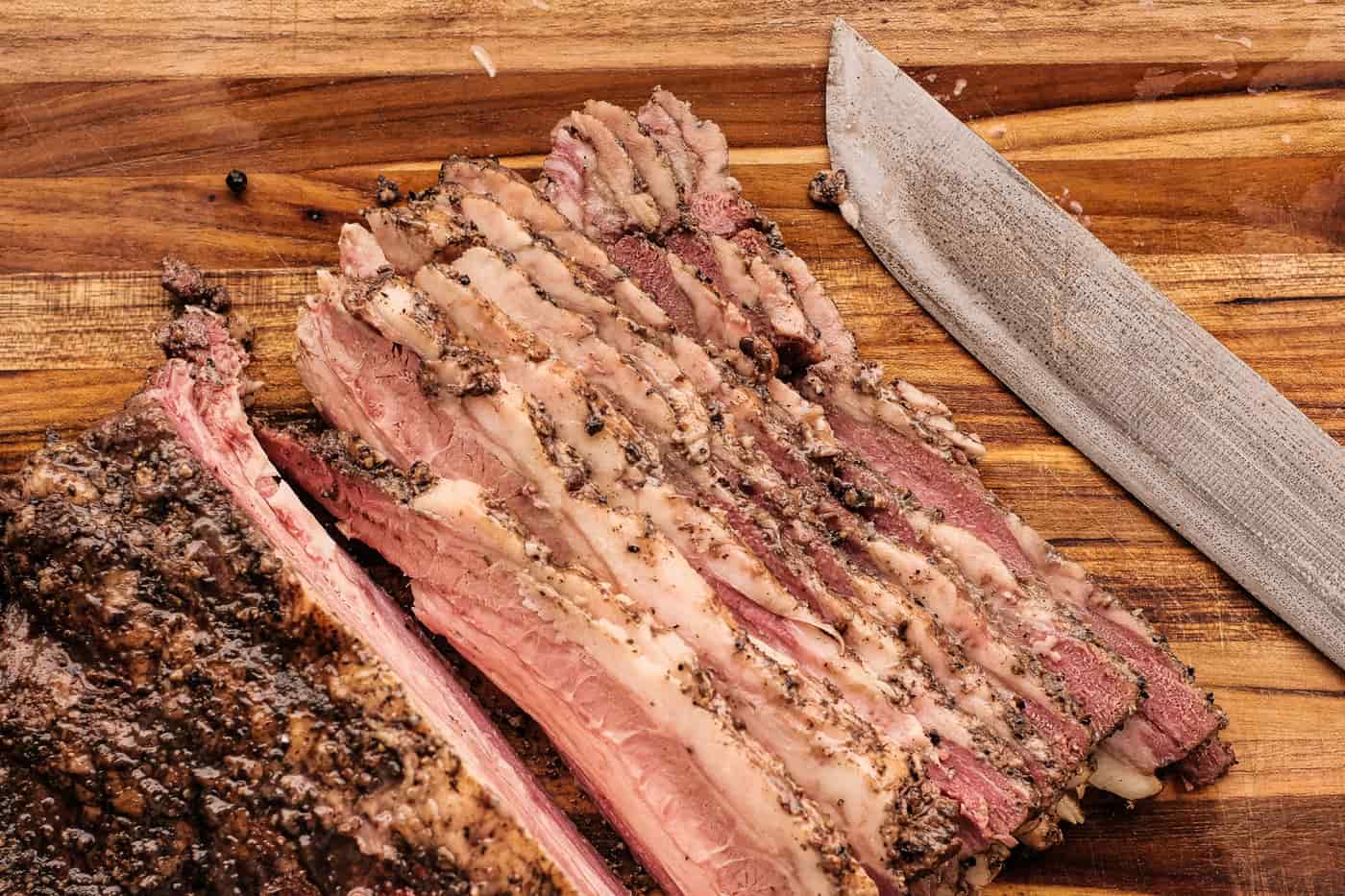
The second most common is dryness in the flat, which is more interesting than it sounds because dry brisket is often not a moisture problem at all. A brisket pulled before its fat and collagen finished rendering eats dry even though it lost less moisture than a properly finished one. So does a well-cooked brisket that was sliced too thick, or sliced with the grain, or rested for ten minutes instead of an hour. Adding moisture — injecting, spritzing, wrapping in foil — does not fix any of those, which is why people who chase moisture directly often stay stuck.
The third is timing: the brisket that finishes four hours before dinner, or two hours after it. Brisket does not run to schedule and never has. The professional answer is not better prediction but a planned hold — finish early on purpose, keep it safely hot, and serve when you intended. A brisket held for two to four hours is usually better than one sliced straight off the pit. There is a limit to that, though, and it is the one people push past: leaving a brisket in a cooler overnight is a different proposition from a four-hour hold, because an unheated box cannot keep the meat above 140°F for eight hours and cannot tell you when it stopped.
The pages below take each symptom in turn. Each one starts with the honest diagnosis, because the wrong diagnosis is what keeps a problem recurring, then covers what to do with the brisket in front of you and what to change on the next cook. Where a problem is genuinely unfixable after the fact — and one or two are — we say so rather than selling you a rescue that does not work.
One general note before you start diagnosing. A surprising share of brisket problems turn out to be measurement problems. Factory dome thermometers read air near the lid rather than at grate level and are frequently inaccurate out of the box, and a cheap instant-read that takes eight seconds to settle will have you opening the smoker for longer and trusting a number that never stabilized. If you have had two briskets go wrong in the same way, verify your thermometers before you change your technique — our instant-read roundup and leave-in probe roundup cover what actually reads accurately.
Everything in Troubleshooting
Why Is My Brisket Tough?
Nine times out of ten it came off the smoker too early. How to tell undercooked from overcooked, and why the number on the probe misled you.
Why Is My Brisket Dry?
Dry brisket usually isn't a moisture problem — it's a rendering, resting or slicing problem. The five real causes, ranked by how often they're the culprit.
How to Fix a Dry Brisket
It's already sliced and it's dry. Four rescues that genuinely work, in order of how much of the brisket they save.
Can You Overcook a Brisket?
Yes — and it looks nothing like overcooked steak. What an overcooked brisket actually does, and the window between perfect and mush.
Brisket Fat Side Up or Down?
The argument that will not die. The answer depends entirely on where your heat comes from — and it matters less than almost anything else you'll do.
How to Hold and Reheat Brisket
Brisket done four hours early, or leftovers from yesterday. The safe hold, the reheat that keeps it moist, and the temperatures the USDA actually sets.
Why Does My Brisket Taste Bitter?
Acrid, ashtray, sooty — that flavor is creosote from a smoldering fire, and no amount of sauce hides it. What causes it and how to stop it.
Why Is My Brisket Bark Soft?
Bark that went soggy in the wrap, never set at all, or turned to paste in the cooler. Three different failures with three different fixes.
Why Is My Brisket Too Salty?
Almost always the rub and the injection doubling up, or a commercial rub used at Texas-style quantities. What to do now, and the maths for next time.
Why Does My Brisket Not Taste Smoky?
The classic pellet-grill complaint, and it is not in your head. Why efficient fires make less flavor, and the five things that actually add smoke.
Why Didn't My Brisket Fat Render?
Chewy white fat in a finished brisket is the commonest reason a cook that hit 203°F still eats badly. It is nearly always the same mistake, made two steps earlier.
Why Is My Brisket Cooking Unevenly?
The flat is done and the point is nowhere near, or one end is dry while the other is still tough. Four causes, and how to tell which one is yours.
Is My Brisket Spoiled?
A sour smell out of the cryovac, a gray patch, a date that has passed. What is normal, what is not, and the food-safety rules that actually decide it.