The Snake Method for Brisket
A line of briquettes laid two wide and two high around the edge of a charcoal grate, lit at one end. It is a fuse: it burns at a rate the geometry sets, which means hours of steady heat from a cooker with no thermostat at all.
How this is funded: we earn a commission if you buy through our links, at no extra cost to you. It never changes which product we recommend, and we’ll tell you plainly when we’d skip one. Full disclosure.
The snake method is a charcoal fuse: briquettes laid two wide and two high around the edge of the grate, lit at one end only, burning slowly along the line. On a kettle grill it is the single best way to hold a low temperature for hours without a thermostat, and the fuel is not optional — it has to be uniform briquettes like Kingsford Original, never lump.
It is also a method with an honest limit, which most pages about it skip. The fire is excellent; the cooker it runs in is usually too small for a full packer. We will get to that.
Why it works: the geometry is the thermostat
A charcoal cooker without electronics has exactly one lever on temperature — how much fuel is burning at once. A pile of lit charcoal burns hot and then dies. The snake changes the question from “how do I stop this fire getting too hot” to “how fast does the fire travel.”
Because only the head of the snake is alight, the amount of fuel combusting at any moment is roughly constant — a few briquettes. The burn front advances into the next few, those light, the ones behind go to ash. The heat output is therefore set by the cross-section of the snake rather than by the total amount of charcoal you loaded.
That is the insight worth carrying away, and it is what lets you tune the method:
Width and height set the temperature.Two wide and two high is the standard because it runs in roughly the right range for brisket. One wide and two high runs cooler and is more fragile — it can go out. Three wide runs hotter. You change the temperature by rebuilding the snake, not by choking the vents.
Length sets the duration.How far around the grate the snake goes decides how long the cook can run. More of the circle equals more hours. We publish no hours-per-foot figure, because no charcoal maker publishes a burn rate and any number we printed would be somebody’s afternoon rather than a specification.
Why it has to be briquettes
This is the part people get wrong and then blame the method for. A snake is a chain of identical links: each briquette has to light the next one at a predictable rate, which only works if they are all the same size, shape and density.
Briquettes are extruded, so they are. Lump charcoal is broken-up carbonized wood, so it is not — a bag contains pieces from fist-sized down to splinters. Build a snake out of that and you get two failure modes at once: gaps where a small piece burns out before it reaches the next big one and the snake stalls, and dense clusters where several pieces catch together and the temperature spikes.
Kingsford’s uniform size is exactly why its own pro line names Minion and snake burns as the use case, and it is also the cheapest fuel per hour of cook time in our registry. The trade is published too: briquettes leave more ash than lump, so on a long cook plan to have somewhere for it to go. Where lump genuinely wins — heat, cleanliness, flavor arguments — is the subject of our lump versus briquettes comparison.
Laying it: the four decisions
| Decision | Standard answer | What changes if you deviate |
|---|---|---|
| Cross-section | Two wide, two high | Narrower runs cooler and risks going out; wider runs hotter and burns through sooner |
| How far round | About two-thirds of the perimeter | Shorter ends the cook sooner; a full circle leaves no cool side for the meat |
| Wood placement | Chunks on top, spaced along the first third | Buried chunks smolder without airflow; chunks along the whole snake smoke the meat after it has stopped taking smoke |
| How much to light | Only the head — a partial chimney | A full chimney lights a quarter of the snake at once: hot early, dead early |
These are the conventional settings for the technique as it is practiced, and the “standard answer” column is our editorial summary of it — not a manufacturer specification and not a figure we have measured. No charcoal maker publishes a burn rate, a snake geometry or an hours figure, which is why there is no time column in this table.
The two things that make or break it
The water pan. Put a foil pan of hot water in the empty center, under where the brisket will sit. It does two jobs: it blocks radiant heat coming off the coals, and it anchors the chamber temperature, because water cannot go above boiling no matter what the fire does. On a kettle running a snake this is the closest thing to a thermostat you have.
Vent discipline. Bottom intake partly open near the burning end, top exhaust positioned over the far, unlit end. That geometry pulls heat and smoke across the meat instead of straight up out of the lid. Then set it and leave it: let the cooker settle for twenty to thirty minutes before you touch a vent, and make one small adjustment rather than three large ones. A snake responds slowly, so an impatient cook will oscillate it badly.
And read the temperature at the grate, beside the meat, rather than from the lid gauge. A dome thermometer on a kettle reads the air at the top of the dome, which on a cooker with a fire banked at one side is not where your brisket is. Our instant-read versus leave-in page makes the case for the grate channel.
The honest limit: it is a kettle method, and a packer is long
Everything above is about the fire, and the fire is genuinely good. The constraint is the cooker.
A 22-inch kettle has a grate about 22 inches across. Once the snake occupies two-thirds of the perimeter, the usable cool-side area is a crescent, not a circle — and a trimmed full packer is commonly 20 to 24 inches long. The arithmetic does not work, and no amount of good fire management fixes it.
The three ways kettle cooks actually deal with this:
Cook a flat instead of a packer.The most common answer, and a good one — a flat fits, cooks faster, and has its own method guide because it needs slightly different handling.
Separate the point from the flat and cook them as two pieces, which fit the crescent far better and arguably want different finishing points anyway. See the separation guide.
Smoke on the kettle, finish in the oven. Run the snake for the smoke phase, then wrap and move the brisket indoors once it has taken all the smoke it is going to. Our oven-finish guide treats this as a legitimate technique rather than a cheat, which it is.
One last thing we will not pretend: a snake is a single-session fire. When the burn front reaches the end of the line, the cook is over. Adding briquettes ahead of a live front in a hot cooker in the dark is possible and unpleasant, which is why we would not plan an overnight brisket around this method. For that, you want a cooker whose fuel capacity is published.
The three things a snake needs
Nothing exotic — the snake method is a technique rather than a kit. But the fuel choice is not optional, and that is the one place where buying the wrong thing makes the method fail. Prices are live and refresh daily.
The fuel this method requires
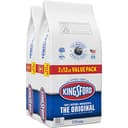
Kingsford Original Charcoal Briquettes
A snake only works if every piece of fuel is the same size and shape, because the burn front has to advance at a predictable rate. Briquettes are extruded to a uniform size - lump charcoal is not, which is why a lump snake burns erratically. Kingsford's own pro line names Minion and snake burns as what the uniform size is for, and it is the cheapest fuel per hour of cook here.
Lump vs briquettesThe smoke, placed along the snake
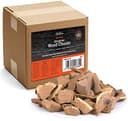
Camerons Products Oak Smoking Wood Chunks
Chunks rather than chips, spaced along the first third of the snake so each one catches as the burn front reaches it. Oak is the traditional Texas brisket wood and chunks smolder long enough for a low-and-slow cook - Camerons states kiln-dried natural hardwood with no additives, though it does not name the oak species.
$34.95 · View on AmazonSee wood picksPrice as of October 20, 2026. #ad How we’re funded
Lighting only the head of the snake
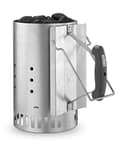
Weber Rapidfire Chimney Starter
You light a small number of briquettes, not a chimney-full, which is why a chimney with a cone-shaped bottom grate is useful - it lights a partial load evenly. Weber states a 7.5 in x 13 in barrel; it publishes no briquette capacity, which is the one figure you would want here.
$24.99 · View on AmazonSee chimney picksPrice as of October 20, 2026. #ad How we’re funded
Frequently asked questions
What is the snake method for brisket?
A way of arranging charcoal so it burns as a slow fuse instead of all at once. Briquettes are laid two abreast and two high in a line around the outer edge of the charcoal grate, wood chunks are spaced along the first part of the line, and only the first few briquettes are lit. The burn front then advances along the snake at a rate set by the geometry rather than by a thermostat, which gives hours of steady low heat on a cooker that has no electronics in it at all.
How long does a snake burn for?
It depends entirely on how long you made it and how wide you built it, which is the honest answer and the reason we publish no hours figure. A two-by-two snake around most of the perimeter of a 22-inch kettle is commonly reported to run a long single-session cook, and you extend it by using more of the circle or by adding briquettes ahead of the burn front mid-cook. We are not going to print a number of hours, because no charcoal maker publishes a burn rate and any figure would be someone's cook rather than a specification.
Can you use lump charcoal for the snake method?
Not well, and this is the one hard rule of the technique. A snake works because every piece of fuel is the same size, so the burn front advances predictably from one piece to the next. Lump charcoal is irregular by nature - fist-sized chunks next to splinters - so a lump snake has gaps that stall the burn and dense clusters that race ahead. Use briquettes, which are extruded to a uniform size. Our lump-versus-briquettes comparison covers where lump genuinely wins instead.
How many briquettes do you light to start a snake?
Only the head of it - a small handful, not a chimney-full. The exact count varies with your cooker and the weather, and we are deliberately not printing one, because the number that matters is 'enough to get the first few briquettes in the snake properly lit and no more.' The classic failure is tipping a full chimney onto the snake, which lights a quarter of it at once and gives you a hot fire that then dies early. Light a partial load, tip it on the end, and wait.
Is the snake method better than the Minion method?
They suit different cookers rather than one being better. A snake is a line, which suits a wide shallow cooker with a flat charcoal grate - a kettle grill. The Minion method is a ring or pile of unlit charcoal with lit coals dropped into the middle, which suits a deep charcoal basket or ring - a bullet smoker. Both do the same job: light a small part of the fuel and let the fire spread slowly. If you own a kettle, use the snake; if you own a bullet smoker, use Minion.
Does the snake method work for a full packer brisket?
The fire does; the grate often does not. The snake will hold a low temperature for a long cook perfectly well on a 22-inch kettle. The problem is geometry - a trimmed packer is commonly 20-24 inches long, and once the snake is occupying the perimeter the usable cool-side space is a fraction of the circle. Most kettle brisket cooks either cook a flat rather than a packer, separate the point from the flat, or finish wrapped in the oven. That is not a failure of the method, it is the size of the cooker.
Can you do the snake method overnight?
On a kettle, we would not plan to. A snake is a one-session fire - when the burn front reaches the end, the cook ends, and topping it up means opening a hot cooker and laying briquettes ahead of a live burn front in the dark. For an unattended overnight brisket, a bullet smoker with a full charcoal ring or a cooker with a published hopper time is a much better tool. Our overnight guide works through the whole question of which cookers are honest candidates for it.
Where should the lid vent go?
Over the far, unlit end of the snake, not over the fire. Air comes in at the bottom intake near the burning end, crosses the cooker, and leaves through the top vent - so putting the exhaust at the opposite end drags heat and smoke across the meat rather than straight up out of the lid. It is a small thing that makes a noticeable difference to how evenly a kettle cooks, and it costs nothing.
Sources
- USDA FSIS — Smoking Meat and Poultry — USDA on safe smoking practices, thermometer use and approved smoker materials (accessed July 22, 2026)
- USDA FSIS — "Danger Zone" (40°F - 140°F) — USDA: bacteria multiply fastest between 40°F and 140°F — the food-safety basis for the 4-hour rule (accessed July 22, 2026)
- Meathead's AmazingRibs.com — What Causes The BBQ Stall — Documentation (citing Greg Blonder's research) that the stall is evaporative cooling, not fat or collagen (accessed July 22, 2026)
Keep reading
Smoking Brisket on a Charcoal Grill
The full kettle method: snake and Minion burns, vent control, the water pan and the size problem.
Read the guideLump Charcoal vs Briquettes
Why a snake needs briquettes, and the cooks where lump is clearly the better fuel.
Read the comparisonBest Charcoal for Smoking
What to fill the snake with, ranked on what each bag's maker actually states.
See the picksLighting Charcoal Without a Chimney
Five methods for lighting the head of a snake when you have no chimney starter.
Read the guideBrisket Fire Management
Clean fire and thin blue smoke - the principles a snake is one expression of.
Read the guideHow to Smoke a Brisket Flat
The cut that actually fits a kettle once the snake has taken the perimeter.
Read the guide