Smoking Brisket in Cold Weather
Cold does not change what a brisket needs. It changes how much fuel and how much time it takes to give it to it — and it introduces one genuine enemy, which is wind rather than temperature.
How this is funded: we earn a commission if you buy through our links, at no extra cost to you. It never changes which product we recommend, and we’ll tell you plainly when we’d skip one. Full disclosure.
Cold weather does not change what a brisket needs. It changes the cost of providing it. The targets are identical — a steady 225 to 275°F in the chamber, probe-tender somewhere around 200 to 205°F, the same wrap decision at the same point — and every adjustment below is about input rather than destination. Get the cooker out of the wind, lay in half again as much fuel as you think you need, add two to four hours to the plan, put a probe at grate level instead of trusting the dome gauge, and stop opening the lid. That is the whole guide; the rest is why.
Wind is the enemy, not temperature
This is the single most useful thing to understand, and it reorders everything else. A cooker loses heat three ways: conduction through its walls, radiation off its hot surfaces, and convection as air moves across the outside and carries warmth away. Still air is a poor conductor; moving air is a very effective one. So a calm 25°F morning is an easier cook than a gusty 45°F one, and a cooker tucked behind a fence at 20°F may hold temperature better than the same cooker in an exposed yard at 40°F.
The practical response is free. Put the cooker on the lee side of the house, behind a fence, or against a wall — keeping well clear of anything combustible and never blocking the intake or exhaust vents. If you cannot move it, put a barrier upwind: a non-combustible screen set at a safe distance does most of the work. On an offset this matters twice over, because wind across the firebox intake changes how the fire draws, and a gusting fire is a fire that will not hold a number.
Fuel: the way a winter brisket usually fails
Every watt the cooker loses has to come back out of the fire, so you will burn substantially more fuel than you would in summer. No manufacturer publishes a consumption figure in the cold, so we are not going to invent a percentage — but the failure mode is specific and worth naming: people run out of fuel at hour nine of a fourteen-hour cook, in the dark, in the cold, and then add cold unlit charcoal to a struggling fire, which drops the temperature further and produces a burst of dirty smoke exactly when the bark is setting.
Three ways to avoid it. Load heavier at the start — a full charcoal ring rather than a comfortable one, as our charcoal page sets out for the Minion method. Favor lump over briquettes on a long winter cook, because the ash that accumulates and smothers the coals is what makes a long burn sag, and briquettes produce a great deal more of it. And check the hopper or the ring before you go to bed rather than when a probe wakes you.
On a pellet grill the equivalent is the hopper, and the arithmetic is the same: a load that comfortably covers a summer brisket may not cover a winter one. On an electric cabinet the element simply spends more of its time switched on, and the risk is different — a cheap cabinet with a modest element may not keep up at all, which is why the insulated ones on our electric roundup are the ones worth having in January.
Time: add hours, not heat
A cold cook runs longer for two reasons. The obvious one is the climb: a colder chamber and a colder meat surface mean a slower rise through the early hours. The less obvious one is the stall, which is evaporative cooling rather than collagen or fat — and dry winter air pulls moisture off the brisket surface more aggressively than humid summer air does. So the stall can be longer and more stubborn in the cold, which is the opposite of what most people expect.
Plan two to four extra hours on a packer and treat that as a minimum. The right way to absorb that is the one in our start-time guide: build the schedule backwards from dinner with a deliberate multi-hour hold at the end, so a slow cook eats into the buffer rather than into your dinner. The wrong way is to raise the temperature at hour ten to catch up, which is how a brisket ends up with a soft bark and a dry flat.
Probes: stop trusting the dome gauge
A lid-mounted thermometer reads the air at the top of the cooker, and the difference between that and the air beside the brisket widens in the cold — the whole chamber has a steeper gradient when the outside is pulling heat through the walls. Put a probe at grate level next to the meat and run the cook off that number. Our thermometer hub covers the units that read grate and meat at once.
Two cold-specific notes. First, check the maker’s stated operating range for any wireless transmitter, because it is outside in the weather with the probe, and start the cook on fresh batteries — cold cuts battery capacity, and a dead transmitter at hour ten is an avoidable failure. Second, a probe cable running through a door seal is a heat leak in a cooker that cannot afford one; a fully wireless probe removes it.
The one discipline that matters most: keep it shut
Every lid opening costs heat, and in the cold it costs more and takes longer to recover. The fix is to batch your interventions. If you spritz, spritz when you are already opening the cooker to check something else — and our spritzing guide is honest that the practice does less than people think even in good weather. Decide what you are doing before you open it, do all of it, and close it.
This is also where a multi-probe thermometer pays for itself twice in winter rather than once: every look you take at a screen indoors is a lid you did not open.
The wrap, and the rest
The wrap decision does not change, but its value does. Wrappingpushes the brisket through the stall by stopping the evaporation that causes it — and since the stall is the part of a winter cook most likely to run long, the wrap is doing more work for you in January than in July. Wrap on color and feel as usual, not on the clock. Our paper versus foil comparisoncovers which to reach for; in the cold, foil’s faster, more aggressive effect is a slightly stronger argument than usual, with the usual cost to the bark.
The rest is where cold weather catches people out. A brisket resting in an unheated garage or on a cold counter sheds heat far faster than one resting indoors, and the rest is not optional. Preheat the cooler with hot water, dump it, towel it, and put the wrapped brisket in — and keep the cooler somewhere warm rather than outside. The food-safety line is the same as ever and the USDA sets it: above 140°F, or chilled promptly, never drifting between.
What changes, at a glance
| What | Summer | Cold weather |
|---|---|---|
| Chamber temperature | 225-275°F | Unchanged — the cooker works harder, you do not change the target |
| Doneness | Probe-tender, around 200-205°F | Unchanged |
| Fuel | A normal load | Load heavier; favor lump over briquettes; check before bed |
| Timeline | Your usual plan | Add 2-4 hours and keep a hold at the end as the buffer |
| Preheat | Until it holds the number | Longer — saturate the metal, not just the air |
| Thermometer | Grate probe recommended | Grate probe required; check the transmitter’s stated range and batteries |
| Lid openings | Minimize | Batch them; every one costs more and recovers slower |
| The rest | Preheated cooler, 1-4 hours | Same, but keep the cooler indoors — a cold garage drains it |
The numbers in the fuel and timeline rows are deliberately ranges rather than figures. No cooker manufacturer publishes a cold-weather fuel-consumption or burn-time figure, and we are not going to convert that silence into a precise claim.
What a winter cook actually needs
Nothing exotic. Two ways to watch the cook without opening it, and more fuel than you would use in July. Prices are live and refresh daily.
The one that keeps you indoors
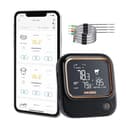
INKBIRD IBT-26S Wi-Fi + Bluetooth BBQ Thermometer
In the cold, the cheapest improvement is not opening the cooker. A multi-probe WiFi unit reads both briskets and the grate from inside the house.
$75.99 · View on AmazonSee thermometer picksPrice as of October 20, 2026. #ad How we’re funded
The leave-in probe
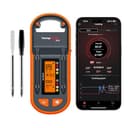
TempPro TempSpike PLUS TP972 Truly-Wireless Thermometer, 2 probes (formerly ThermoPro)
A wireless probe stays in the meat all night with no cable through the door seal — one less place for a cold cooker to leak heat.
See wireless picksThe fuel
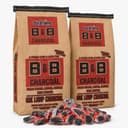
B&B Charcoal Oak Lump Charcoal
You will burn noticeably more charcoal in the cold, and lump produces far less ash than briquettes — which matters because ash smothering the coals is what makes a long winter cook sag.
Read the review
Frequently asked questions
Can you smoke a brisket in freezing weather?
Yes. Competition cooks do it in February and the brisket does not know what the weather is. Nothing about the targets changes — it is still done when it is probe-tender, usually somewhere around 200-205°F. What changes is the input: more fuel, a longer timeline, a windbreak, and the discipline to stop opening the lid. Plan those four things and a January brisket is no harder than a July one.
Is wind or cold worse for smoking a brisket?
Wind, and not by a small margin. Moving air carries heat off the outside of the cooker far faster than still cold air does, which is why a breezy 45°F afternoon is harder work than a calm 25°F one. If you only do one thing in response to a cold forecast, get the cooker out of the wind — a fence, a wall, the lee side of the house, or a non-combustible barrier set at a safe distance upwind.
How much longer does a brisket take in cold weather?
Plan two to four extra hours on a packer and treat that as a floor rather than a ceiling. The climb to temperature is slower because the chamber and the meat both start colder, and the stall can be more stubborn in dry winter air because the stall is evaporative cooling and dry air evaporates more aggressively. The right response is to start earlier, not to crank the heat — and to keep a few hours of hold in the plan as your buffer.
Should I cook a brisket hotter in the cold?
Not as a reaction to the weather. Set the cooker to the temperature you would normally run and let it work harder to get there; your target is a property of the brisket, not of the air outside. Running 275°F instead of 250°F is a legitimate choice for other reasons — it is a shorter cook, which has real appeal in winter — but make it deliberately, with the trade-offs in our hot-and-fast guide in mind, rather than because the thermometer outside is low.
How much extra charcoal or pellets will I need?
Expect to use meaningfully more than a comparable summer cook — every watt leaving the cooker has to be replaced by the fire. The exact figure depends on your cooker, the wind and how cold it is, and no maker publishes a cold-weather consumption figure, so we are not going to put a precise number on it. The practical rule: lay in half again as much as you think you need, check the hopper or the ring before you go to bed rather than after, and never add cold unlit charcoal to a running fire if you can avoid it.
Can I wrap my smoker in a blanket for winter cooks?
Ask the maker of your cooker what they sell for that model. Several manufacturers offer a fitted insulated cover and a correctly specified one is a cheap, effective upgrade. We will not recommend a generic welding blanket, because the failure modes are real — covering an intake or exhaust vent changes how the fire behaves, and the wrong material against a hot surface is a hazard rather than an improvement.
Does the brisket's internal temperature target change in winter?
No, and neither do the food-safety rules. Brisket is done when it is probe-tender, which usually lands somewhere around 200-205°F, and the USDA danger zone is 40°F to 140°F regardless of what it is doing outside. Cold weather changes the time and the fuel, never the destination. The one food-safety point specific to winter is the rest: a brisket resting in an unheated garage sheds heat much faster than one resting indoors, so preheat your cooler and keep the hold somewhere warm.
Will my wireless thermometer work in the cold?
Check the maker's stated operating range, because the transmitter is sitting outside in the weather alongside the probe, and batteries lose capacity in the cold. Most units are specified for the temperatures a normal winter produces, but a cold-weakened battery dying at hour ten of a fourteen-hour cook is a real and avoidable failure. Start the cook on fresh or fully charged batteries and keep the receiver indoors.
Sources
- USDA FSIS — "Danger Zone" (40°F - 140°F) — USDA: bacteria multiply fastest between 40°F and 140°F — the food-safety basis for the 4-hour rule (accessed July 22, 2026)
- USDA FSIS — Smoking Meat and Poultry — USDA on safe smoking practices, thermometer use and approved smoker materials (accessed July 22, 2026)
- Meathead's AmazingRibs.com — What Causes The BBQ Stall — Documentation (citing Greg Blonder's research) that the stall is evaporative cooling, not fat or collagen (accessed July 22, 2026)
- ThermoWorks — Smoked Brisket: A How-To Primer — ThermoWorks on brisket internal temperature, probe tenderness and the stall (accessed July 22, 2026)
Keep reading
Best Smoker for Cold Weather
If you are buying rather than cooking: cookers ranked on the wall construction their makers publish.
See the picksHow to Smoke Brisket
The full method, one step at a time — this page is the winter overlay on top of it.
Read the methodSmoking a Brisket Overnight
The other hard version of this cook, and most winter briskets are both at once.
Read the guideBrisket Fire Management
Clean fire, steady temperature, thin blue smoke — all three get harder when it is cold.
Read the guideThe Brisket Stall
Why it is evaporative cooling rather than collagen, and why dry winter air can make it worse.
Read the guideWhen to Start a Brisket
Work the timeline backwards from dinner, then add the winter padding this page recommends.
Plan the cook