The numbers Weber publishes, and the one it does not
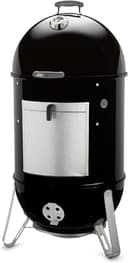
Weber states 726 square inches across the 22-inch’s two grates and 481 square inches across the 18-inch’s. That is a 51% increase in area for four inches of diameter, which sounds like the headline until you remember that area on a bullet smoker is split across two stacked grates — and a brisket occupies exactly one of them.
What actually decides this purchase is usable grate diameter: the straight-line distance a brisket can occupy before it meets the side of the bowl. Weber publishes the body diameter (22 inches and 18 inches, hence the names) but not a usable grate diameter, and the grate necessarily sits a little inside the body. So the honest way to read it is: the 22-inch gives you around 20 inches of usable straight line and the 18-inch gives you around 16, with the exact figures unpublished. Twenty inches accommodates a trimmed packer. Sixteen does not.
This is the reason our charcoal smoker roundup puts the 22-inch at the top and the 18-inch further down, despite them being the same cooker.
Side by side
| | Smokey Mountain 22" | Smokey Mountain 18" |
|---|
| Stated total cooking area | 726 sq in (two grates) | 481 sq in (two grates) |
| Body diameter | 22 inches | 18 inches |
| Usable grate diameter | Not published | Not published |
| Whole packer, laid flat? | Yes | Rarely — expect to bend, roll or trim |
| Body | Porcelain-enameled steel | Porcelain-enameled steel |
| Temperature control | Manual vents + water pan | Manual vents + water pan |
| Stated overall dimensions | Not published on this listing | 41"H x 19"W x 21"D (stated) |
| Charcoal per cook | Higher — bigger ring, bigger chamber | Noticeably lower |
Areas, diameters and the 18-inch’s dimensions are Weber’s or the listing’s own stated figures, read on the dates shown in the spec tables above. “Usable grate diameter” is not published for either model, and we are not going to publish an estimate as though it were a specification. The fuel comparison is our reasoning from chamber volume, not a measured figure — Weber publishes no charcoal consumption for either.
Does the 18-inch really not fit a brisket?
It fits a brisket. It does not fit a brisket well, and the distinction is worth spelling out because plenty of people cook very good brisket on an 18-inch WSM every weekend.
Here is what actually happens. A whole packer on an 18-inch grate meets the bowl wall, so you curve it. The curve means the thin end of the flat now sits higher, closer to the lid, in a slightly different thermal environment than the point. It also means part of the meat is touching or nearly touching the side of the cooker, where it will cook faster and dry out. Cooks manage this by rotating the brisket a couple of times through the cook, which works, and by accepting that the far tip of the flat will be a bit drier than the rest. That is a real cook with a real compromise, not a failure.
The better 18-inch strategies, in order of how well they work: separate the point from the flat and cook them as two pieces (our separation guide covers it, and it has genuine advantages beyond fit); buy a flat rather than a packer, which is what a lot of 18-inch owners settle into; or trim harder at the thin end, which you were partly going to do anyway. What we would not do is stand the brisket vertically against the bowl, which shows up in forum advice and puts an uneven load on the bark.
Where the 18-inch is genuinely the better buy
Fuel. A smaller bowl means a smaller charcoal ring heating a smaller chamber, and over a 12-hour cook the difference in lump burned is real. If you cook often, that compounds. Weber publishes no consumption figure for either, so treat this as a structural argument rather than a number.
Footprint and weight.The 18-inch states 41 inches high by 19 wide by 21 deep. Neither cooker has wheels — both are lift-and-set-up smokers — and the smaller one is meaningfully easier to carry, store and wrestle onto a balcony. If space is your binding constraint, read our small-patio page, where the 18-inch is the top pick for exactly this reason.
Smaller cooks generally. If most of your weekends are a flat, a couple of racks of something, or a single point for burnt ends, the 22-inch is a larger fire than you need and the 18-inch will be the cooker you actually reach for.
The third option: hang it instead
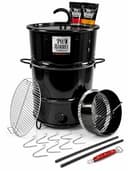
If what you are really trying to solve is “how do I fit a whole packer into a round cooker with a small footprint,” there is an answer neither Weber gives you. Pit Barrel states that two full packers of 14 to 16 pounds hang at once from hooks in an 18.5-inch barrel. Hanging the meat means its length stops mattering, because gravity rather than a grate is holding it.
The trade is that the Pit Barrel runs hot by design and offers very little adjustment beyond a single intake vent, so it is not a 225°F cooker and does not pretend to be. That makes it a different cook rather than a straight substitute — closer to hot and fast. Our Smokey Mountain versus Pit Barrel comparison works through the whole thing, and the vertical smoker roundup covers the cabinet alternatives.
The honest verdict
Buy the 22-inch for whole-packer brisket. It is the cooker that has produced more competition brisket than anything in its price bracket, the grate takes a packer flat, and the extra cost is small against how long these last. Buy the 18-inch if you cook flats, if your space genuinely will not take the bigger bowl, or if fuel economy is worth more to you than capacity — and if you do, plan on separating the point and flat rather than folding a packer every time.
Either way, read our full review of the 22-inchfor the detail on how the water pan and vent system actually behave overnight, because that part of the cooker — the part that makes it so good at brisket — is identical on both.