How to Smoke a Brisket in an Electric Smoker
An electric smoker will hold 225°F overnight without a single intervention, which removes the hardest part of brisket. It will also give you the palest bark and the mildest smoke of any cooker on this site. Both of those are the same design decision.
How this is funded: we earn a commission if you buy through our links, at no extra cost to you. It never changes which product we recommend, and we’ll tell you plainly when we’d skip one. Full disclosure.
Every cooker on this site makes a trade. An offset trades your attention for smoke flavor. A pellet grill trades some of that flavor for automation. An electric smoker takes that trade to its logical end: it is the easiest cooker in this category to hold at a fixed temperature for twelve hours, and the least capable of producing the dark, firm, heavily smoked exterior people picture when they picture brisket.
That is not a defect in your unit. It is the direct consequence of separating the heat source from the wood, and understanding why makes the fixes obvious.
Why an electric smoker makes less smoke
In a charcoal or offset cooker, the fuel is the heat. Wood burns, and burning wood continuously releases the aromatic compounds we taste as smoke. In an electric cabinet, an element heats the air and a small tray of chips sits near it. The element switches off as soon as the thermostat is satisfied — which, at 225°F, is most of the time.
Wood only smokes while it is hot enough to pyrolyze. So your chips are producing smoke in short bursts, separated by long gaps, while a stick burner is producing it continuously for twelve hours. Same wood, a fraction of the exposure. This is also why the fix is not “use stronger wood” — it is to get more of the cook happening while the element is actually on.
The three fixes that actually work
1. Run at 250°F, not 225°F. The element cycles on more often, so the chips smoke more of the time. You also get considerably more surface evaporation, which is the entire mechanism behind bark. There is no downside here that applies to an electric — the caution about running hot on a live fire is about temperature control risk, and you do not have that risk.
2. Keep the vent wide open. This is the most common electric-smoker mistake. A sealed cabinet with a closed vent becomes a steam oven: moisture from the meat has nowhere to go, the surface never dries, and bark cannot form on a wet surface. Open vent, all cook, no exceptions. It also stops stale smoke sitting on the meat and turning the flavor sour.
3. Front-load the smoke and stop worrying after four hours. Meat takes on smoke most readily while its surface is cool and damp. Reload the chip tray diligently for the first three to four hours; after that the surface has dried and set, and the returns drop away sharply. Getting up every hour at hour nine to add chips is effort spent for almost nothing.
Bark, and being honest about it
Bark needs a dry surface, time, and heat. An electric cabinet is small, well sealed and full of moisture evaporating off a fifteen-pound piece of meat, which is close to the opposite of those conditions.
Beyond the vent and the temperature, two things help. Season several hours ahead so surface moisture has drawn out and reabsorbed before the brisket goes in. And wrap later than the guides say — the standard advice to wrap at 165-170°F assumes bark has already formed by then, which in an electric it very often has not. Judge by touch: if the surface still gives, it is not ready to be covered up. Some cooks run an electric brisket entirely naked for this reason, accepting a longer stall in exchange for every available hour of drying. That is a legitimate choice here in a way it is not on a pellet grill.
If the brisket reaches probe tenderness with a crust that still looks anaemic, an unwrapped twenty to thirty minutes at the cabinet’s top temperature will firm it up. Watch it — you are past the point where the meat has much protection.
Trust your own thermometer
Budget electric smokers are frequently well out at the display, and the built-in meat probe on many models is worse. This matters more here than on other cookers, because the entire proposition of an electric is “set it and believe it”. Verify with your own probe at rack level before the first cook, note the offset, and cook to what your thermometer says. Then cook the brisket to probe tenderness, not to a number, exactly as you would anywhere else.
Where the electric genuinely wins
It is the best cooker on this site for an overnight brisket. There is no fire to go out, no hopper to empty, no coal bed to die at 4am. You set a temperature, you go to bed, and the cabinet is still at that temperature in the morning. For anyone cooking on a weeknight, or for whom a twelve-hour attended cook is simply not going to happen, that reliability is worth more than a shade of bark.
It is also the cooker least likely to produce a genuinely bad brisket. There is no creosote risk, no bitter smoke, no runaway fire. The failure mode of an electric smoker is a brisket that is fine but underwhelming — which is a much better worst case than most cookers offer.
What an electric cook needs that others do not
An electric smoker removes the fire management problem and hands you a smoke problem instead. These three address it. Prices are live and refresh daily.
The smoke
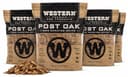
Western Post Oak BBQ Smoking Wood Chips
Electrics take chips, not chunks — the tray is small and a chunk will not fully pyrolyze on an element that cycles off.
$27.49 · View on AmazonSee wood picksPrice as of October 20, 2026. #ad How we’re funded
The cabinet
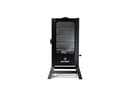
Masterbuilt 40" Digital Electric Vertical Smoker
Capacity is the spec that matters: a 40-inch cabinet takes a full packer on one rack without curling the flat.
$399.99 · View on AmazonSee electric smokersPrice as of October 20, 2026. #ad How we’re funded
The real thermometer
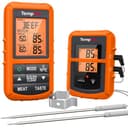
TempPro TempSync CORE TP20B Wireless Dual-Probe Thermometer (the ThermoPro TP20)
Built-in probes on budget electrics are frequently well out. Run your own probe in the flat and one at rack level.
See thermometer picks
Frequently asked questions
Can you make good brisket in an electric smoker?
You can make genuinely good brisket in one — tender, well rendered, properly cooked. What you will struggle to make is competition-looking brisket, because bark and smoke are the two things an electric cabinet is worst at. If your priority is a reliable, unattended, low-effort cook and you can live with a paler crust and a gentler smoke, an electric smoker is an entirely reasonable choice and we would not talk you out of it.
Why does my electric smoker not make much smoke?
Because the heating element cycles on and off to hold your set temperature, and wood only smokes while the element is hot. In a live-fire cooker the fuel and the heat source are the same thing, so smoke is continuous. In an electric they are separate systems, and the wood is only being heated part of the time. That is inherent to the design rather than a fault with your unit.
Chips or chunks in an electric smoker?
Chips. The tray is small, and it is heated indirectly by an element that spends much of its time switched off — which is not enough sustained heat to pyrolyze a fist-sized chunk properly. A chunk in an electric tends to char slowly on one face and never fully commit, giving you less smoke than chips rather than more. Save chunks for charcoal and offset cookers.
Should I wrap a brisket in an electric smoker?
Yes, but later than you would elsewhere, and butcher paper rather than foil. Bark sets slowly in a humid, sealed cabinet, so wrapping at the usual 165°F often means wrapping before there is any bark to protect. Wait until the surface is genuinely firm and dark. Some cooks skip the wrap entirely in an electric on the grounds that they need every hour of drying they can get, which is a defensible call.
What temperature for brisket in an electric smoker?
250°F rather than 225°F. On a live fire the argument for the lower end is more smoke exposure and gentler rendering; in an electric you are not getting much extra smoke for those hours anyway, and the higher temperature drives more surface evaporation, which is the only real lever you have on bark. There is also no runaway-fire risk to manage, so the usual caution about pushing the temperature does not apply.
Is it safe to leave an electric smoker running overnight?
It is the cooker best suited to it, which is much of the appeal. There is no fire to go out and no fuel to run dry, and the thermostat holds the chamber well above the USDA danger zone all night. Standard sense still applies: run it outdoors on a non-combustible surface, well away from siding and overhangs, on a circuit that is not shared with anything heavy, and set a low-temperature alarm on your own probe in case the element fails.
Sources
- USDA FSIS — Smoking Meat and Poultry — USDA on safe smoking practices, thermometer use and approved smoker materials (accessed July 22, 2026)
- USDA FSIS — "Danger Zone" (40°F - 140°F) — USDA: bacteria multiply fastest between 40°F and 140°F — the food-safety basis for the 4-hour rule (accessed July 22, 2026)
- ThermoWorks — Smoked Brisket: A How-To Primer — ThermoWorks on brisket internal temperature, probe tenderness and the stall (accessed July 22, 2026)
Keep reading
Best Electric Smoker for Brisket
Plug-in cabinets compared on capacity, control and smoke output.
See electric picksElectric vs Pellet Smoker
Both hold a temperature. Only one burns wood — and it shows.
Read the comparisonWhy Does My Brisket Not Taste Smoky?
The complaint electrics generate most, diagnosed properly.
Read the diagnosisWhy Is My Brisket Bark Soft?
The other electric-smoker failure, and the three causes.
Read the diagnosis