Pit Barrel vs Oklahoma Joe's Bronco
Two 18-inch charcoal drums at similar money, built on opposite convictions: one deliberately gives you nothing to adjust, the other gives you a vent and expects you to use it. For brisket that difference decides it.
How this is funded: we earn a commission if you buy through our links, at no extra cost to you. It never changes which product we recommend, and we’ll tell you plainly when we’d skip one. Full disclosure.
For a whole packer, buy the Pit Barrel. For control over the temperature, buy the Bronco. Pit Barrel states that the Classic hangs two full briskets of 14–16 pounds each, which is extraordinary capacity for the footprint and the money, and the cooker deliberately gives you almost nothing to fiddle with. Oklahoma Joe’s Bronco publishes 284 square inches of grate — too small for a packer lying flat — but it has an adjustable air-intake channel, which is the closest thing to real vent control in this class.
Those are not two versions of the same cooker. They are two different beliefs about what a drum smoker is for, and the right answer depends on which belief you share.
The design argument, in one paragraph each
The Pit Barrel’s position:a drum works because it is simple. Light a basket of charcoal, hang the meat above it, set the single intake vent for your altitude and walk away. There is no temperature to chase because the cooker has already decided; it will settle somewhere hot and stay there. Pit Barrel leans into this so hard that the Classic ships with eight stainless hooks and two rods as standard equipment — hanging is not an accessory, it is the cooker.
The Bronco’s position:a drum is a smoker, and a smoker should let you pick a temperature. The adjustable air-intake channel is the whole thesis. Oklahoma Joe’s also gives you a heavy-duty steel body, a removable ash pan, and the option to hang or use the grate as you prefer. You are expected to manage the cook.
Both are defensible. What is not defensible is reviewing them as though they were competing on the same axis.
Side by side, on what each maker publishes
| Pit Barrel Classic Premier 18.5" | Oklahoma Joe’s Bronco 18" | |
|---|---|---|
| Barrel size | 18.5 inches | 18 inches |
| Stated brisket capacity | Two full packers, 14–16 lb each (stated) | Not published as a brisket figure |
| Stated grate area | Not published | 284 sq in (stated) |
| Temperature control | Single intake vent — minimal adjustment by design | Adjustable air-intake channel |
| Hanging hardware included | 8 stainless hooks, 2 rods, basket, grate, ash pan (stated) | Hooks and grate; removable ash pan |
| Steel gauge | Not published | Not published |
| Where it naturally runs | Hot — this is not a 225°F smoker | Adjustable, so closer to your chosen figure |
Every figure is the maker’s or the listing’s own, read on the date in each product’s spec table. The two gaps are worth noticing rather than filling: Pit Barrel publishes a brisket capacity but no grate area, Oklahoma Joe’s publishes a grate area but no brisket capacity, and neither publishes a steel gauge. We are not going to convert one into the other or print a thickness we have not been given.
The capacity question is really a geometry question
This is the part worth thinking through before you buy either, because it is the same problem that decides the Weber Smokey Mountain 18 against the 22.
A trimmed full packer is commonly 20 to 24 inches long. An 18-inch drum has a grate that is roughly a 19-inch circle at best — and 284 square inches, the Bronco’s published figure, is about that. So a packer does not lie flat in either cooker. That is not a flaw in one of them; it is true of the entire 18-inch drum category.
There are three ways out of it, and the drums differ in which one they push you towards:
Hang it.Turn the length problem into a height problem. A drum has plenty of height, which is why Pit Barrel built the cooker around hooks and states two whole packers as capacity. The cost is the hooks themselves — a brisket at 195°F is structurally weak, and the weight hangs on two puncture points. Briskets do tear free.
Fold it. Plenty of people bend a packer to fit a round grate. It works and it cooks unevenly where the meat doubles over; the fold insulates itself and finishes behind the rest.
Separate it. Split the point from the flat and cook them as two pieces, which fit far better and arguably cook better anyway, since they want different finishing points. Our point-and-flat guide covers the seam.
If none of those appeal, the honest recommendation is to leave the drum category and buy a 22-inch bullet smoker, where a packer lies flat on a 726-square-inch pair of grates and the water pan does the temperature work for you.
The practical hook strategy, since nobody publishes it
If you buy either drum and intend to hang briskets, the technique that most owners converge on is a two-stage cook, and it is worth stating plainly because neither maker documents it.
Hang the brisket for the first several hours, while it is still firm and the hooks have plenty of intact meat to hold. This is also the phase where smoke deposition and bark formation happen, so hanging buys you the fat-dripping-on-coals effect exactly when it is useful. Then, before the meat becomes tender enough to tear — in practice, around the point you would wrapanyway — take it off the hooks and lay it on the grate or wrap it.
Two things make that transfer much safer. A long waterproof glove, because you are reaching down into a hot barrel with both hands and a brisket’s worth of rendered fat running out of it. And a second pair of hands, genuinely — an unhooked brisket is a two-person lift if you care about the bark.
Who should buy which
Buy the Pit Barrel if: you cook whole packers, you want capacity for two, you like the idea of a cooker with nothing to adjust, and you are happy running hot and finishing sooner. It is also the better pick if you want to be able to lend the cooker to someone and have it work.
Buy the Bronco if: you want to decide what temperature you are cooking at, you intend to run 225–250°F deliberately, and you accept that a packer will be folded, hung or separated to fit 284 square inches.
Buy neither if: what you actually want is a brisket lying flat on a grate with a thermostat-like buffer holding the temperature. That is a 22-inch bullet smoker, it costs similar money, and it is the most forgiving brisket cooker in the category.
The two drums, and the bullet smoker that beats both on space
Every capacity figure below is the maker’s or the listing’s own, read on the date in each product’s spec table. Prices are live and refresh daily.
Best for two whole packers
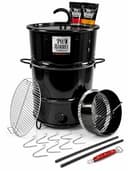
Pit Barrel Cooker Co. Classic Pit Barrel Cooker Premier 18.5"
Pit Barrel states the Classic hangs two full packers of 14-16 lb each, and ships complete with 8 stainless hooks, 2 rods, the charcoal basket, a grate and an ash pan. It runs hot by design and gives you almost nothing to adjust - which is the point, and the reason it is so hard to ruin a cook on.
$459.99 · View on AmazonRead the reviewPrice as of October 22, 2026. #ad How we’re funded
Best if you want to control the temperature
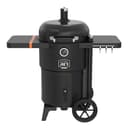
Oklahoma Joe's Bronco 18 in. Charcoal Drum Smoker
The Bronco's adjustable air-intake channel is the real difference between these two cookers - it gives a drum something close to genuine vent control, so you can aim for 250°F rather than accept whatever the barrel settles at. The published cost is grate space: 284 sq in, so a packer will not lie flat.
See charcoal picksIf neither drum convinces you
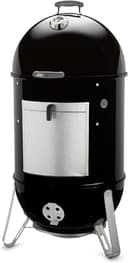
Weber Smokey Mountain Cooker 22"
The honest third option. 726 sq in across two 22 in grates means a packer lies flat, the water pan makes 225-250°F genuinely easy to hold, and vents give you real control. You give up the hanging trick and the small footprint, and you gain the most forgiving brisket cooker at this money.
$549.00 · View on AmazonRead the reviewPrice as of October 22, 2026. #ad How we’re funded
Frequently asked questions
Is the Pit Barrel or the Bronco better for brisket?
The Pit Barrel, for most people cooking a whole packer. Pit Barrel states that the Classic hangs two full packer briskets of 14-16 lb each, which is more brisket capacity than any cooker near its price, and the hanging design means you are not fighting a grate that is too small. The Bronco is the better cooker if you want temperature control - its adjustable air-intake channel is a real feature rather than marketing - but Oklahoma Joe's publishes 284 sq in of grate, and a full packer will not lie flat on that.
Can you cook a brisket at 225 degrees F in a Pit Barrel?
Not really, and Pit Barrel does not pretend otherwise. The Classic has a single intake vent and runs hot by design - somewhere in the high 200s to low 300s is where these cookers live. That is hot-and-fast territory rather than low-and-slow, and brisket cooks perfectly well there; it just finishes sooner and the texture window is narrower. If you specifically want to cook at 225°F, the Bronco's adjustable intake gets you closer, and a bullet smoker with a water pan gets you there properly.
Why hang a brisket instead of laying it on a grate?
Two reasons, one geometric and one about fat. Geometrically, hanging sidesteps the central problem of a small round cooker: a 16-pound packer is about two feet long, and almost nothing with an 18-inch barrel will take that lying flat. Hanging turns the length problem into a height problem, which a drum has in abundance. The fat argument is that rendered fat drips through the hanging meat and onto the coals, which both bastes the brisket and puts beef fat into the smoke.
What is the downside of hanging a brisket?
The hooks. A brisket late in a cook is structurally weak - that is the entire point of cooking it that long - and the weight of the meat is concentrated at two small puncture points. Briskets do tear off hooks, usually at the worst possible moment. The usual answer is to hang for the first part of the cook and move the brisket to the grate before it gets tender, or to wrap and finish it elsewhere. Both cookers ship with a grate for exactly this.
Does the Bronco's adjustable intake actually matter?
Yes, and it is the one specification worth paying for in this comparison. A fixed-vent drum does what it does; you light it and accept the result, which is genuinely relaxing and genuinely limiting. The Bronco's adjustable air-intake channel means a cook who wants to run 250°F for a long packer can aim at that figure instead of hoping. If you ever intend to cook anything other than hot-and-fast, that control is the difference between a drum you grow into and one you grow out of.
Which drum is better value?
They are priced close enough that value comes down to what ships in the box, and here the Pit Barrel is clearly ahead: it states 8 stainless hooks, 2 hanging rods, a charcoal basket, a grate and an ash pan as included. That is a complete cooker on day one. The Bronco includes a removable ash pan and the adjustable intake. Check both live prices below, because they move - and note that neither maker publishes a steel gauge for its barrel, so you cannot compare build on paper.
Will a full packer fit in either of these?
Hanging, yes - Pit Barrel states two packers of 14-16 lb each. Lying flat on the grate, no, in either cooker. The Bronco publishes 284 sq in of total grate area in an 18-inch barrel, which is roughly a 19-inch circle; a trimmed packer is commonly 20-24 inches long. You can fold or bend a brisket to fit a round grate and plenty of people do, but it cooks unevenly where it doubles over. If lying flat matters to you, the 22-inch bullet smoker is the pick.
Sources
- USDA FSIS — Smoking Meat and Poultry — USDA on safe smoking practices, thermometer use and approved smoker materials (accessed July 22, 2026)
- USDA FSIS — "Danger Zone" (40°F - 140°F) — USDA: bacteria multiply fastest between 40°F and 140°F — the food-safety basis for the 4-hour rule (accessed July 22, 2026)
- USDA FSIS — Beef From Farm to Table — USDA on safe handling, cooking and resting of beef, including brisket (accessed July 22, 2026)
Keep reading
Best Charcoal Smoker for Brisket
Every bullet, drum and hanging cooker we carry, ranked on grate size against a packer.
See the roundupWeber Smokey Mountain vs Pit Barrel
The other half of this decision: a water-pan bullet against a hanging drum.
Read the comparisonPit Barrel Cooker Premier Review
The hanging cooker in full, including what Pit Barrel does and does not publish.
Read the reviewHot and Fast Brisket
The method a fixed-vent drum pushes you towards, done deliberately rather than by accident.
Read the guideBest Charcoal for Smoking
What goes in the basket, and why lump and briquettes behave differently in a drum.
See the picksBest Smoker for a Small Patio
Both drums score well here - the full footprint-against-capacity comparison.
See the roundup