How to Store and Freeze Brisket
Three USDA numbers decide this: into the fridge within 2 hours, eaten within 3 to 4 days, or frozen within that window for 3 to 4 months. Everything else on this page is about keeping the texture you spent twelve hours building.
How this is funded: we earn a commission if you buy through our links, at no extra cost to you. It never changes which product we recommend, and we’ll tell you plainly when we’d skip one. Full disclosure.
Get the brisket into the refrigerator within 2 hours, eat it within 3 to 4 days, or freeze it inside that window for 3 to 4 months. Those three figures are the USDA’s for cooked leftovers, and they are the part of this page that is not a matter of opinion. The rest is craft: store it in large pieces rather than slices, keep it wrapped, hang on to every drop of juice and rendered fat you can, and reheat it low and slow to 165°F. Do those four things and day-three brisket is genuinely good rather than merely edible.
The three numbers, and what they mean
Two hours to the refrigerator.The USDA’s leftovers guidance is that food must be refrigerated within 2 hours of cooking or of being removed from whatever was keeping it warm — and within 1 hour if the ambient temperature is above 90°F, which is a realistic figure at a summer cookout. The reason is the danger zone: bacteria multiply fastest between 40 and 140°F, so the object is to move the brisket through that band quickly rather than let it coast down over an afternoon on the counter.
That clock is not the same as the rest. A brisket wrapped and sitting in a preheated cooler above 140°F is being held, which our holding guide covers and which is a different set of rules. The 2-hour clock starts when it leaves that hold.
Three to four days in the refrigerator.This is the USDA figure for cooked leftovers generally. It starts when the brisket went into the fridge. On day five, freeze it or bin it — and note that looking and smelling fine is not the test, because the organisms that make food unsafe are not always the ones that make it smell.
Three to four months in the freezer.Also the USDA’s figure. This one is a qualitywindow rather than a safety cliff: food kept continuously frozen stays safe more or less indefinitely, but texture, moisture and flavor decline, and after four months you will taste it. Freeze it near the start of the 3-to-4-day refrigerator window rather than at the end of it, because the freezer preserves the condition the brisket was in when it went in — it does not improve anything.
Cool it down faster than you think
A whole brisket is a dense, insulated, nine-pound block of hot meat, and putting it in the fridge intact is the slowest possible way to cool it. The 2-hour rule is about getting through the danger zone, not about getting the parcel into the fridge, so help it along.
Separate the point from the flat if you have not already — our point-and-flat guide covers the seam — and cut each muscle into two or three large chunks. Lay them in a shallow container rather than stacking them in a deep one. Leave the lid off or ajar until the surface has stopped steaming, then cover. A shallow, divided brisket is through the danger zone in a fraction of the time a whole one takes, and it is the single most useful thing in this section.
What not to do: leave a hot brisket sitting on the counter to “come down to room temperature first.” That is the exact behavior the 2-hour rule exists to prevent. A modern refrigerator handles a warm container without difficulty.
Chunks, not slices — the one storage rule that changes the texture
If you take one piece of craft advice from this page, take this one. Store brisket in large pieces and slice it after reheating, never before storing it.
The reason is surface area. A sliced brisket exposes an enormous amount of cut face to dry air, and every one of those faces loses moisture in the fridge, picks up freezer burn in the freezer, and goes stringy when reheated. A whole chunk has a tiny fraction of that exposure, keeps its juices inside, and reheats evenly because it has mass to buffer the heat.
And keep the liquid. Whatever is in the bottom of the butcher paper when you unwrap the brisket — rendered fat, meat juices, the paper’s worth of both — is the best thing you will ever reheat brisket in, and most people pour it down the sink. Save it in a jar in the fridge; the fat will set on top and keep. Our beef tallow page covers rendering and using it properly.
If the brisket is already sliced because you served it, store the slices with those juices rather than dry. That alone rescues most of the difference.
How to wrap it, in order of how well it works
| Method | Best for | Notes |
|---|---|---|
| Vacuum sealed | Freezing, and the gentlest reheat | Removes the air that causes freezer burn, and the sealed bag can go straight into hot water to reheat. See our vacuum sealer picks. |
| Butcher paper, then heavy foil | Refrigerator storage of a whole chunk | Paper against the bark stops it sweating into paste the way bare plastic film does; the foil is the moisture barrier. |
| Plastic film, then foil, then a freezer bag | Freezing without a sealer | Three layers, each pressed tight. Press as much air out of the bag as you can — air is what causes freezer burn. |
| Airtight container with the juices | Already-sliced brisket, short term | Shallow rather than deep, so it cools fast. Cover the slices in their own juices if you have them. |
| Loosely covered in the pan it was served from | Nothing | Slow to cool, dries out, picks up fridge smells. This is what most leftover brisket gets and it is why most leftover brisket is disappointing. |
The ranking above is ours, argued from surface area and air exposure. The time and temperature figures elsewhere on this page are the USDA’s, cited in full below.
Reheating: 165°F, wrapped, with fat
The number is the USDA’s: reheat leftovers to 165°F, measured with a thermometer in the thickest part. You cannot judge this by eye, because the outside of a chunk of brisket is at serving temperature long before the center is anywhere near, and the center is the part that matters.
The method that keeps the texture has three parts. Wrapped, so the moisture leaving the meat stays against the meat. With liquid— the saved juices, a spoonful of rendered tallow, or beef stock, in that order of preference. Low, around 250°F in the oven, so the heat has time to reach the middle before the outside gives up its moisture. A sealed bag in hot water is gentler still and is the best reheat available if you vacuum sealed it in the first place.
Slice after reheating, across the grain, as covered in our slicing guide— the grain direction does not change just because the brisket has been in the fridge, and cutting it wrong will make good brisket eat badly whatever else you did right.
When the leftovers were already dry
Storage will not fix a brisket that came off the cooker dry; it will preserve it exactly as it is. If that is where you are, the honest move is to stop trying to serve it as slices. Our dry-brisket rescues cover the options and the best of them are the chopped-brisket sandwich and burnt ends from the point, both of which take a brisket that failed as a centerpiece and turn it into something people ask for on purpose.
And if the dryness was a surprise, the diagnosis is worth reading before the next cook: our dry brisket page ranks the five real causes, and none of them is a storage problem.
For the question of what to actually cook with what is in the refrigerator, we have a separate page: what to do with leftover brisket matches a dish to each part of the packer, and makes the case that the chopped-beef sandwich is a menu item rather than a salvage operation. And at the other end of the freezer, if you have run out of thawing time, cooking one from frozenis possible — with four specific costs.
The two things leftovers actually need
A wrap that protects the bark, and a thermometer to confirm the reheat. If you want the third tool — a vacuum sealer, which is the only real fix for freezer burn — our vacuum sealer roundup ranks five machines on the bag width almost nobody publishes. Prices are live and refresh daily.
The wrap
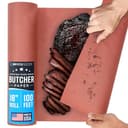
Bryco Goods Pink Butcher Paper 18" x 100 ft
Unwaxed butcher paper around the brisket, then foil or a bag around that, is the storage version of the Texas crutch — it keeps the bark from going to paste the way bare plastic wrap does.
See paper picksThe reheat check
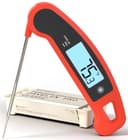
Lavatools Javelin PRO Duo Instant-Read Thermometer
The USDA number for reheating leftovers is 165°F, and it is the one figure on this page you cannot judge by eye. An instant-read in the thickest part is the whole verification.
$43.99 · View on AmazonRead the reviewPrice as of October 20, 2026. #ad How we’re funded
Frequently asked questions
How long does cooked brisket last in the fridge?
The USDA's figure for cooked leftovers is 3 to 4 days in the refrigerator, and that clock starts when the brisket went in rather than when you cooked it. The same guidance says leftovers must be refrigerated within 2 hours of cooking or of coming off whatever was keeping them warm — and within 1 hour if the ambient temperature is above 90°F. Beyond 4 days, freeze it or throw it away; a brisket that looks and smells fine can still be past the point the guidance covers.
Can you freeze brisket after smoking it?
Yes, and it freezes better than most cooked meat because of its fat content. The USDA gives 3 to 4 months for frozen leftovers — that is a quality window rather than a safety cliff, since food held continuously frozen stays safe, but texture and flavor fall off after it. Freeze it in large pieces rather than slices, wrapped tightly with as little air as you can manage, and freeze it within the 3-to-4-day refrigerator window rather than at the end of it.
Should I slice brisket before storing it?
No, if you have the choice. Slices have far more surface area than a whole chunk, so they dry out in the fridge faster, lose more moisture in the freezer and turn stringy on reheating. Store the point and the flat as large pieces and slice what you need after reheating. The exception is a practical one: if the brisket is already sliced because you served it, store the slices with any juices or rendered fat you collected, which is the single most effective thing you can do for them.
What temperature do I reheat brisket to?
165°F, measured with a thermometer in the thickest part. That is the USDA's figure for reheating leftovers and it is not negotiable by eye or by feel — the outside of a piece of brisket reaches serving temperature long before the middle does. Reheat low and slow, in a wrapped parcel with a splash of liquid or some rendered tallow, and check the number rather than guessing.
How do I reheat brisket without drying it out?
Three rules. Keep it wrapped, so the moisture leaving the meat stays with the meat. Add liquid — beef stock, the juices you saved, or a spoonful of rendered beef tallow, which is the best of the three because it is what came out of the brisket in the first place. And go slow: a low oven, around 250°F, until the center hits 165°F, rather than a hot oven that drives moisture out faster than the heat travels in. A sealed bag in hot water is the gentlest method of all if you have the kit for it.
Can you freeze raw brisket?
Yes, and a brisket in unopened cryovac is already well packaged for it. Leave it in the original vacuum packaging if it is intact, and freeze it rather than letting it sit in the refrigerator past its date. The thing to plan for is the other end: a whole frozen packer takes a long time to thaw safely, and the only safe methods are in the refrigerator, in cold water changed every 30 minutes, or in the microwave. Our thawing guide covers the timings, and the refrigerator method on a 14-pound packer is measured in days rather than hours.
Do I need a vacuum sealer to freeze brisket properly?
It is the best tool for the job and it is not required. A vacuum sealer removes the air that causes freezer burn and lets you reheat the sealed bag directly in hot water, which is the gentlest reheat there is. Without one, wrap the brisket tightly in plastic film or butcher paper, then again in heavy foil, then into a freezer bag with as much air pressed out as you can manage — the principle is the same, you are just less efficient at it. If you do want one, the spec that decides the purchase is the widest roll the machine accepts, not vacuum pressure; our vacuum sealer roundup ranks five machines on exactly that.
How long can cooked brisket sit out before it has to go in the fridge?
Two hours, per the USDA, measured from when it came off the heat or off whatever was holding it warm — and one hour if the surrounding temperature is above 90°F, which is a realistic figure at a summer cookout. The reasoning is the danger zone: bacteria multiply fastest between 40°F and 140°F, so the goal is to get the brisket through that range quickly rather than letting it coast down over an afternoon. A brisket resting in a cooler above 140°F is being held, not left out, and that is a different clock.
Can I refreeze brisket I have already thawed?
If it was thawed in the refrigerator and never left that temperature, yes — though you will lose some quality each time, because freezing and thawing damages the meat's structure and costs it moisture. If it was thawed in cold water or in the microwave, it needs to be cooked or reheated before it goes back in the freezer. The practical answer is to avoid the question: freeze brisket in meal-sized pieces so you only ever thaw what you are going to eat.
Sources
- USDA FSIS — Leftovers and Food Safety — USDA: refrigerate leftovers within 2 hours of cooking or of removal from a warm-holding appliance (1 hour above 90°F); keep 3 to 4 days refrigerated or 3 to 4 months frozen; reheat to 165°F measured with a food thermometer (accessed October 5, 2026)
- USDA FSIS — "Danger Zone" (40°F - 140°F) — USDA: bacteria multiply fastest between 40°F and 140°F — the food-safety basis for the 4-hour rule (accessed July 22, 2026)
- USDA FSIS — Safe Minimum Internal Temperature Chart — USDA safe minimum internal temperatures, incl. 145°F for beef cuts plus a 3-minute rest (accessed July 22, 2026)
- USDA FSIS — Beef From Farm to Table — USDA on safe handling, cooking and resting of beef, including brisket (accessed July 22, 2026)
Keep reading
Butcher Paper vs Parchment Paper
Which paper belongs in the freezer, which belongs in the cooker, and the one that belongs nowhere near heat.
Read the comparisonHow to Hold and Reheat Brisket
The same-day version of this problem: a brisket done four hours early, held safely.
Read the guideHow to Thaw a Brisket
The other end of the freezer, and the only three methods the USDA considers safe.
Read the guideBeef Tallow for Brisket
Why rendered tallow is the best thing to reheat brisket in — it came out of the brisket.
Read the guideHow to Fix a Dry Brisket
What to do with leftovers that were already dry before they went in the fridge.
Read the rescuesBest Butcher Paper for Brisket
The wrap for the cook and for the fridge, compared on width, length and value.
See paper picksBrisket Burnt Ends
The best possible use for a leftover point, and the reason to store the two muscles separately.
Read the guideBest Vacuum Sealer for Brisket
The only real fix for freezer burn, ranked on the bag width almost no maker publishes.
See sealer picks