Can You Smoke a Frozen Brisket?
You can, and it can be done safely. But you cannot trim it, the rub has nothing to grip, the smoke has nothing to stick to, and you add hours to a cook that was already long. Here is the whole trade, and the one version of this that is genuinely fine.
How this is funded: we earn a commission if you buy through our links, at no extra cost to you. It never changes which product we recommend, and we’ll tell you plainly when we’d skip one. Full disclosure.
Yes, and no reasonable person should want to. A brisket can be cooked from frozen safely, but a frozen start removes the two steps that do most of the work — trimming and seasoning — and adds hours of unpredictable cook time to the longest cook in barbecue. If you have a day, thaw it. If you have half a day, thaw it partially and work with that, which is genuinely fine and in one respect better. If you have neither and the brisket has to be dinner, read on — it can be done, and there are four specific adjustments that make the difference.
One thing to get out of the way first, because it is the version of this question people are usually really asking. Do not thaw a brisket on the counter to save time.A 14-pound packer thaws from the outside in, so the surface sits for hours in the 40–140°F range the USDA calls the danger zone while the middle is still solid ice. That is strictly worse than either thawing it properly or cooking it frozen. If the only two options on the table are a counter thaw and a frozen start, take the frozen start.
The four things a frozen start costs you
1. You cannot trim it, and trimming is most of the job. This is the big one. Our trimming guide exists because taking the fat cap down to an even quarter inch, removing the hard deckle fat that will never render, and squaring off the thin edges that otherwise burn is where a good brisket is largely decided. None of it is possible on a block of ice, and you cannot go back and do it two hours in. You are committing to cooking the brisket exactly as the packer wrapped it.
2. The rub has nothing to hold on to.Salt and pepper stick to a surface that is slightly tacky with meat moisture, and they need time to draw a little of that moisture out and form a paste. A frozen surface does neither. Most of what you apply either falls off or washes into a slurry as the outside thaws. The workaround — cook naked for the first hour or two, then season once the exterior is weeping — works, at the price of a less even crust than our seasoning guide would get you.
3. The smoke has nothing to stick to either, and neither does the ring. Smoke compounds deposit onto a cool, damp surface, which is why we tell people to put a brisket on cold rather than at room temperature. Ice is not damp. For the opening stretch of the cook there is no liquid water at the surface for anything to dissolve into, and that stretch is exactly the window when the smoke flavor and the smoke ring would otherwise be forming. By the time the surface is receptive, it is warming past the range where the ring reaction happens. Expect a lighter smoke flavor and a thin ring or none.
4. The timeline becomes a guess.Every timing on this site — including our own per-pound figures and the backwards schedule in when to start a brisket — assumes a thawed start. A frozen packer has to absorb a large amount of energy simply to turn ice into water before its internal temperature begins to climb at all, so it sits near freezing for a long opening phase and then starts the normal cook from there. Our reading is that a solidly frozen whole packer can run half again as long as the same brisket thawed, and we are deliberately not putting a firmer number on it. Nobody can, which is itself the argument against planning a dinner this way.
If you are doing it anyway: four adjustments
Run the pit hotter, not cooler.This is the most important one and it is counter-intuitive, because the instinct with any uncertain cook is to go low and slow. Do the opposite: 250–275°F rather than 225°F. The reason is food safety rather than speed. The failure case for a frozen brisket is a long period with a thawing, warming surface in the danger zone while the core is still frozen, and a hotter cooker shortens that period considerably. A frozen brisket in a smoker struggling to hold 200°F is the one version of this that we would actively tell you not to do. Our hot-and-fast guide covers running a brisket at the top of that range deliberately.
Cook naked, then season. Put it on bare. Somewhere in the first ninety minutes the exterior will have thawed and begun to weep. That is the moment to apply a coarse salt-and-pepper rub, and it will stick properly. Do not try to pre-season frozen meat.
Plan to wrap, and plan to wrap later. Because the surface spends its early hours wet, bark formation starts late. That means you want more unwrapped time rather than less before you commit to the wrap, and it means foil rather than paperis the more defensible choice here — our butcher paper review is clear that paper earns its place by protecting a bark you have already built, since you are chasing the finish more than you are protecting a bark you never really got.
Measure everything and trust nothing. One probe in the thickest part of the flat, one at the grate, and the understanding that the brisket is done when it is probe-tender, whatever the clock says. Expect a more uneven cook than usual — a frozen core and an untrimmed fat cap both work against evenness — so probe in four or five places rather than one.
Frozen, partially thawed, and fully thawed, compared
| Solidly frozen | Partially thawed | Fully thawed | |
|---|---|---|---|
| Can you trim it? | No | Yes — and it cuts cleanly | Yes |
| Will a rub adhere? | No — season an hour or two in | Mostly | Yes |
| Smoke flavor and ring | Light ring or none | Close to normal | Normal |
| Timing predictability | Poor | Fair | Good |
| Recommended pit temperature | 250–275°F | 225–250°F | 225–250°F |
| Our verdict | Last resort | Genuinely fine | What you want |
This table is our reasoning about how a frozen start interacts with each stage of the cook, not a set of measurements — no maker or authority publishes brisket cook times from frozen, and we are not going to invent them. The food-safety basis for the pit-temperature recommendation is the USDA danger zone, cited below.
The partially thawed case, which is better than its reputation
If there is one thing worth taking from this page, it is this. A brisket that has thawed at the edges but is still firm in the middle — eight to twelve hours out of the freezer in the refrigerator, rather than a full day — trims better than a fully thawed one.
The reason is simple: fat at refrigerator temperature or slightly below takes a clean edge, while fat at room temperature smears and drags under the blade. Professional butchers work with cold meat for exactly this reason. So a half-thawed packer gives you the one thing a frozen packer cannot — a proper trim — and gives it to you under easier conditions than a fully thawed one. It will also take a rub once the surface stops being cold enough to repel it.
So if you have discovered at breakfast that tomorrow’s brisket is still a brick, the plan is not to panic-cook it frozen. It is to get it into the refrigerator now, accept that the center will still be firm at trimming time, and treat that as the intended state. Our thawing guide has the timings for the cold-water method if you need to accelerate the last part of it.
Why this is a quality question, not really a safety one
Worth stating clearly, because the internet treats cooking from frozen as dangerous and that is not quite where the risk is.
A brisket is whole-muscle beef, and it finishes probe-tender somewhere around 200°F after many hours in a hot cooker. That is far past any safe minimum internal temperature, and the USDA’s own guidance on low-temperature cooking recognizes that lethality is a function of time at temperature rather than of a single number touched at the end. A frozen brisket cooked properly hot until it is tender is safe.
What is genuinely risky is the slowfrozen cook: a big block of ice in an underperforming smoker, where the outer inch thaws and sits at 60 or 80°F for hours while the core is still frozen and the pit never climbs. That is the scenario the pit-temperature advice above exists to prevent. Everything else about a frozen start is a cost to the brisket, not a hazard to you — and the costs are enough on their own.
What this cook actually needs
If you are going ahead from frozen, the one thing you cannot do without is measurement — every published timing for brisket assumes a thawed start, so your only navigation is a probe. The third pick here is the argument against the whole idea. Prices are live and refresh daily.
Non-negotiable on a cook from frozen
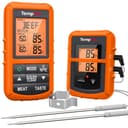
TempPro TempSync CORE TP20B Wireless Dual-Probe Thermometer (the ThermoPro TP20)
A frozen start makes every timing rule on this site useless, so the only way to know where you are is to measure. A cook that may run twenty hours is not one to run blind.
See leave-in picksFor the doneness call at the end
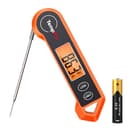
TempPro TempSwift PLUS TP19H Instant-Read Thermometer (the ThermoPro TP19H)
A brisket cooked from frozen is more likely to finish unevenly, so you need to probe in several places rather than trust one number. An instant-read is faster at that than any leave-in probe.
See instant-read picksThe reason to thaw instead
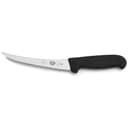
Victorinox Fibrox Pro 6" Curved Flexible Boning Knife
Trimming is the step a frozen brisket makes impossible, and trimming is where most of a good brisket is decided. A flexible boning knife and a thawed packer get you more than any frozen shortcut saves.
See trimming knife picks
Frequently asked questions
Can you smoke a brisket from frozen?
Physically yes, and it can be done safely, because a brisket spends many hours at smoking temperatures and finishes far above any safe minimum. But you give up four things that matter: you cannot trim it, the rub will not adhere to a frozen surface, smoke deposits poorly on ice, and the cook takes substantially longer with a less predictable finish. If you have 24 hours, thaw it. If you have 12, partially thaw it and trim what you can reach. Cooking a solidly frozen packer is a last resort rather than a technique.
Is it safe to smoke a frozen brisket?
It can be, with two conditions. The first is that the cooker has to be genuinely hot — a frozen brisket in a smoker struggling at 200°F is the one version of this that is a real risk, because the surface sits in the danger zone for a long time while the core is still frozen. Run 250°F or higher rather than 225°F. The second is that you verify the finish with a thermometer rather than a clock, since every timing rule assumes a thawed start. Brisket cooked until it is probe-tender has long passed any safety threshold.
How much longer does a frozen brisket take to smoke?
Expect it to add hours rather than minutes, and treat any published figure as a guess. The physics is that the brisket has to absorb a great deal of energy just to turn ice into water before its temperature starts climbing at all, so a frozen packer effectively sits near freezing for a long opening stretch before the normal cook begins. Our reading is that a solidly frozen whole packer can run half again as long as the same brisket thawed — but the honest answer is that nobody can give you a reliable number, which is itself a reason not to plan a dinner around it.
Can you season a frozen brisket?
Not usefully. A rub adheres to a surface that is slightly tacky with moisture, and a frozen surface is neither tacky nor able to absorb anything — most of what you apply falls off or ends up in a slurry as the outside thaws. The workable version is to cook it naked for the first hour or two until the exterior has thawed and started to weep, then season it then. It will be a less even crust than a brisket seasoned and rested overnight, which our seasoning guide explains properly.
Can you trim a frozen brisket?
No, and this is the real cost. Trimming is where a good brisket is largely decided — the fat cap taken down to a consistent quarter inch, the hard deckle fat removed, the thin edges squared off so they do not burn. None of that is possible on a frozen packer, and you cannot do it mid-cook either. A partially thawed brisket is actually easier to trim than a fully thawed one, because firm fat cuts cleanly, so if you are going to compromise, compromise in that direction.
Will a frozen brisket get a smoke ring?
A poor one. The ring forms when combustion gases react with myoglobin at a cool, damp meat surface, and ice is not damp — there is no liquid water at the surface for anything to dissolve into for the first part of the cook, which is exactly the window when the ring would otherwise be forming. By the time the surface has thawed and become receptive, it is also warming past the temperature range where the reaction happens. Expect a thin ring or none.
Is it better to smoke a partially frozen brisket?
Yes, and this is the version of the question with a genuinely good answer. A brisket that has thawed at the edges but is still firm in the middle trims better than a fully thawed one, because firm fat takes a clean edge instead of smearing. It will also take a rub once the surface is weeping. If you have eight to twelve hours of refrigerator time rather than a full day, aim deliberately for this state rather than treating it as a failure to thaw.
Can you thaw a brisket on the counter to save time?
No. A whole packer left out thaws from the outside in, which means the surface spends hours in the 40°F to 140°F range the USDA identifies as the danger zone while the center is still frozen solid — the worst of both outcomes. The safe fast methods are cold running water or the refrigerator, and our thawing guide covers the timings for each. If the choice is between a counter thaw and cooking from frozen, cook from frozen.
Sources
- USDA FSIS — Grilling Food Safely — USDA guidance on safe outdoor cooking, thawing and holding (accessed July 22, 2026)
- USDA FSIS — "Danger Zone" (40°F - 140°F) — USDA: bacteria multiply fastest between 40°F and 140°F — the food-safety basis for the 4-hour rule (accessed July 22, 2026)
- USDA FSIS — Cooking Guideline for Meat and Poultry (Appendix A) — USDA reference on lethality — why long low-temperature cooks are safe despite being below 145°F for hours (accessed July 22, 2026)
- USDA FSIS — Smoking Meat and Poultry — USDA on safe smoking practices, thermometer use and approved smoker materials (accessed July 22, 2026)
Keep reading
How to Thaw a Brisket
The safe methods and real timings, including how long a 15-pound packer actually needs.
Read the guideHow to Trim a Brisket
The step a frozen brisket makes impossible, and why it decides so much of the result.
Read the guideSeasoning a Brisket
Why a rub needs a tacky surface and some resting time, neither of which ice provides.
Read the guideHow to Store and Freeze Brisket
The other end of the problem: freezing brisket properly so thawing is predictable.
Read the guideHot and Fast Brisket
The higher pit temperature a frozen start wants, done deliberately instead of by accident.
Read the guideHow to Get a Smoke Ring
Why a frozen surface cannot form one, and why we de-emphasize the ring anyway.
Read the guide