Butcher Paper vs Parchment Paper for Brisket
Almost every page that answers this one says parchment will scorch in a smoker. Parchment's published rating is comfortably above brisket temperatures, so that is not the reason - and the actual reasons are better ones.
How this is funded: we earn a commission if you buy through our links, at no extra cost to you. It never changes which product we recommend, and we’ll tell you plainly when we’d skip one. Full disclosure.
Use uncoated butcher paper. Parchment will not burn at brisket temperatures — it will just steam your bark soft without buying you any of the speed foil would. That is the short version, and the reason it is worth a page is that the popular objection to parchment is the wrong one. Reynolds publishes “Non-Stick & Oven Safe Up to 425°F” on its Stay Flat parchment. A brisket cooks at 225 to 275°F. Scorching is not the problem.
The problem is the word in front of “oven safe.” Parchment is sold as non-stick, and non-stick means coated, and a coating is a barrier. The entire mechanism of the Texas crutch is a wrap that holds moisture against the meat while still letting steam out, which is what uncoated kraft does and what no coated sheet can. Below: what each paper actually is on its maker’s own published claims, which jobs each one is for, and the one that must never go in a cooker.
What each paper is, on the makers’ published claims
| Butcher paper (smoking rolls) | Parchment paper | Wax paper | Freezer paper | |
|---|---|---|---|---|
| Coating | None (uncoated, unwaxed) | Non-stick treatment; material not named on the page we read | Wax; material not named | Plastic coated (Reynolds’ own description) |
| Published heat rating | None stated on the rolls we carry | Oven safe up to 425°F (Reynolds Stay Flat) | None — microwave only | None stated |
| Stated purpose | Wrapping meat; sold for smoking | Baking and roasting | Preventing splatters, non-stick | Prevents freezer burn; keeps moisture in, air out |
| Breathes? | Yes — the point of it | No, by design | No | No, by design |
| Width for a packer | 18 in rolls are standard | Sized for baking sheets; check it | Not applicable | Varies |
| Use it for a brisket? | Yes — the wrap and the rest | Only as a tray or board liner | Never near heat | Freezer only |
Butcher paper rows describe the uncoated rolls in our registry, read from their listings on the dates in each product’s spec table. The parchment, wax and freezer paper rows are Reynolds’ own published claims, read from its product pages on October 18, 2026. Note what is missing as much as what is there: Reynolds names no coating material for its parchment or wax paper, publishes no oven rating at all for wax paper, and no butcher paper brand we carry publishes a heat rating — uncoated kraft is simply paper.
Why a coating ruins a wrap
A wrapped brisket is a small, deliberately leaky steam chamber. Rendered fat and water vapor collect against the meat, the surface stops drying out, and the cook pushes through the stall faster than it would naked. What decides whether you still have bark at the end is how much of that steam the wrap lets go.
Uncoated kraft paper lets some out. That is the whole reason it beat foil in Texas: bark survives it. Foil lets nothing out, which is why it is faster and why the crust comes out softer — a trade our paper-versus-foil comparison argues through properly, including the foil-boat compromise.
Parchment sits in the worst place on that spectrum. The non-stick treatment resists moisture passing through, so it behaves like a weak foil — soft bark — while being a thin sheet of paper rather than a sealed metal envelope, so it does not deliver foil’s speed or its structural toughness either. You pay foil’s price and collect paper’s benefits.
There is a second, quieter problem: width. Butcher paper for brisket is sold at 18 inches because that wraps a packer in one sheet with enough overhang to fold the ends in. Parchment is cut for baking sheets. A seam running the length of a brisket is where juice escapes and where the wrap comes apart when you lift it — the wrapping guide explains the fold order that depends on having that overhang.
What nobody publishes
Two figures would settle this argument on paper rather than principle, and neither exists.
Wet strength. A brisket wrap spends ten hours saturated in rendered fat and then gets lifted by hand. How much a soaked sheet can carry before it tears is the specification that matters most, and no butcher paper brand we carry publishes it, nor does Reynolds for its parchment. We are not going to assert that one tears sooner than the other, because we would be guessing.
What the non-stick coating is.Reynolds’ parchment page says non-stick and oven safe and does not name a coating material. Silicone is the usual answer in this category, but the page we read does not say so, and we will not put a material in a maker’s mouth. What matters for the decision is that it is coated at all.
One figure that is published and worth repeating: Reynolds states no oven rating whatsoever for wax paper — only that it is microwave safe and non-stick. When a manufacturer that prints a temperature on its parchment prints nothing on its wax paper, read that as the answer.
Where parchment and freezer paper genuinely belong
This is not a page about a useless product. Both of these papers are good at a job a brisket cook actually has.
Parchment: line the tray, not the meat.A sheet pan under a resting brisket catches rendered fat that otherwise bakes onto the pan, and a sheet on the board under sliced brisket makes the handoff to the table clean. Both are legitimate uses at well under 425°F, and neither puts a coating between the bark and the air.
Freezer paper: for the freezer.Reynolds’ claim — keeps moisture in, air out — is exactly the property that prevents freezer burn, and it is exactly the property you do not want in a cooker. For leftovers, the plastic-coated sheet or a vacuum bag is the right call; our storing and freezing guide covers how to portion before you wrap, and the sealer roundup covers the alternative.
Butcher paper: the wrap, the rest and the board. One 18-inch roll does all three, which is why the paper roundup ranks on cost per foot rather than features. Keep foil for the one case where finishing on time beats finishing with crust.
If parchment is all you have at midnight
It happens. The brisket is at 165°F, the bark is set, and the roll in the drawer is parchment. Three honest options, in order of preference.
Do not wrap at all.An unwrapped brisket is a legitimate cook, not a failure — it takes longer and produces the firmest bark of any method. Our wrapped-versus-unwrapped page makes that case in full. If you have the time, this is the better answer than reaching for the wrong paper.
Use foil as a boat. Fat side down in an open foil tray gives you some of the protection of a wrap while leaving the bark exposed to the air. It is the standard compromise and it works.
Use the parchment and accept the trade.It will hold the moisture, it will get you through the stall, and the bark will be softer than it would have been. Nothing dangerous happens at 250°F. Just do not let a sheet rest against a hot cooker wall, and do not expect the crust you would have had — and buy an 18-inch roll of uncoated paper before the next one, because the difference is a few dollars across an entire brisket season.
Three uncoated rolls that do the job parchment cannot
All three are unwaxed, uncoated kraft butcher paper. Every figure is the maker’s or the listing’s own, read on the date in each product’s spec table — including the two figures Reynolds does not state. Prices are live and refresh daily.
The default wrap
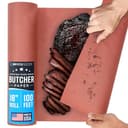
Bryco Goods Pink Butcher Paper 18" x 100 ft
18 in wide, 100 ft, unwaxed and uncoated, stated FDA-compliant food-grade. The width is the spec that decides a wrap: 18 inches takes a full packer in one sheet with overhang to fold the ends. Our top pick in the paper roundup.
See all paper picksBest value per foot

PerkHomy Pink Butcher Paper 18" x 200 ft
The same 18 in uncoated pink paper at 200 ft instead of 100 - the lowest cost per foot we carry. Buy it if you wrap most weekends and have somewhere to keep a large roll. The paper itself is no different from the 100 ft rolls.
Pink vs peach, settledThe grocery-aisle option

Reynolds Kitchens Butcher Paper for Smoking Meat
Reynolds sells butcher paper for smoking meat in the same cutter box as its parchment, which is exactly why this comparison exists. Honest caveat: the listing we read states neither a width nor a length, so confirm the roll is wide enough for a packer before you count on it.
Read the wrapping guide
Frequently asked questions
Can you wrap a brisket in parchment paper?
You can, and it will not catch fire at smoker temperatures, but it is the wrong wrap and you will notice. Parchment is a coated non-stick paper sold for baking and roasting: Reynolds publishes 'Non-Stick & Oven Safe Up to 425 degrees F' on its Stay Flat sheets, which is well above the 225 to 275 degrees F a brisket cooks at. The problem is that the coating makes the sheet behave like a weak foil - it resists moisture instead of breathing - so you get foil's soft bark without foil's speed through the stall. Uncoated butcher paper is what the Texas crutch is built around.
Will parchment paper burn in a smoker?
Not at brisket temperatures, on the makers' own published numbers. Reynolds states its Stay Flat parchment is oven safe up to 425 degrees F, and a brisket runs at 225 to 275. A smoker is not an oven - there is radiant heat from a firebox and there can be direct flame contact in the wrong cooker - so anywhere a sheet could touch a hot wall or a flare is a different question. But 'it will burn' is not the honest objection to parchment, and we would rather give you the real one than repeat a convenient warning.
What is the actual difference between butcher paper and parchment paper?
Coating. Butcher paper for smoking is uncoated, unwaxed kraft: it holds moisture against the meat while still letting steam through, which keeps the bark firm. Parchment is treated to be non-stick, which is a barrier - Reynolds describes the category as 'oven-safe, non-stick performance for baking and roasting' and does not name the coating material on the page we read. The second difference is width: butcher paper for brisket is sold at 18 inches so a packer wraps in one sheet, while parchment is sized for baking sheets. Check the width before you assume a roll will do.
Is wax paper ever safe to use on a brisket?
No. Not as a wrap, not as a liner, not in a cooker at all. The telling detail is what Reynolds publishes about its wax paper: 'Microwave safe, prevents splatters' and 'Non-Stick' - and no oven rating of any kind, no temperature figure, nothing about grills. The absence is the answer. Wax melts, and melted wax belongs nowhere near a brisket. Wax paper is for separating cold things from each other on a counter.
What about freezer paper - can I wrap a brisket in that?
For the freezer, yes, and it is genuinely the right paper for that job; for the cooker, no. Reynolds shows its freezer paper as 'Plastic Coated Freezer Paper' and states it 'keeps moisture in, air out,' which is precisely what you want around meat you are storing and precisely what you do not want around meat you are smoking. Plastic coating plus a long cook is not a combination to experiment with. Wrap for the freezer in freezer paper or vacuum-seal it, and wrap for the smoke in uncoated butcher paper.
Which paper do I actually need, then?
One roll of 18-inch, unwaxed, uncoated, food-grade butcher paper handles every brisket job in the cooker - the wrap, the rest, and lining the board you slice on. If you already own parchment, use it for what it is good at: lining a sheet pan under a resting brisket so the tray is easy to clean, or under the slices on their way to the table. Keep a box of foil for the one case where speed beats bark, which our paper-versus-foil comparison covers properly.
Does parchment work for the rest, after the cook?
As a liner, yes. As the wrap the brisket rests in, no - the rest is where the wrap matters most, because the bark either survives it or steams soft. A non-stick coated sheet holds that moisture against the crust for the whole two to four hours. If you want the bark you spent twelve hours building, rest it in the butcher paper it was wrapped in, and keep parchment for the tray underneath.
Is unbleached parchment any different for this?
Not in the way that matters here. Unbleached parchment is still treated to be non-stick - the color refers to whether the pulp was bleached, exactly as it does with pink butcher paper, which our peach-versus-pink page gets into. A brown parchment sheet is not an uncoated sheet. The spec to read on any roll is whether it says uncoated and unwaxed, not what color the paper is.
Sources
- Reynolds Kitchens — Parchment Paper — Reynolds' published claims for its parchment line: 'Non-Stick & Oven Safe Up to 425°F' on the Stay Flat sheets, 'Oven-safe, non-stick performance for baking & roasting' for the category, and uses given as baking and roasting; the page names no coating material, and makes no statement about grills or open flame (accessed October 18, 2026)
- Reynolds Kitchens — Wax & Freezer Paper — Reynolds' published claims: wax paper is 'Microwave safe, prevents splatters' and 'Non-Stick' with no oven or grill rating of any kind, and the freezer paper is shown as 'Plastic Coated Freezer Paper' that 'Keeps moisture in, air out' (accessed October 18, 2026)
- USDA FSIS — Smoking Meat and Poultry — USDA on safe smoking practices, thermometer use and approved smoker materials (accessed July 22, 2026)
- USDA FSIS — Leftovers and Food Safety — USDA: refrigerate leftovers within 2 hours of cooking or of removal from a warm-holding appliance (1 hour above 90°F); keep 3 to 4 days refrigerated or 3 to 4 months frozen; reheat to 165°F measured with a food thermometer (accessed October 5, 2026)
Keep reading
Best Butcher Paper for Brisket
Five rolls compared on width, length, coating and cost per foot.
See the roundupButcher Paper vs Foil
The wrap decision that genuinely changes the brisket: bark, moisture and speed.
Read the comparisonPeach Paper vs Pink Butcher Paper
Two names, one product - and what the color actually tells you.
Read the comparisonWrapping a Brisket
When to wrap, how tightly, and the fold order that keeps the juices in the paper.
Read the guideStoring and Freezing Brisket
Where a plastic-coated freezer paper is the right wrap rather than the wrong one.
Read the guideBuilding Bark
Why a breathable wrap is the whole reason paper beats a coated sheet.
Read the guide