What Time Should You Start a Brisket?
Everyone asks how long a brisket takes, which is the wrong question because nobody can answer it. The right question is what time to light the fire so that a cook of genuinely unpredictable length still lands before dinner.
How this is funded: we earn a commission if you buy through our links, at no extra cost to you. It never changes which product we recommend, and we’ll tell you plainly when we’d skip one. Full disclosure.
Brisket has a scheduling problem that no other cut shares to the same degree, and most timing advice makes it worse by trying to answer the wrong question.
“How long does a brisket take?” has no honest answer. Two packers of the same weight, from the same case, on the same cooker, can finish two hours apart. Thickness matters more than weight. The stall can hold the internal temperature flat for one hour or five, and there is no way to know in advance.
So stop trying to predict the finish. Build a schedule that does not need one.
The principle: plan backwards, buffer with the hold
There is exactly one fixed point in a brisket day: the time people eat. Everything else is an estimate.
So you work backwards from dinner, and you build in a deliberate multi-hour gap between when the brisket is likely to finish and when it is needed.
That gap is the hold — a wrapped brisket parked in a pre-warmed insulated box above 140°F, as described in resting and holding.
The hold is what makes the whole thing work, and it has an unusual property: it is not a compromise. A brisket held for three hours is better than one rested for thirty minutes. Juices redistribute, collagen breakdown continues gently, and the meat relaxes.
So the asymmetry is total. Finishing early costs you nothing and may improve the brisket. Finishing late costs you the evening.
Building your own timeline
Five steps, in this order.
1. Fix the serving time. Everything hangs off this.
2. Subtract 20-30 minutes for slicing. Slice immediately before serving, not in advance — sliced brisket dries fast. See slicing a brisket.
3. Subtract your intended hold. Aim for at least two hours, three is comfortable. This is your buffer, and it should feel generous.
4. Subtract the estimated cook. Use the per-pound figures from time and temperature — roughly 1 to 1.25 hours per pound at 250°F, 1.5 at 225°F. Round up.
5. Subtract 45 minutes to an hour for the cooker to stabilize. The brisket goes on a settled cooker at temperature, never on one that is still climbing.
The number you land on is your alarm. For a 12 lb packer eaten at 6pm, it will be somewhere in the small hours, and that is correct rather than excessive.
Why the buffer has to be that big
Because the stall is genuinely unpredictable, and it sits right in the middle of the cook.
Evaporative cooling from the brisket surface can balance the heat going in almost exactly, holding the internal temperature flat for hours. Wrapping shortens it, but it does not make it predictable.
A two-hour buffer covers a normal stall. A three-hour buffer covers a bad one. Anything less and you are relying on the cook behaving, which is not a plan.
Two hidden costs people forget
Stabilization time. Lighting a fire is not starting the cook. A cooker needs 45 minutes to an hour to settle at temperature, and a ceramic kamado or a heavy offset needs longer. Putting meat on a climbing cooker makes the whole cook unpredictable from the start.
Fridge-cold meat. A brisket straight out of the fridge starts near 38°F and spends its first hour just getting to a temperature where anything is happening. Some people pull the brisket an hour before the cook to take the chill off; if you do, keep it well inside the two-hour danger-zone limit.
If it is running late anyway
It happens. Two things genuinely help.
Raise the temperature to 275-300°F. This is hot and fast territory and it works — you lose a little bark quality and gain an hour or more.
Switch to foil. If you were running butcher paper, wrapping tightly in foil traps steam completely and speeds the back half. You will pay for it in softened bark.
Both are damage limitation. The plan above exists so you never need either.
The one thing not to do
Do not cut the hold to make the numbers work.
A brisket pulled at 5:45pm and served at 6pm will be tough and it will lose its juices onto the board the moment you cut it, because nothing has had time to redistribute. Every hour you take from the hold is an hour of quality you are removing from a cook you have already spent twelve hours on.
If the schedule does not fit, move the start time earlier. That is always the correct adjustment.
A worked timeline: 12 lb packer, dinner at 6pm
Built backwards at 250°F with a deliberate three-hour hold. Your brisket will not follow this exactly — that is the entire reason for the buffer.
| Time | What happens | Why |
|---|---|---|
| Night before | Trim and season | Removes an hour of fiddly knife work from the morning |
| 1:00 am | Light the fire, bring the cooker to 250°F | Stabilize before the meat goes on, not after |
| 1:45 am | Brisket on | Start of the cook clock |
| ~8:00 am | Stall, then wrap around 165-170°F | Timing here varies by hours — this is the loosest point in the plan |
| ~1:00 pm | Probe tender, brisket off | Roughly 11 hours in. Judged on feel, not on the clock. |
| 1:15 pm - 5:30 pm | Hold above 140°F | The buffer. Absorbs everything that ran early or late. |
| 5:40 pm | Slice | Slice to order, immediately before serving |
| 6:00 pm | Eat | The only fixed point in the entire schedule |
The two things this plan depends on
Backwards planning needs a way to watch the cook without standing over it, and a way to park a brisket that finished early. Prices are live and refresh daily.
The overnight watchman
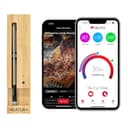
MEATER Plus Wireless Smart Thermometer
A leave-in probe reading both meat and grate is what lets you sleep through the middle of the plan instead of setting alarms.
Read the reviewThe buffer
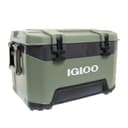
Igloo BMX 52 QT Cooler
The hold is what absorbs a cook that finished three hours early. Without an insulated box, the plan below does not work.
$149.99 · View on AmazonRead the reviewPrice as of October 20, 2026. #ad How we’re funded
Frequently asked questions
What time should I put a brisket on for dinner at 6pm?
For a 12 lb packer at 250°F, somewhere around 1 to 2am, which lands the brisket off the cooker in the early afternoon with several hours of hold before serving. That feels absurdly early and it is deliberate: you are not aiming to finish at 6pm, you are aiming to finish well before it and hold. A brisket that finishes three hours early is a non-event; one that finishes an hour late ruins the evening.
How long does a 12 lb brisket take to smoke?
Commonly 10 to 12 hours at 250°F, or 14 to 16 at 225°F — but treat those as planning figures for booking out your day rather than predictions. Thickness matters more than weight, and the stall can add hours with no warning. Two identical-looking briskets from the same case can finish two hours apart, which is why the schedule needs a buffer rather than a better estimate.
Can you start a brisket the night before?
Yes, and for a lunchtime or early-evening meal it is the standard approach — an overnight cook means the unpredictable middle hours happen while you sleep. Do it with a leave-in probe that alarms, a cooker you trust to hold temperature unattended, and ideally at 225°F for the overnight stretch for the wider margin. Our overnight guide covers the safety side properly.
What if the brisket finishes way too early?
That is the plan working, not failing. Wrap it, put it in a pre-warmed insulated box packed with towels, and hold it above 140°F until you need it. A held brisket is not merely surviving — the extended rest genuinely improves it, letting juices redistribute and collagen breakdown continue gently. Several hours of hold is routine; just verify the meat stays above 140°F with a probe.
What if it is running late and people are arriving?
You have two real options. Raise the cooker temperature to 275-300°F to push through the back half faster, which costs you a little in bark quality but can save an hour or more. Or wrap tightly in foil rather than paper, which traps steam and speeds things up meaningfully. Neither is ideal, which is precisely why the schedule is built to make them unnecessary.
Should I trim and season the night before?
Trimming the night before is straightforwardly good — it is fiddly knife work you do not want to do at 1am, and a trimmed brisket stores fine overnight in the fridge. Seasoning the night before is optional and mildly beneficial: the salt has time to penetrate and the surface dries slightly, which helps bark form. Neither is essential, but both remove work from the hardest part of the day.
Sources
- ThermoWorks — Smoked Brisket: A How-To Primer — ThermoWorks on brisket internal temperature, probe tenderness and the stall (accessed July 22, 2026)
- Meathead's AmazingRibs.com — What Causes The BBQ Stall — Documentation (citing Greg Blonder's research) that the stall is evaporative cooling, not fat or collagen (accessed July 22, 2026)
- USDA FSIS — "Danger Zone" (40°F - 140°F) — USDA: bacteria multiply fastest between 40°F and 140°F — the food-safety basis for the 4-hour rule (accessed July 22, 2026)
- USDA FSIS — Safe Minimum Internal Temperature Chart — USDA safe minimum internal temperatures, incl. 145°F for beef cuts plus a 3-minute rest (accessed July 22, 2026)
Keep reading
Smoking Brisket in Cold Weather
Add two to four hours to this plan when it is cold, and keep the hold as buffer.
Read the guideBrisket Time & Temperature
The per-pound planning figures this schedule is built from.
Read the guideResting & Holding a Brisket
How the hold works, how long it can safely run, and why it improves the meat.
Read the guideSmoking a Brisket Overnight
The 1am start, done safely — and how to sleep through part of it.
Read the guideThe Brisket Stall
The reason no honest cook will give you a finish time.
Read the guide