How to Transport a Cooked Brisket
There are two safe ways to take a finished brisket somewhere: hot, above 140°F, or cold, below 40°F. The one that ruins both the brisket and the evening is the one most people default to — somewhere in between, in the back of a car, for three hours.
How this is funded: we earn a commission if you buy through our links, at no extra cost to you. It never changes which product we recommend, and we’ll tell you plainly when we’d skip one. Full disclosure.
Pick one: hot above 140°F, or cold below 40°F. Never the middle. That is the whole food-safety story, and it comes straight from the USDA’s danger zone — the 40 to 140°F band where bacteria multiply fastest. For a journey of a few hours, hot is better in every respect: the brisket keeps resting while it travels and arrives ready to slice. For anything longer, chill it properly, travel cold and reheat on arrival. The thing that goes wrong is the default nobody chooses on purpose — a hot brisket cooling slowly in an unpreheated cooler in the back of a car, drifting down through the danger zone over three hours.
Hot or cold: how to decide
| Journey | Travel | Why |
|---|---|---|
| Under an hour | Hot | Trivial in a preheated box. The brisket is still resting, which it needs to do anyway, and arrives ready to slice. |
| One to four hours | Hot | Still the better brisket, and well within what a full, preheated, unopened cooler will hold above 140°F. Probe it on arrival. |
| More than four hours, or an overnight stop | Cold | Do not gamble the hold. Chill it fully, travel below 40°F with ice, reheat to 165°F at the other end. |
| Cooking the day before regardless | Cold | Already a storage problem rather than a transport one. Chill, travel cold, reheat wrapped and with fat. |
| Flying, or shipping it | Frozen | Anything you cannot control the timing of should be frozen solid, not held. Treat it as a freezer question. |
The temperature thresholds are the USDA’s. The journey bands are our reading of them against how a well-packed cooler behaves — no cooler maker publishes a hot-hold duration, which is itself worth knowing, and it is why the advice here is to probe the brisket rather than trust a number on a box.
Traveling hot: the five things that matter
1. Preheat the box. This is the step people skip and it is the one that decides the first hour. An ambient-temperature cooler is a large mass of cold plastic and foam, and the brisket will heat it up at its own expense. Fill the cooler with hot tap water, shut it for ten to fifteen minutes, then tip it out and dry it. You have now turned the box from a heat sink into a thermos.
2. Keep it whole. A nine-pound brisket is its own insulation. Slices are not: they have many times the surface area and they will be lukewarm and dry on arrival while the whole brisket beside them is still too hot to handle. Take the knife and a board with you instead of a tray.
3. Wrap paper first, then foil, then towels. Unwaxed butcher paper against the bark lets it breathe just enough not to steam itself soft, which is the same reasoning as the paper versus foil argument during the cook. Heavy foil over the paper is the moisture and heat barrier. Clean towels around the parcel fill the air space, and air space is where the heat goes.
4. Fill the box.A 52-quart cooler with one brisket in it is mostly a box of air, and air circulates and cools. Pack towels, or a second wrapped item, around the brisket until the lid closes against something. If you routinely travel with one brisket, a smaller insulated carrier is genuinely the better tool — which is why a catering food-pan box is the first pick above rather than the biggest cooler.
5. Do not open it.Not to check, not to show someone, not at the services. Put a probe in before you close the lid if you want to know the temperature — our wireless thermometer pickswill read it from the driver’s seat — and otherwise leave it alone until you arrive.
Traveling cold: do it properly or not at all
Cold transport is a perfectly good answer and it has one requirement: the brisket has to actually get cold first, quickly. That means into the refrigerator within 2 hours of coming off the heat, cut into large chunks in a shallow container so the center cools fast, and fully chilled before it travels. Our storage guide sets out the USDA timings and the cooling technique.
Then travel it like groceries: a cooler with ice or frozen packs, lid shut, out of the sun, below 40°F. Reheat at the destination wrapped, with rendered tallowor the saved juices, in a low oven until the center reads 165°F. A brisket reheated well is noticeably better than a brisket that was mishandled hot, and nobody at the table will be counting.
What does not work is the hybrid: a warm brisket packed with a couple of ice packs “to be safe.” That is the slowest possible route through the danger zone and it ruins the texture into the bargain. Hot or cold, and commit.
On arrival
Probe the thickest part before anything else. Above 140°F you are fine and can keep holding or start slicing. Below it, the clock has started and the brisket should be served or reheated promptly rather than left on a counter while people arrive.
Then slice across the grain, as our slicing guidesets out — and remember that the grain runs differently in the point and the flat, which is easy to forget in someone else’s kitchen with people watching. Slice only what is going out, keep the rest in the wrap, and pour the juices from the paper back over the slices as you plate them. That last step takes four seconds and is the difference between brisket that traveled and brisket that traveled well.
A note on serving somewhere without a kitchen
Tailgates, parks and village halls are where this goes wrong, because the brisket is fine and the logistics are not. Three things worth planning. You need a surface: take a board big enough for a packer, because a packer does not fit on whatever is there. You need somewhere for the juice to go, which is what a board with a groove is for. And you need to decide in advance whether you are slicing to order or slicing all at once — slicing to order is better brisket and slower service, and that trade is yours to make rather than one to discover halfway through.
If you are buying a box specifically for this rather than using one you own, the brand question is worth ten minutes: YETI against RTIC and a Cambro turns entirely on published interior dimensions, because none of the three publishes a hot-hold figure at all.
What traveling with a brisket actually needs
An insulated box, a wrap, and a thermometer you already own. Nothing on this list is single-purpose — the same box is what holds a brisket that finished early at home. Prices are live and refresh daily.
The hot box
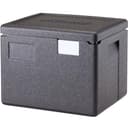
Cambro GoBox Insulated Food Pan Carrier, 8" Deep
An insulated food-pan carrier is what caterers use because it is built for exactly this: holding cooked food above 140°F for hours without power. It is also the cheapest pick here.
$52.43 · View on AmazonSee holding picksPrice as of October 20, 2026. #ad How we’re funded
The cooler most people already own
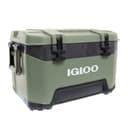
Igloo BMX 52 QT Cooler
A hard-sided cooler preheated with hot water does the same job well. Size it so the brisket nearly fills it — a half-empty box of air loses heat far faster.
$149.99 · View on AmazonRead the reviewPrice as of October 20, 2026. #ad How we’re funded
The wrap
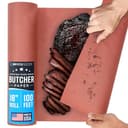
Bryco Goods Pink Butcher Paper 18" x 100 ft
Unwaxed butcher paper next to the bark, then foil, then towels. Paper lets the bark breathe just enough that it does not steam itself soft on a two-hour drive.
See paper picks
Frequently asked questions
What is the best way to transport a cooked brisket?
Hot, whole and in a preheated insulated box, if the journey is a few hours or less. Leave the brisket unsliced, wrap it in butcher paper then heavy foil, pack it into a cooler you have preheated with hot water and padded with towels, and do not open the lid until you arrive. A well-packed cooler holds a brisket above 140°F for hours with no power at all, and the brisket continues resting while it travels — which it needs to do anyway.
How long can I keep a brisket hot in a cooler?
Several hours in a well-packed, preheated box, and the limiting factor is the temperature rather than the clock: the brisket is safe as long as it stays above 140°F, which is the top of the USDA danger zone. The practical variables are how full the box is, how hot the brisket was when it went in, and how often you open it. Pack it full, preheat the box, keep it shut — and put a probe in so you are reading a number rather than hoping.
Should I slice brisket before transporting it?
No, and this is the most common mistake. A whole brisket is a dense insulated mass that holds heat for hours and keeps its juices inside. Slices have enormous surface area, shed heat in minutes, dry out, and arrive looking tired. Travel whole, slice at the destination, and pour the juices from the wrap over the slices as you plate them. Take a long slicing knife and a board with you rather than a tray of slices.
Can I transport a brisket cold and reheat it there?
Yes, and for a long journey it is the better answer. Chill the brisket properly first — into the refrigerator within 2 hours of coming off the heat, cut into large chunks in a shallow container so it cools quickly — then travel below 40°F in a cooler with ice or packs. Reheat at the destination, wrapped and with liquid, to 165°F. It is slightly less good than a brisket that traveled hot, and much better than one that spent four hours drifting through the danger zone.
What temperature is unsafe for transporting brisket?
Anything between 40°F and 140°F for an extended period — that is the USDA's danger zone, where bacteria multiply fastest. The failure mode on a long drive is predictable: a brisket that left the cooker at 200°F, sat on a counter while the car was loaded, and then cooled slowly in an unpreheated cooler can be well inside that band for hours. The rule is simple and absolute: pick hot or pick cold, and make sure the brisket actually is what you picked.
How do I keep a brisket hot in a car without a cooler?
Wrap it in paper, then foil, then as many clean towels or blankets as you can wrap around it, and put the parcel inside a cardboard box or a laundry basket to hold the insulation tight. It is a poorer version of a cooler and it does work for a short journey. What matters is the same thing: minimize air space, do not unwrap it on the way, and probe it when you arrive rather than assuming. Do not put it in the boot of a car in summer and leave it there.
Will the brisket keep cooking while it travels?
A little at first, and that is fine — it is the rest, and the rest is doing useful work. Carryover heat continues moving through the meat and the collagen keeps relaxing for a while after it comes off the cooker. The point of worrying about this is the earlier decision rather than the journey: if a brisket is already at the far edge of probe-tender when it goes in the box, a long hot hold can take it past the point you wanted. Our resting and holding guide covers where that line is.
Should I take the brisket in the wrap it cooked in?
Yes if it is intact, and add a fresh layer of foil and towels around it. The paper is already saturated with rendered fat and juices and that is exactly what you want against the meat. If the wrap tore or you unwrapped it to probe, re-wrap in fresh butcher paper and foil before it goes in the box, and pour any collected juices in with it rather than leaving them behind in the pan.
Sources
- USDA FSIS — "Danger Zone" (40°F - 140°F) — USDA: bacteria multiply fastest between 40°F and 140°F — the food-safety basis for the 4-hour rule (accessed July 22, 2026)
- USDA FSIS — Safe Minimum Internal Temperature Chart — USDA safe minimum internal temperatures, incl. 145°F for beef cuts plus a 3-minute rest (accessed July 22, 2026)
- USDA FSIS — Leftovers and Food Safety — USDA: refrigerate leftovers within 2 hours of cooking or of removal from a warm-holding appliance (1 hour above 90°F); keep 3 to 4 days refrigerated or 3 to 4 months frozen; reheat to 165°F measured with a food thermometer (accessed October 5, 2026)
- USDA FSIS — Grilling Food Safely — USDA guidance on safe outdoor cooking, thawing and holding (accessed July 22, 2026)
Keep reading
Resting and Holding a Brisket
The technique this page borrows: a preheated box, a whole brisket and hours of patience.
Read the guideBest Cooler for Holding Brisket
The boxes compared, from a catering food-pan carrier up to a rotomoulded cooler.
See holding picksHow to Hold and Reheat Brisket
The safe hold, the reheat, and the temperatures the USDA actually sets for both.
Read the guideHow to Store and Freeze Brisket
If the journey is long enough that traveling cold is the right call, start here.
Read the guideBest Brisket Slicing Knife
Take the knife, not a tray of slices. The knives that cut a packer in one pull.
See knife picksHow Much Brisket Per Person?
Work out what to take before you cook it, with the trimming and rendering losses included.
Do the maths