What to Do With Brisket Trimmings
Two to four pounds comes off a whole packer, and throwing it all away is a waste — but so is treating it as one material. It is three, with three different uses, and the sorting happens while you trim, not afterwards.
How this is funded: we earn a commission if you buy through our links, at no extra cost to you. It never changes which product we recommend, and we’ll tell you plainly when we’d skip one. Full disclosure.
Sort them into three piles while you trim, because the piles have nothing to do with each other: soft fat to render, lean scraps to grind or braise, and hard fat for the bin. Doing that at the board costs you nothing. Doing it afterwards, out of a single bag of cold mixed trim, is a miserable half hour that most people skip — which is why so many people throw the whole lot away.
On a typical whole packer of 13 to 16 pounds, there is somewhere around two to four pounds of material in question. That is a range from the shape of the cut rather than a published figure, and it swings a long way: how the brisket was trimmed at the plant matters more than how you trim it, and a fatty Prime packergives up far more than a closely trimmed Choice one — and a Wagyu-graded brisket more again, which is one of the quieter arguments for and against paying for one. Either way, the majority of it is usually soft fat, and soft fat has one excellent use.
One rule before anything else: trim for the brisket, never for the trimmings. The target our trimming guidesets — the cap down to a consistent quarter inch, the hard deckle fat out, the thin edges squared off — is set by what makes a good brisket. Whatever falls off is a by-product. Over-trimming to fill the rendering pan costs you the thing you actually came for.
The three materials, and how to tell them apart
Soft fat. Most of the fat cap, plus the softer intermuscular fat. It is pliable at refrigerator temperature, you can dent it with a thumbnail, and it is pale cream rather than chalk white. This is the rendering pile and it should be the biggest one.
Hard fat.Chiefly the deckle — the dense, waxy wedge between the point and the flat — plus any fat that feels like a candle rather than like butter. It does not render at smoking temperatures, which is exactly why our trimming guide tells you to cut it out, and it will not render pleasantly in a pan either. Bin it. You are not missing anything.
Lean scraps. Whatever actual muscle comes away: the squared-off thin end of the flat, the pieces you tidy off the edges, the bits attached to fat you decided to remove. This is real beef and it is worth keeping separate from everything else.
And one category that is none of the above: silverskin, heavy membrane and anything glandular.Silverskin is the iridescent connective sheet that goes rubbery rather than tender. Glandular tissue is a firm, pale, irregular nodule that looks like neither fat nor muscle — it is a lymph node, and it does not belong in food or in your rendering pan. If you are unsure whether a piece of hard fat is worth keeping, bin it. The whole point of this page is that you have plenty.
Use one: render it into tallow
This is where most of the volume should go, and it is the use with the best return on effort.
Cut the soft fat into roughly one-inch cubes — smaller renders faster and more evenly, and cold fat cubes cleanly — and put it in a pan or a foil tray with a splash of water to stop it catching before any fat has melted out. Then render it low and slow until the solids have shrunk to crisp brown bits and the liquid is clear. Strain it through a fine sieve into a jar and refrigerate.
The traditional move is to do this on the smoker, in a tray on the grate beside or below the brisket, while the brisket cooks. The heat is already paid for, the long gentle temperature is exactly what rendering wants, and the tallow picks up a little smoke. It also means the fat is ready at roughly the moment you might want it at the wrap. Our tallow guidehas the full method and — more usefully — an honest account of how much adding it at the wrap actually accomplishes, which is less than the current enthusiasm suggests.
What you end up with keeps for months refrigerated and is a genuinely good cooking fat: roast potatoes, searing steak, frying eggs, the base of a pot of beans. It is also the correct fat for a brisket-fat pan sauce if you go that way.
Use two: grind the lean for burgers
Brisket is one of the great burger grinds. It has a deep, beefy flavor that chuck does not, and the texture holds together well. Steakhouse blends routinely include it for exactly that reason.
The one thing to be deliberate about is the ratio. Aim for roughly 80 parts lean to 20 parts fat by weight, which means weighing your piles rather than eyeballing them — trimmings skew heavily fatty, and a grind that is 40% fat makes a burger that shrinks to nothing and flares on the grill. If your lean pile is small, the honest answer is that you do not have enough for a burger batch; freeze it and add the next brisket’s scraps to it.
We carry no meat grinder in our product registry, so we are not going to name one. The practical options are a stand-mixer grinder attachment if you already own the mixer, a hand-crank grinder, or — the one most people should use — taking the bag to a butcher counter and asking them to run it. Most will, often for nothing. Keep the meat very cold right up to the moment it is ground, whichever route you take: warm fat smears instead of cutting, and a smeared grind makes a pasty burger.
Use three: stock, beans and a braise
For lean scraps that are not going to become burgers, there are three good destinations and all of them are better than the bin.
Stock. Brown the scraps hard in a little of your own tallow, cover with water, add an onion and a couple of bay leaves, and simmer for a few hours. Brisket scraps make a dark, gelatinous beef stock that is a long way from a bouillon cube.
Beans. The Central Texas answer. A pot of pinto beans with brisket trimmings rendered into the base is the side dish that belongs with the brisket you are about to cook, and it uses both piles at once.
A small braise. Cubed lean scraps, seasoned with the same rub you are using on the brisket, browned and then braised for a couple of hours, make an excellent chili or a filling for tacos. This is essentially what you would do with a chuck roast, on a smaller scale.
What goes where, at a glance
| Material | How to recognize it | Where it goes |
|---|---|---|
| Soft fat cap | Pliable when cold, dents under a thumbnail, pale cream | Render into tallow |
| Hard deckle fat | Dense and waxy, chalk white, feels like a candle | Bin — will not render usefully |
| Lean scraps | Actual muscle; the squared-off thin end and edge trim | Grind, stock, beans or a braise |
| Silverskin / membrane | Iridescent, sheet-like, tough under the knife | Bin — goes rubbery, never tender |
| Glandular tissue | Firm pale nodule, irregular, neither fat nor muscle | Bin — not food |
| Blood clots and bruising | Dark red to near-black, soft, localized | Cut away and bin |
This table is our own sorting guide, reasoned from how each tissue behaves under heat. It is not a published classification. The food-safety handling of raw beef trimmings follows the USDA guidance cited below.
Handling and storage, briefly
Trimmings are raw beef and nothing more, so the ordinary rules apply rather than the shorter timelines for cooked brisket. Keep them cold while you work — a bowl in the refrigerator rather than on the counter, especially if trimming is taking you the best part of an hour — and remember that the USDA danger zone starts at 40°F, which a bowl of fat on a warm kitchen counter clears quickly.
If you are not rendering the same day, freeze the fat and the lean separately, flat, and label them. Frozen brisket fat and frozen brisket lean are indistinguishable at six weeks, and a bag of mystery beef in the freezer is the same waste you were trying to avoid.
One last thing worth doing the first time: weigh the piles. It takes ten seconds, it tells you whether you are trimming to the quarter-inch target or well past it, and it is the quickest feedback loop available on the one step of a brisket cook that matters most.
The three tools this job actually needs
Everything on this page starts with sorting the trimmings into piles as they come off, and that is a knife-and-board problem rather than a kitchen-gadget one. We carry no meat grinder in our product registry, so we are not going to name one — see the grinding section below for what to do instead. Prices are live and refresh daily.
What makes the sorting possible
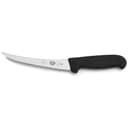
Victorinox Fibrox Pro 6" Curved Flexible Boning Knife
Separating hard fat from soft fat from lean scraps is a knife job, and a stiff slicer cannot do it. A flexible curved boning knife follows the seam between fat and muscle instead of cutting through it, which is the difference between three useful piles and one mixed one.
See trimming knife picksWhere the trimming actually happens
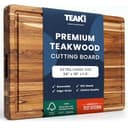
Teakhaus Carving Board with Juice Groove, XL 24" x 18"
A whole packer plus the trimmings coming off it needs more board than most kitchens own, and a juice groove keeps the rendered fat and purge off your counter. 24 by 18 inches holds a packer without the point hanging off the edge.
$133.00 · View on AmazonSee cutting board picksPrice as of October 20, 2026. #ad How we’re funded
For an hour of handling raw fat
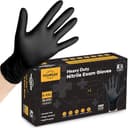
TitanFlex Black Nitrile Gloves, 6-mil (100 ct)
Trimming is cold, greasy, slippery work and a thin nitrile glove gives you grip and a clean hand on the knife. These are the disposable kind, not the heat gloves — different job, different glove.
See glove picks
Frequently asked questions
What should you do with brisket trimmings?
Sort them into three piles as you trim. Soft fat from the cap goes to rendering — that is where your tallow comes from, and it is the single best use for the volume. Lean scraps go to grinding, stock or a braise; brisket makes an outstanding burger. Hard deckle fat, silverskin and anything glandular goes in the bin, because it will not render usefully and no amount of cooking makes it pleasant. The key is doing the sorting at the board, because once it is all in one bag it is a much worse job.
How much fat comes off a brisket when you trim it?
On a typical whole packer of 13 to 16 pounds, expect somewhere around 2 to 4 pounds of trimmings in total, depending on how the brisket was cut at the plant and how aggressively you trim. Of that, roughly two-thirds is usually soft fat worth rendering, and the rest splits between lean scraps and hard fat for the bin. These are ranges from the shape of the cut rather than published figures — the amount varies enormously between briskets, and a hard-trimmed Prime packer gives up far more than a closely trimmed Choice one.
Can you make tallow from brisket trimmings?
Yes, and it is the best use for the bulk of them. Cut the soft fat into roughly inch cubes, render it low and slow — in a pan on the smoker while the brisket cooks is the traditional move, since the heat is already paid for — strain it through a fine sieve, and refrigerate. You get a clean, mild beef fat that keeps for months. Our tallow guide covers the method in detail, and is honest about what tallow does and does not do when you add it at the wrap.
Can you grind brisket trimmings for burgers?
Brisket is one of the great burger grinds, and the lean scraps plus some of the fat are exactly the right raw material. The thing to be deliberate about is the ratio: aim for roughly 80 parts lean to 20 parts fat by weight, which means weighing your piles rather than guessing, because trimmings skew heavily to fat. We carry no meat grinder in our registry, so the practical options are a stand-mixer grinder attachment if you own one, a hand grinder, or taking the bag to a butcher and asking — most will do it.
What parts of a brisket should you throw away?
Three things. The hard, waxy deckle fat between the point and the flat, which will not render at smoking temperatures and is unpleasant at any temperature. Silverskin and heavy connective membrane, which goes rubbery rather than tender. And anything that looks glandular — a firm, pale, irregular nodule rather than fat or muscle — which is a lymph node and should not go into food or into your rendering pan. When in doubt about a piece of hard fat, bin it: you have plenty.
Can you freeze brisket trimmings?
Yes, and it is the sensible move if you are not rendering the same day. Freeze the fat and the lean separately, in flat packages so they thaw quickly, and label them — a bag of frozen brisket fat and a bag of frozen brisket lean look identical in six weeks. Trimmings are raw beef, so the same storage rules apply as to any raw beef rather than the shorter timelines for cooked brisket, which our storage guide covers separately.
Can you give brisket trimmings to a dog?
We would not, and this is outside what we are qualified to advise on. Raw beef fat in quantity is a genuinely rich thing to give a dog, and seasoned or smoked trimmings bring salt, pepper, garlic and onion into the picture. Ask your vet rather than a barbecue site. What we can say confidently is that trimmings have better uses — rendering alone recovers most of the value.
Should you trim a brisket more or less to get more trimmings?
Trim for the brisket, never for the trimmings. The fat cap wants to come down to a consistent quarter inch or so — enough to protect and baste the meat, not so much that it never renders — and the thin edges want squaring off so they do not burn. That target is set by what makes a good brisket, and whatever falls off is a by-product. Over-trimming to fill the rendering pan costs you the thing you came for.
Sources
- USDA FSIS — Beef From Farm to Table — USDA on safe handling, cooking and resting of beef, including brisket (accessed July 22, 2026)
- USDA FSIS — "Danger Zone" (40°F - 140°F) — USDA: bacteria multiply fastest between 40°F and 140°F — the food-safety basis for the 4-hour rule (accessed July 22, 2026)
- USDA FSIS — Leftovers and Food Safety — USDA: refrigerate leftovers within 2 hours of cooking or of removal from a warm-holding appliance (1 hour above 90°F); keep 3 to 4 days refrigerated or 3 to 4 months frozen; reheat to 165°F measured with a food thermometer (accessed October 5, 2026)
Keep reading
Beef Tallow for Brisket
Rendering the fat pile properly, and an honest account of what tallow does at the wrap.
Read the guideHow to Trim a Brisket
The step that generates all of this, and the quarter-inch target that decides how much.
Read the guideBest Knife for Trimming Brisket
Flex, grip when greasy and published steel — the six knives that make sorting possible.
See the picksBrisket Point vs Flat
Where the hard deckle fat sits, and why that seam is the one worth knowing.
Read the guideBrisket Burnt Ends
The other way to use the fattiest part of a packer, and the best thing to do with a point.
Read the guideWhat to Do With Leftover Brisket
The same thrift at the other end of the cook, once the brisket is cooked and sliced.
Read the guide