The four things that decide whether a sauce works on brisket
Where sugar sits on the label. Ingredients are listed by weight, so the first two or three lines tell you almost everything. A sauce that opens with brown sugar or high-fructose corn syrup is a sweet sauce whatever the front of the bottle says, and sweetness is the single thing most likely to flatten a peppery bark. A sauce that opens with tomato and vinegar is a condiment; a sauce that opens with sugar is a glaze. Both are legitimate. They are just not interchangeable, and buying the wrong one is the most common mistake on this shelf.
Acid. Brisket is a fatty cut even after a careful trim, and the point especially coats your palate. Vinegar is what cuts through that and resets it between bites, which is why the vinegar-forward regional styles exist at all. On a sliced flat you want only a little; on chopped point in a sandwich you want a lot. A sauce with vinegar in the top three ingredients does that work. A sauce where vinegar appears below the thickener does not.
Body. Thickness decides whether a sauce sits under a slice or sits on it. Thin sauces pool on the plate and get picked up in the amount the eater chooses; thick sauces coat, and a coated slice of brisket is a slice you can no longer taste the smoke through. For the table, thin wins. For a glaze, thick wins, because thick is what tacks up under heat rather than running into the bottom of the pan.
What it was formulated for. Read the label copy honestly. Most of the best-selling barbecue sauce in the United States was built for pork ribs and chicken, where sugar caramelizing on a short cook is the entire point. Beef is a different problem: it is richer, it is already seasoned aggressively, and it has spent ten to fourteen hours acquiring a flavor that a sweet sauce covers in one stroke. A sauce does not have to be marketed at brisket to work on it, but if sugar is doing the heavy lifting, it will taste like sauce with brisket underneath rather than brisket with sauce beside it.
The three jobs sauce actually does on brisket
The table condiment.This is the common case, and the requirement is modest: something tangy, thin enough to spoon, not so hot that a guest can be caught out by it. Serve it in a cup on the side and warm rather than fridge-cold — a cold sauce on a hot slice kills the fat that makes brisket taste like brisket. Thirty seconds in a small pan is enough. Do not sauce the platter; sauce is a choice each eater should get to make, and once a platter is sauced nobody can opt out.
Chopped brisket.When the flat overcooks and will not hold a slice, or when you are stretching one packer across a lot of sandwiches, chopped brisket is the answer and it genuinely wants sauce. Here you are not decorating — you are seasoning a mixture, and a thin vinegar sauce tossed through hot chopped point does the job that a thick sweet sauce cannot, because a thick sauce turns the mixture into a paste. This is the one case where we would spend more on the sauce than most people think is reasonable.
The burnt-end glaze. Burnt ends are cubes of the point returned to the smoker for a second cook, and the modern version is glazed. That is exactly the job a sugar-forward sauce is built for: the sugar tacks up, goes shiny, and grips the cut faces of the cube. It is also the job with the strictest timing rule on this page, which we come to next.
When sauce goes on, and when it must not
Never during the cook.Sauce applied at the start of a brisket has ten or more hours to sit at 225-275°F. Sugar does not survive that; it scorches, and scorched sugar tastes bitter in a way that is very easy to mistake for creosote from a dirty fire. It also puts a wet, sugary layer over the surface exactly while bark is trying to form, and bark cannot form through a wet layer.
Burnt ends: the last thirty to forty-five minutes. Long enough for the glaze to set and tack, short enough that the sugar does not burn. If your burnt ends taste scorched rather than caramelized, the sauce almost always went on too early rather than in too great a quantity.
Sliced brisket: at the table, or not at all. There is no version of this where sauce goes on a whole packer before slicing. It softens the bark you spent the entire cook building, and it removes the choice from everyone eating.
One food-safety note that people get wrong with sauce specifically: if you have been brushing sauce onto meat, the brush and whatever is left in the bowl have touched partly cooked surfaces, so neither goes back to the table. Decant what you intend to serve before you start basting. The same discipline applies to holding — a finished, sauced brisket still has to stay above 140°F until it is served, exactly like an unsauced one (see resting and holding).
The Texas “sauce” that does not come in a bottle
The thin, dark, savory liquid served alongside brisket at a lot of Texas joints is not a barbecue sauce in the supermarket sense at all. It is built from the drippings — the rendered fat and juices caught under the meat — defatted, loosened with beef stock, and seasoned with some of the same coarse pepper that went on the rub. Sometimes a little of the house tomato sauce goes in; often it does not.
It is worth knowing about for two reasons. First, it is free, and it tastes more like the brisket than anything you can buy, because it literally came out of it. Second, it explains why so many bottled sauces disappoint on beef: they are sweet where the traditional accompaniment is savory and fatty. If you are holding a pan of drippings after a cook, skim the fat, warm the rest, add coarse pepper and a splash of vinegar, and try that before you open anything. Our page on beef tallow for brisket covers what to do with the fat you skimmed off.
The same principle gives you the best trick on this page for a bottled sauce you find too sweet: thin it. A tablespoon or two of warm defatted drippings, or beef stock, loosens a thick sauce, drops the sugar concentration, and pushes it toward the savory side without you having to like a different bottle. Warm it gently and do not boil it — boiling concentrates sugar, which is the opposite of what you want.
Reading a barbecue sauce label in ten seconds
Turn the bottle around and read only the first three ingredients. If the first is tomato or vinegar, you are holding a condiment and it will probably behave itself next to beef. If the first is sugar, brown sugar or high-fructose corn syrup, you are holding a glaze; it will be very good on burnt ends and heavy on a slice. If ketchupis first, you are holding a sauce built on someone else’s sauce, which usually means sugar is in there twice.
That single check tells you more than the front-label adjectives, all of which are unregulated. “Original” means nothing. “Texas-style” means nothing enforceable. The ingredient order is the only part of the label that is required to be true, and on this shelf it is the only part worth reading.
Sauce is not a repair
Worth saying plainly, because it is the most common reason people arrive at a page like this one. A sauce cannot make an undercooked brisket tender — tough brisket is a connective-tissue problem and no condiment reaches it. It cannot re-render fat that never rendered. And it cannot rescue a genuinely dry flat; it wets the surface for one bite and then the meat is dry again underneath.
What actually helps a disappointing brisket is fat and moisture put back deliberately: warm defatted drippings or tallow over the slices, or chopping the meat and using it where the texture is not the point. How to fix a dry brisket walks through both. Use sauce afterwards because you want sauce, not because you are hoping it will do a repair job.
What we did not pick, and why
No-sugar-added sauces.There is a real case for one — a sugar-free sauce cannot scorch, which makes it interesting on a long cook — and there is real demand for it. We have not named a pick because at the time of writing we could not resolve a single-bottle listing for the obvious candidates that was both in stock and unambiguous about which flavor you receive. We would rather leave the slot empty than send you to a mixed multipack and call it a recommendation.
White sauce and Carolina mustard sauce. Alabama white sauce is a mayonnaise-and-vinegar sauce built for smoked chicken, and South Carolina mustard sauce is built for pulled pork. Both are excellent at their own jobs. Neither belongs next to beef, and putting one on this page to pad the list would be padding the list.
Restaurant-branded bottles. Several famous Texas joints bottle their table sauce, and some of it is very good. Availability is the problem: these come and go from national retail, and a roundup that sends you to an out-of-stock listing is worse than one that does not mention it.
The honest verdict
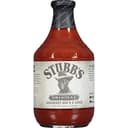
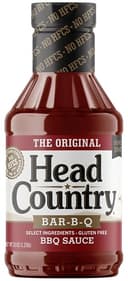
If you want one bottle on the table next to a Central Texas brisket, buy the Stubb’s. It is tangy rather than sweet, it is cheap per ounce, and it is the only pick here that manages both. If you are cooking for a group with mixed tastes — which is most brisket cooks, since nobody smokes a fourteen-pound packer for one — Head Country’s balance is the safer choice and costs less than a bag of charcoal.
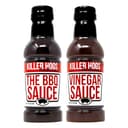
If your brisket is going into sandwiches, spend the money on the Blues Hog Tennessee Red; it is the only sauce here doing a job the others cannot. If you are making burnt ends, the Killer Hogs sauce is built to glaze and pairs with the rub we already recommend on our brisket rub roundup. And if the honest answer is that the bottle in your refrigerator is fine, it probably is — thin it with a spoonful of drippings, warm it, and serve it on the side.