How to Smoke Two Briskets at Once
The first thing to know is that it does not take twice as long. The second is that almost everything else about the cook shifts slightly, and the one that catches people out is not fuel or timing — it is that the two briskets will not finish together.
How this is funded: we earn a commission if you buy through our links, at no extra cost to you. It never changes which product we recommend, and we’ll tell you plainly when we’d skip one. Full disclosure.
Cooking two briskets is one of the few things in barbecue where the intuitive answer is wrong in a helpful direction.
It does not take twice as long. Cook time is a function of how thick each piece is, because heat penetrates from the outside in. Two twelve-pound packers are still twelve-pound packers, and each cooks at roughly the rate one would.
What changes is everything around that.
Space is the real constraint
Not weight. Not fuel. Space — and specifically airflow.
A smoker moves hot air around the meat. Block that path and the blocked surfaces sit in relatively still, cooler air and cook far more slowly than the exposed ones. Two briskets pushed together produce exactly this, and it is the most overlooked cause of an uneven cook.
The rule is a genuine gap — a couple of inches minimum between the packers and away from the chamber walls.
Which means published grate area overstates what you can use. 619 square inches sounds like plenty for two briskets and is not, once you subtract the air they need; 751 square inches is, which is the entire subject of Highland vs Longhorn.
If you have two grates, use both rather than crowding one. A brisket on a lower shelf will run differently from one above it, but a real difference between two well-ventilated positions beats two packers suffocating each other on the same level.
What actually gets longer
Recovery after loading. Putting thirty pounds of refrigerator-cold meat into a chamber drops the temperature hard, and a fuller chamber takes longer to climb back. Expect the cooker to sit below target for a while and resist the urge to open every vent to force it — it will recover, and over-correcting leads to an overshoot an hour later.
Fuel demand. More thermal mass to heat and hold means more fuel across the cook. Not double — you are still heating one chamber — but meaningfully more. Start with a full basket, ring or hopper, and have more to hand.
Overall duration. Add an hour or so to your planning figure to account for the slower start. That is not a second cook's worth of time; it is the recovery.
The thing that catches people out
They will not finish together.
Two packers of identical weight differ in thickness, fat content, grade and how they were trimmed. They sit in different parts of a chamber that is not uniformly heated. An hour or more of difference between them is completely normal.
People plan around a single finish time, then find one brisket probe-tender while the other is clearly not — and rather than deal with two, they compromise on both.
Do not do that. Probe them independently. Pull each one when it is ready. And put the first into a pre-warmed insulated box to hold above 140°F while the second finishes.
The hold is what makes this manageable, and a brisket held for an extra hour is no worse for it — which is why planning backwards with a buffer matters even more on a double cook than a single one.
You need two probes
This follows directly. If the briskets are on independent timelines, you need independent monitoring — a probe in each, plus a grate reading.
This is the specific case where a single-probe wireless unit like the MEATER Plus stops being sufficient. One probe means one brisket, and buying a second unit costs more than a four-channel wired system that also gives you the grate temperature.
The same applies at the end: probe both packers by hand, in several places each, because tenderness is what decides and no leave-in probe measures it.
Position deliberately, and rotate once
With one brisket you put it in the best spot. With two, one of them is going somewhere less good — so choose which.
If you know your cooker’s gradient, put the thicker packer, or the point end of each, in the hotter zone. Then swap their positions once around the halfway point.
Rotate once, deliberately, at a moment you are opening the lid anyway. Every additional lid lift costs heat, and with a fuller chamber that recovery is slower than usual.
What does not change
Reassuringly, most of the method.
Same cooker temperature — do not run hotter to compensate, since the extra mass is a recovery problem, not a rate problem. Same wrap point for each, judged individually. Same smoke wood, and roughly the same amount — the smoke absorption window is set by time and surface drying, not by how much meat is in the chamber. Same finish on probe tenderness. Same rest.
Should you?
If you need the meat, yes — and two moderate packers beat one enormous one, because a very large brisket has a wider spread between its thickest and thinnest points and is more prone to cooking unevenly.
Check the arithmetic first. Our how much brisket per person guide is the difference between genuinely needing a second packer and cooking one because it seemed prudent. Yields are lower than people expect, but so is the number of guests who eat a full half pound.
What a double cook specifically needs
The three things that change when you double the meat: chamber size, probe count and fuel. Prices are live and refresh daily.
The chamber that fits two
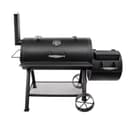
Oklahoma Joe's Longhorn Reverse Flow Offset Smoker
751 sq in of primary grate is the point at which two packers fit with airflow between them rather than touching. Capacity is the whole problem here.
Read Highland vs LonghornTwo probes, not one
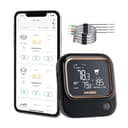
INKBIRD IBT-26S Wi-Fi + Bluetooth BBQ Thermometer
Two briskets finish at different times. A four-channel wired unit gives you a probe in each plus a grate reading, which a single wireless probe cannot.
$75.99 · View on AmazonSee thermometer picksPrice as of October 22, 2026. #ad How we’re funded
Fuel for a longer, hungrier cook
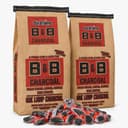
B&B Charcoal Oak Lump Charcoal
More meat in a fuller chamber means more fuel and a longer cook. Running out at hour ten is the avoidable disaster.
Read the review
Frequently asked questions
Does smoking two briskets take twice as long?
No. Cook time is driven by the thickness of each individual piece, not by the total weight in the chamber, so two 12 lb packers take roughly the same time as one 12 lb packer would. What does extend is the recovery time after the meat goes on — a fuller chamber takes longer to come back up to temperature — and that typically adds something in the region of an hour rather than doubling anything.
How much space do you need between two briskets?
At least a couple of inches, and more is better. A smoker works by circulating hot air around the food, and two packers touching or nearly touching block that flow entirely on their facing surfaces — which cook far more slowly than the exposed ones. If your grate cannot give you real separation, you do not have room for two briskets, however much the surface area suggests you do.
Will both briskets finish at the same time?
Almost certainly not, and planning for that is the main skill in this cook. Two packers differ in thickness, fat content and grade even when they weigh the same, and they sit in different parts of a chamber that is not uniformly heated. An hour or more of difference is completely normal. Probe them independently, pull each when it is ready, and hold the first while the second finishes.
Do you need more fuel for two briskets?
Yes, though less than you might expect — you are still heating one chamber, and the extra demand comes from the additional thermal mass of the second brisket rather than from a second cook's worth of fuel. Plan for meaningfully more than a single-brisket cook and start with a full basket or hopper. Running out of fuel with two packers mid-stall is the one failure that genuinely ruins the day.
Should you rotate two briskets during the cook?
If your cooker has a known temperature gradient, yes — swapping their positions once, roughly halfway through, evens out the exposure considerably. This matters more with two briskets than with one, because with two you have deliberately put meat in the parts of the chamber you would otherwise have avoided. Do it once, deliberately, rather than opening the lid repeatedly.
Is it better to cook two briskets or one big one?
Two smaller packers, generally. A single very large brisket has a thicker point and a wider spread between its thickest and thinnest sections, which makes uneven cooking more likely — and it still only yields what it yields. Two 12 lb packers give you more meat with more predictable behavior from each. The constraint is whether your cooker genuinely has room for both with airflow.
Sources
- USDA FSIS — Smoking Meat and Poultry — USDA on safe smoking practices, thermometer use and approved smoker materials (accessed July 22, 2026)
- ThermoWorks — Smoked Brisket: A How-To Primer — ThermoWorks on brisket internal temperature, probe tenderness and the stall (accessed July 22, 2026)
- Meathead's AmazingRibs.com — What Causes The BBQ Stall — Documentation (citing Greg Blonder's research) that the stall is evaporative cooling, not fat or collagen (accessed July 22, 2026)
- USDA FSIS — "Danger Zone" (40°F - 140°F) — USDA: bacteria multiply fastest between 40°F and 140°F — the food-safety basis for the 4-hour rule (accessed July 22, 2026)
Keep reading
How Much Brisket per Person
The math that tells you whether you actually need a second packer.
Read the guideHighland vs Longhorn
The same offset in two sizes — and the one that genuinely takes two packers.
Read the comparisonBest Smoker for a Large Family
The cookers that genuinely take two packers, on published primary cook area.
See capacity picksWhy Is My Brisket Cooking Unevenly?
Crowding is the most overlooked cause, and it is exactly this cook's risk.
Read the diagnosisResting & Holding a Brisket
The hold that lets one brisket wait while the other finishes.
Read the guide