The four things that decide a large-capacity smoker
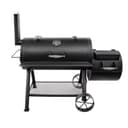
1. Area, and then the shape of that area.A trimmed packer is roughly 18 to 20 inches long, so two of them side by side need a grate that is both long enough in one direction and wide enough in the other. Rectangular chambers do this easily; round ones do not, no matter what their area figure says. The Longhorn’s 751 stated square inches of primary space is a rectangle, so two packers lie down in it. A bullet smoker with a similar total figure gets there by stacking two circles, which is a very different thing — useful, but it means one brisket above another rather than beside it, with a real temperature difference between the levels.
2. Primary area versus total area.This is the single most misread spec on a smoker listing and the makers know it. A warming rack is counted in the total and is nearly useless for brisket: it sits in the hottest, driest part of the chamber and it is usually too shallow for a thick point. Where a maker publishes both numbers, read the primary one. Oklahoma Joe’s publishes 1,060 total and 751 primary for the Longhorn, which is honest of them; Char-Griller publishes a 1,130 total for its budget offset and no primary figure at all, which is why that cooker is on the offset roundup rather than this one.
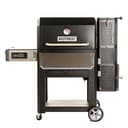
3. How long the fuel lasts without you.Capacity buys you nothing if you have to be awake for all of it, and this is where the published numbers get genuinely interesting. Masterbuilt states up to 10 hours from the 1050’s hopper and up to 18 hours at 225°F from the smaller Gravity Series 600— the smaller cooker is the better overnight machine, which is not what anyone expects. An offset needs a split every forty-five minutes or so, all night, by design. A bullet smoker on a full charcoal ring will run a whole brisket unattended. An electric cabinet runs as long as the outlet does. None of these is better; they are different nights, and you should choose the night you actually want.
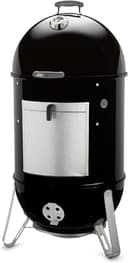
4. Whether a bigger chamber is harder to run. Partly yes, and in a specific way: more steel means more thermal mass, which makes the cooker slower to move in both directions and therefore more stable once it settles, but it also means more fuel burned just to heat the box. On a half-empty large cooker you are paying for air. That is an argument for buying only as much capacity as you will routinely use, and it is why the 22-inch Weber at 726 stated square inches is still on this page: for most large families, one big brisket plus sides is the real requirement, and a cooker you can run on autopilot beats one you have to feed.
How the six compare
| Cooker | Total area (stated) | Primary area (stated) | Layout | Published burn / hopper time |
|---|
| Masterbuilt Gravity 1050 | 1,050 sq in | Not published | Rectangular cabinet, gravity hopper | Up to 10 hours |
| Oklahoma Joe’s Longhorn | 1,060 sq in | 751 sq in | Horizontal barrel, side firebox | Not published — a stick fire needs tending throughout |
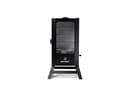
| Masterbuilt 40" Electric | 970 sq in | Not published | 4 racks, vertical cabinet | Mains powered — no fuel limit |
| Pit Boss 850 Navigator | 849 sq in | Not published | Rectangular, two levels | Not published — a hopper of pellets per long cook |
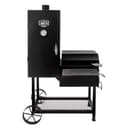
| Oklahoma Joe’s Bandera | 992 sq in | 744 sq in | Vertical cabinet, side firebox | Not published — small firebox, frequent tending |
| Weber Smokey Mountain 22" | 726 sq in | Not published | Two 22 in round grates | Not published — a full ring typically runs a whole cook |
Every figure above is the maker’s own published number, read on the date shown in each product’s spec table below. “Not published” means the maker does not state it — we have not substituted an estimate, and in the burn-time column that gap is itself the finding: only Masterbuilt publishes a usable number for how long its cooker runs unattended.
How many briskets do you actually need?
Work it out before you spend anything. A whole packer arrives somewhere between 12 and 18 pounds, loses a serious share of that to trimming, and loses more again to rendered fat and moisture over twelve hours. What reaches the table is a long way short of the sticker weight, and our per-person page does that arithmetic properly with the yield losses written down rather than hidden.
Three practical consequences. First, the gap between “feeds eight” and “feeds sixteen” is often one brisket, not two cookers. Second, if you are feeding a crowd sandwiches rather than plated slices, the per-person requirement drops a long way and a single packer goes much further. Third, brisket holds superbly — far better than almost anything else you could cook for a crowd. A brisket finished early and held properly is genuinely as good as one that came off at serving time, which means you can cook two packers on one cooker on consecutive days instead of buying capacity you use twice a year. Our holding and reheating guide covers the safe way to do it, and the cooler roundup covers the gear.
Two briskets at once: what actually goes wrong
Capacity on paper and two good briskets are not the same achievement, and our two-brisket guideis the full treatment. The short version is three problems. You have doubled the cold mass going into the chamber, so the recovery after loading is much longer and the cooker runs below your target for a while — which lengthens the cook more than the arithmetic suggests. You have blocked airflow, because two packers side by side on one grate leave much less room for heat to move than one does. And the two briskets will not finish together, because they are different pieces of meat in different parts of the chamber; expect to pull one an hour or more before the other, and probe both independently.
The gear consequence is that a multi-probe thermometer stops being a luxury. Reading two briskets and the grate temperature at once is three channels, and our thermometer hubcovers the units that do it — the four-probe WiFi option in particular.
The vertical offset: the one that breaks the trade-off
The Bandera deserves a paragraph of its own because it answers a question the other five do not. It is a true side-firebox offset, so coals never sit under the brisket, but the cooking chamber stands upright as a cabinet instead of lying down as a barrel. Oklahoma Joe’s states 992 total and 744 primary square inches across four adjustable grates in a body about 40 inches wide. A horizontal offset with that much primary space needs a great deal more patio. Our Bandera review covers the format in full.
Two honest caveats, both in its spec table. A tall cabinet has a genuine top-to-bottom temperature gradient, so the rack you choose matters and rotating between them is part of the method rather than a sign something is wrong. And the firebox is small relative to the chamber, which means more frequent tending on a long cook than the Longhorn needs. Oklahoma Joe’s publishes no steel gauge for it, which on an offset is the spec you would most like to have.
What we did not pick, and why
The Char-Griller Smokin’ Pro. Its 1,130 stated square inches is the largest number on this site, and it is a total that includes the warming rack with no primary figure published alongside it. It is a genuinely good cooker for the money and it is our budget pick on the offset roundup; it is not here because a capacity page should rank on capacity you can verify.
The Masterbuilt Gravity Series 800.800 stated square inches, the same controller and a 225-700°F range. It is our top pick on the grill-and-smoker combo page because of that range. Against the 1050 on this specific question it simply has less grate, and the hopper time is the binding constraint on both.
The Primo Oval XL 400. Primo publishes an 18.5 by 25 inch oval grid, which is the longest straight run of any ceramic cooker we list and genuinely excellent for one packer. Its stated main cooking area is 400 square inches, so it is a one-brisket cooker, and it is covered on the kamado roundup instead.
Trailer pits and insulated competition cabinets. The right answer above a certain scale, and nothing in that class is verified to a live retail listing we could route a buy link to. If you are cooking for fifty regularly you are shopping from a pit builder, not from this page, and we would rather say so than pad the list.