Brisket & Bark

The Best Kamado Grill for Brisket

Few cookers hold 250°F through the night as steadily as a ceramic kamado. Whether a whole packer fits on its grate is another question, and that is where these six differ most.

By Stephen V.Last updated How we pick

A kamado is two cookers in one shell. With the fire directly under the grate it is a searing grill. Put a heat deflector between the fire and the food and it becomes a sealed, heavily insulated smoker that holds a set temperature with very little tending. That second mode is the reason to own one for brisket, and it is also why most “best kamado” lists are no help to you: they rank pizza, steaks and chicken wings, and brisket is the one cook that shows up a kamado’s weakness.

That weakness is shape. Kamado grates are round, and a trimmed packer brisket commonly runs sixteen to twenty inches long. So the picks below are ranked on five things, in this order. Grate size and shape, because it decides whether the brisket lies flat or has to be rolled or split. Whether a heat deflector ships in the box, because without one you cannot smoke a brisket at all, and three of these six do not include one. The body: ceramic or insulated steel. Airflow and ash control, because a twelve-hour cook lives or dies on vents you cannot easily reach once the brisket is on. And burn time on one load, which matters a great deal and which not one of these makers publishes.

One honesty note. We have not cooked on these grills. Every grate size, weight and box-contents claim below was read from the maker’s own page or the retail listing on September 15, 2026, and where a maker does not state a figure the cell reads “Not published.” Our methodology page explains what we do instead of testing.

How this is funded: we earn a commission if you buy through our links, at no extra cost to you. It never changes which product we recommend, and we’ll tell you plainly when we’d skip one. Full disclosure.

Quick picks

Ranked on the published specs and how each one fits a brisket cook. Select a row to jump to the full write-up. We have not run this gear in a lab — here is exactly what we do instead.

#ProductBest forPrice
1
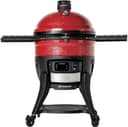
Kamado Joe Big Joe Series I 24" Ceramic Kamado Grill

Kamado Joe Big Joe Series I 24" Ceramic Kamado Grill

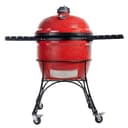
The cheapest way into a 24-inch Kamado Joe, and for brisket the 24 inches are the whole point. A grate that size is wide enough for a trimmed packer to lie across instead of being rolled or split, and Kamado Joe says the halved heat deflector ships with the grill, so it smokes out of the box. The Series II and III add a better vent, hinge and gasket. They do not add a bigger grate.

Best overall
$1,499.99 · View on Amazon

Price as of September 22, 2026. #ad How we’re funded

2
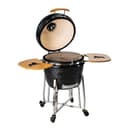
Primo Oval XL 400 All-In-One Ceramic Kamado Grill

Primo Oval XL 400 All-In-One Ceramic Kamado Grill

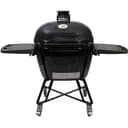
The only grill in this roundup whose grate is not a circle, and for brisket that settles a lot. Primo publishes an 18.5 x 25 in cooking grid, so a packer lies along the long axis with room at both ends. The fit problem that defines every round kamado mostly goes away. The catch is that Primo lists heat deflectors as required for indirect cooking and does not include them in the All-In-One package.

Best fit for a whole packer
$1,822.01 · View on Amazon

$2,299.0021% off

Price as of September 22, 2026. #ad How we’re funded

3
Kamado Joe Big Joe Konnected Joe Digital Charcoal Grill and Smoker

Kamado Joe Big Joe Konnected Joe Digital Charcoal Grill and Smoker

A 24-inch Big Joe with a fan, a controller and an electric fire starter added. Those take care of the two hardest parts of a kamado brisket: coming up to 250°F without overshooting, and holding it through the night. Set the temperature and the fan does the vent work. It is also the most expensive grill here, and it needs a power cord that a ceramic grill otherwise never does.

Best for overnight cooks
$2,999.96 · View on Amazon

Price as of September 22, 2026. #ad How we’re funded

4
Grilla Kong Ceramic Kamado Grill

Grilla Kong Ceramic Kamado Grill

Grilla sells the Kong as a 24-inch kamado, but for brisket the number to read is its 329 sq in main grate (maker stated), which is a circle a little over 20 inches across. So a trimmed packer is a close fit, not an easy one. What you get is that grate, a second level for 643 sq in in total, and a ceramic body, in the same price bracket as Kamado Joe's 18-inch grill rather than its 24-inch one.

Best mid-range ceramic
$999.99 · View on Amazon

$1,079.997% off

Price as of September 22, 2026. #ad How we’re funded

5
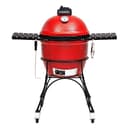
Kamado Joe Classic Joe Series I 18" Ceramic Kamado Grill

Kamado Joe Classic Joe Series I 18" Ceramic Kamado Grill

An 18-inch grill is the wrong size for a whole packer, and we will not pretend otherwise. On a 250 sq in grate you roll the flat or cook the point and flat separately. It is on this list because plenty of people cook a flat, or half a packer, for four. For that cook it is the least expensive Kamado Joe, with the same deflector system and ash drawer as the Big Joe.

Best for flats and halves
$999.00 · View on Amazon

Price as of September 22, 2026. #ad How we’re funded

6
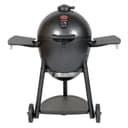
Char-Griller AKORN 20" Kamado Charcoal Grill and Smoker

Char-Griller AKORN 20" Kamado Charcoal Grill and Smoker

Not ceramic at all: triple-wall insulated steel, which is why it costs and weighs a fraction of everything above it. For brisket the 20-inch cooking diameter is borderline for a packer. The real catch is that the listing puts no heat deflector in the box. Char-Griller sells its Smokin' Stone separately, and without one this is a grill, not a smoker. Budget for both.

Best budget
$399.99 · View on Amazon

Price as of September 22, 2026. #ad How we’re funded

The picks in full

#1Best overall

Kamado Joe Big Joe Series I 24" Ceramic Kamado Grill

The cheapest way into a 24-inch Kamado Joe, and for brisket the 24 inches are the whole point. A grate that size is wide enough for a trimmed packer to lie across instead of being rolled or split, and Kamado Joe says the halved heat deflector ships with the grill, so it smokes out of the box. The Series II and III add a better vent, hinge and gasket. They do not add a bigger grate.

Strengths

  • 24 in grate, 450 sq in (maker stated): the size where a trimmed packer lies flat
  • Slide-out ash drawer, so ash comes out without lifting the grate and deflector
  • Cart with locking wheels and folding side shelves included

Trade-offs

  • 358.9 lb (maker stated): once it is placed, it stays placed
  • Cast-iron top vent; the rain-proof Kontrol Tower vent and wire-mesh gasket are Series II upgrades
  • Kamado Joe publishes no burn time for a load of lump
Fuel / powerLump charcoal + wood chunks
Grate diameter24 in (maker stated)
Cooking area450 sq in (maker stated)
Heat deflectorHalved deflector included, part of Divide & Conquer (maker stated)
Temperature range225-750°F (maker stated)
Weight358.9 lb (maker stated)
Burn time on one loadNot published

Specs read from the manufacturer listing, on September 15, 2026. “Not published” means the maker does not state that figure.

#2Best fit for a whole packer

Primo Oval XL 400 All-In-One Ceramic Kamado Grill

The only grill in this roundup whose grate is not a circle, and for brisket that settles a lot. Primo publishes an 18.5 x 25 in cooking grid, so a packer lies along the long axis with room at both ends. The fit problem that defines every round kamado mostly goes away. The catch is that Primo lists heat deflectors as required for indirect cooking and does not include them in the All-In-One package.

Strengths

  • 18.5 x 25 in oval grid (Primo spec sheet), longer than any round grate here
  • The oval makes a true two-zone layout: fire under one end, brisket over the other
  • All-In-One package includes the cradle stand, side tables, ash tool and grate lifter (maker stated)

Trade-offs

  • Heat deflectors are not in the All-In-One package, and Primo lists them as required for indirect cooking
  • Near the top of this roundup's price range, and sold by a third-party seller on Amazon
  • About 250 lb (maker stated), and Primo publishes no burn time for a load of lump
Fuel / powerLump charcoal + wood chunks
Cooking grid18.5 x 25 in, oval (Primo spec sheet)
Main cooking area400 sq in (maker stated)
With optional rack system680 sq in total (maker stated)
Heat deflectorNot included; required for indirect cooking (maker stated)
Temperature range151-850°F+ (maker stated)
Weight250 lb (maker stated)

Specs read from the manufacturer listing, on September 15, 2026. “Not published” means the maker does not state that figure.

#3Best for overnight cooks

Kamado Joe Big Joe Konnected Joe Digital Charcoal Grill and Smoker

A 24-inch Big Joe with a fan, a controller and an electric fire starter added. Those take care of the two hardest parts of a kamado brisket: coming up to 250°F without overshooting, and holding it through the night. Set the temperature and the fan does the vent work. It is also the most expensive grill here, and it needs a power cord that a ceramic grill otherwise never does.

Strengths

  • Digital fan and Kontrol Board hold a set temperature, with a Traditional Mode for manual vents (maker stated)
  • Automatic Fire Starter lights the charcoal at the push of a button (maker stated)
  • Two ceramic heat deflectors and one meat probe in the box (maker stated)

Trade-offs

  • Needs to be plugged in, and a power cut takes the fan and controller with it
  • One probe included; a brisket cook wants a second one reading the grate
  • The priciest grill in this roundup, sold by a third-party seller on Amazon
Fuel / powerLump charcoal + wood chunks (fan and controller need power)
Grate diameter24 in (maker stated)
Cooking area450 sq in (maker stated)
Temperature controlDigital fan + Kontrol Board, app over Wi-Fi (maker stated)
Heat deflector2 ceramic deflectors included (maker stated)
Temperature range225-750°F (maker stated)
Weight341.7 lb (maker stated)
Burn time on one loadNot published

Specs read from the manufacturer listing, on September 15, 2026. “Not published” means the maker does not state that figure.

#4Best mid-range ceramic

Grilla Kong Ceramic Kamado Grill

Grilla sells the Kong as a 24-inch kamado, but for brisket the number to read is its 329 sq in main grate (maker stated), which is a circle a little over 20 inches across. So a trimmed packer is a close fit, not an easy one. What you get is that grate, a second level for 643 sq in in total, and a ceramic body, in the same price bracket as Kamado Joe's 18-inch grill rather than its 24-inch one.

Strengths

  • 329 sq in main grate plus an upper level, 643 sq in in total (maker stated)
  • 304 stainless grates and bamboo side tables included (maker stated)
  • Built-in legs and wheels for moving a 213 lb grill (maker stated)

Trade-offs

  • The main grate is roughly a 20-inch circle despite the 24-inch billing, so measure your brisket
  • Grilla sells its ceramic Kong Diffuser separately; confirm what ships with the grill before you buy
  • 4-year warranty (maker stated), well short of the lifetime cover Kamado Joe states on its ceramics
Fuel / powerLump charcoal + wood chunks
Main grate329 sq in (maker stated)
Total cooking area643 sq in, two levels (maker stated)
Heat deflectorCeramic Kong Diffuser sold separately by Grilla
Maximum temperature700°F (maker stated)
Weight213 lb (maker stated)
Warranty4 years (maker stated)

Specs read from the manufacturer listing, on September 15, 2026. “Not published” means the maker does not state that figure.

#5Best for flats and halves

Kamado Joe Classic Joe Series I 18" Ceramic Kamado Grill

An 18-inch grill is the wrong size for a whole packer, and we will not pretend otherwise. On a 250 sq in grate you roll the flat or cook the point and flat separately. It is on this list because plenty of people cook a flat, or half a packer, for four. For that cook it is the least expensive Kamado Joe, with the same deflector system and ash drawer as the Big Joe.

Strengths

  • Same Divide & Conquer deflector system and slide-out ash drawer as the Big Joe (maker stated)
  • 227.7 lb (maker stated), with a far smaller footprint than any 24-inch grill here
  • A smaller chamber to bring up to temperature and hold there

Trade-offs

  • A whole packer will not lie flat on an 18 in grate, so plan to roll, fold or split it
  • Felt gasket (maker stated), not the double-thick wire-mesh gasket on the Big Joe II
  • Kamado Joe publishes no burn time for a load of lump
Fuel / powerLump charcoal + wood chunks
Grate diameter18 in (maker stated)
Cooking area250 sq in (maker stated)
Heat deflectorHalved deflector included, part of Divide & Conquer (maker stated)
Temperature range225-750°F (maker stated)
GasketFelt (maker stated)
Weight227.7 lb (maker stated)

Specs read from the manufacturer listing, on September 15, 2026. “Not published” means the maker does not state that figure.

#6Best budget

Char-Griller AKORN 20" Kamado Charcoal Grill and Smoker

Not ceramic at all: triple-wall insulated steel, which is why it costs and weighs a fraction of everything above it. For brisket the 20-inch cooking diameter is borderline for a packer. The real catch is that the listing puts no heat deflector in the box. Char-Griller sells its Smokin' Stone separately, and without one this is a grill, not a smoker. Budget for both.

Strengths

  • Triple-wall insulated steel holds heat without ceramic's weight (listing stated)
  • Indexed dual dampers and an EasyDump ash pan (listing stated)
  • 8 in locking casters and folding side shelves, so it actually moves

Trade-offs

  • No heat deflector in the box; the Smokin' Stone is sold separately, and a brisket needs one
  • 20 in cooking diameter, so a trimmed packer will usually need the flat rolled
  • 1-year repair-or-replace warranty (listing stated), against lifetime cover on Kamado Joe ceramics
Fuel / powerCharcoal + wood chunks
Cooking diameter20 in (listing stated)
Total cooking area445 sq in incl. warming rack (listing stated)
BodyTriple-wall insulated steel (listing stated)
Heat deflectorNot included; Smokin' Stone sold separately
Temperature range200-700°F (listing stated)
Warranty1 year, repair or replace (listing stated)

Specs read from the manufacturer listing, on September 15, 2026. “Not published” means the maker does not state that figure.

The five things that decide a kamado for brisket

1. Grate size and shape. This is the brisket spec, and it matters more than every other line on the box put together. Makers quote cooking area in square inches, and those numbers are easy to misread, because many of them add a warming rack or an upper level to the main grate. What you need to know is the size of the one grate the brisket actually sits on. A round 24-inch grate works out to about 450 square inches, which is exactly what Kamado Joe states for the Big Joe. An 18-inch grate is about 250. When a listing quotes a much bigger total than the grate diameter allows, the rest is upper racks, and a brisket does not go on an upper rack.

2. A heat deflector in the box.A kamado with nothing between the fire and the grate is a direct-heat grill, and a brisket over that fire gets a burnt underside long before the middle is done. The deflector (a plate setter, a “stone,” a diffuser, depending on the brand) is what makes the grill a smoker. Kamado Joe says its grills come with a halved deflector as part of the Divide & Conquer system, and the Konnected Joe lists two ceramic deflectors. Primo lists deflectors as requiredfor indirect cooking but leaves them out of its All-In-One package, Grilla sells a Kong Diffuser as its own product, and Char-Griller sells the AKORN’s Smokin’ Stone separately. None of that rules those grills out. It does mean the price on the button is not the price of a working brisket smoker.

3. Ceramic or insulated steel. Thick ceramic is what gives a kamado its reputation: huge thermal mass, very little heat lost through the walls, and a temperature that barely moves once it settles. The costs are weight (every ceramic grill here weighs more than 200 pounds) and a body that can crack if it is dropped or badly shocked. The AKORN gets its insulation from three layers of steel instead. It is lighter and far cheaper. Expect a shorter working life from a steel body than a ceramic one; the warranty terms point the same way.

4. Airflow and ash. Every kamado is controlled by a bottom intake and a top vent, and on a long cook the top vent does most of the fine-tuning. A vent that holds its setting when you open and close the dome is a real advantage, and Kamado Joe claims it for both the cast-iron vent on its Series I grills and the rain-proof Kontrol Tower on the Series II. Ash matters more than people expect. A kamado firebox sits at the bottom of a ceramic well, under the deflector and the grate, and ash from the last cook choking the bottom vent is how a brisket drifts off temperature at hour nine. A slide-out ash drawer, which Kamado Joe fits to both the Big Joe I and the Classic Joe I, lets you clear it without lifting anything out.

5. Burn time on one load.No maker in this roundup publishes one, so that row reads “Not published” wherever it appears. The practical answer is the one in our kamado brisket method: fill the firebox to the top with lump before you light it, because refueling mid-cook means lifting out a hot brisket, a hot grate and a hot deflector to reach the fire.

Will a whole packer fit? Grate by grate

The table below puts each grate beside a trimmed packer of sixteen to twenty inches. The grate figures are the makers’ (or, for the AKORN, the listing’s). The “our read” column is ours, and it is geometry, not a cooking test. Leave clearance between the meat and the ceramic wall on any of them: a brisket touching the wall scorches where it touches.

GrillMain grate (stated)Heat deflector in the box?Our read for a whole packer
Primo Oval XL 40018.5 x 25 in oval, 400 sq inNo; listed as requiredBest fit here. The 25-inch long axis clears a 20-inch packer with some room at both ends.
Kamado Joe Big Joe I24 in round, 450 sq inYes, halved deflectorFits. A trimmed packer lies across the middle; the biggest ones are tight at the ends.
Big Joe Konnected Joe24 in round, 450 sq inYes, two ceramic deflectorsFits. Same grate as the Big Joe I.
Grilla Kong329 sq in main grate (by our arithmetic, about a 20.5 in circle)Diffuser sold separatelyClose. A smaller packer fits; a 20-inch one needs the thin end of the flat rolled.
Char-Griller AKORN 20"20 in cooking diameter (445 sq in incl. warming rack)No; Smokin’ Stone sold separatelyClose. Plan to roll the flat on anything but a small packer.
Kamado Joe Classic Joe I18 in round, 250 sq inYes, halved deflectorDoes not fit flat. Roll it, split it, or cook a flat.

If a packer does not fit, you have three options, and none of them is a disaster. Rolling the thin end of the flat under itself shortens the brisket and shields the part that overcooks first anyway. Splitting the point from the flat and running them side by side is the cleanest answer on a small grate. Our guide to separating the point and the flat covers the cut. The third is to buy a smaller brisket, or a flat on its own, and smoke just the flat. That is a perfectly good cook for four people and the one an 18-inch grill is actually built for. If you are not sure how big a packer runs, our page on brisket sizes and weights gives the ranges.

Why a kamado at all, for brisket

Stability is the whole case, and it is a strong one. A settled ceramic kamado holds its temperature through wind, cold and rain that would have you feeding an offset a split every forty-five minutes. It is sealed tightly enough that a firebox of lump runs a long cook, and it needs no electricity unless you buy one with a fan. The middle ten hours of a kamado brisket are about as undemanding as charcoal cooking gets.

The drawbacks are real too, and they are the drawbacks of that same sealed ceramic. It overshoots and recovers slowly.If you let a kamado run past 250°F on the way up, closing the vents does not bring it back quickly, because there is a lot of hot ceramic to cool. Light one small spot and creep up to temperature. Every lid lift spikes it. Opening the dome feeds oxygen to a fire that has been running starved, so the discipline of the cook is simply not opening it. You cannot easily refuel. The fire is under the deflector and the grate. And it runs low on airflow, which is great for smoke staying in the chamber and a risk if the fire smolders. A dirty, oxygen-starved fire is exactly what produces bitter, acrid brisket, so let the fire burn clean before the meat goes on, and use fewer wood chunks than you would in a bullet or drum smoker.

If brisket is the main thing you will cook, a kamado is not the obvious first choice. A 22-inch bullet smoker fits a packer flat for much less money. If you want one grill that sears a steak on Tuesday and runs a brisket on Saturday, a kamado does both jobs better than almost anything, and a big one does the brisket job well.

Manual vents or a fan

A manual kamado is easier to run overnight than most charcoal cookers, because the ceramic does so much of the temperature holding for you. Once the vents are set and the temperature has settled, it tends to stay put. What catches people out is the first hour. Overshoot badly and you can spend a long time waiting for it to drift back, while the brisket waits on the counter.

A fan-controlled kamado like the Konnected Joe takes over that part. It lights the charcoal, drives the temperature to where you set it, and uses the fan rather than your hand on the vent to hold it. The price of that is a power cord, a controller and a fan that a plain ceramic grill does not have, and a cook that stops being fully independent of the house. We make the same trade-off argument about gravity-fed smokers, and the conclusion is the same: it is a genuine convenience, not a compromise to be embarrassed about, as long as you know what happens in a power cut.

Whichever you choose, do not steer by the dome thermometer. It sits well above the grate and reads higher than the air around the meat, which is how people end up cooking at 225°F while believing they are at 250°F. Clip a probe at grate height. Our wireless thermometer roundup covers dual-probe units that read the grate and the brisket at once.

What to budget for on top of the grill

A deflector, if it is not included. On the Primo, the Kong and the AKORN, this is the first purchase, not an upgrade. Buy the part made for your exact model. Deflectors are sized to sit on a specific ledge or rack, and a plate that does not seat securely is a real problem over a live fire.

Lump charcoal, and plenty of it. A kamado wants lump rather than briquettes. Briquette binders leave far more ash, and ash in a firebox you cannot reach mid-cook is the wrong problem to have. Our charcoal roundup ranks the lump worth buying, and lump versus briquettes explains why kamados are the clearest case for it.

A few wood chunks. Bury three or four through the lump pile rather than laying them on top, so they catch in turn as the fire burns down. Post oak is the Central Texas default. See our wood chunk picks.

Gloves you can hold a hot deflector with. Sooner or later you will have to move a hot ceramic plate, or a grate with a brisket on it. Heat-resistant gloves are not optional kit on a kamado.

What we did not pick, and why

Big Green Egg. The best-known kamado of all is not in this roundup because our live Amazon search on September 15, 2026 returned no Big Green Egg grill, only accessories and other brands. We link only products we can resolve to a live listing, so we would rather leave it out than send you to a search page.

Weber Summit Kamado. Same reason. The same search returned covers for it and no grill.

Kamado Joe Big Joe II and Big Joe III.Both are live, and both are better grills to own than the Big Joe I. The Series II adds the rain-proof Kontrol Tower top vent, the Air Lift hinge, which Kamado Joe says significantly reduces the dome’s lifting weight, a double-thick wire-mesh gasket and the multi-panel AMP firebox. The Series III adds the SloRoller insert and a three-level rack. None of them changes the one spec a brisket depends on: every Big Joe has the same 24-inch, 450-square-inch grate. Kamado Joe prices each series well above the one before it. Buy the II if the hinge and the gasket are worth that to you. For brisket alone, the I cooks the same packer.

The 18-inch Konnected Joe.It has the same fan and controller as the Big Joe version, on the Classic Joe’s 18-inch grate. If you are paying for automation so you can sleep through a brisket, it makes little sense to buy it on the one size that cannot lay a packer flat.

Portable kamados. The AKORN Jr, at a listed 155 square inches, and the other small tabletop models are good grills for two steaks. They are the wrong tool for a twelve-pound piece of beef.

The honest verdict

If you want a kamado that cooks a whole packer flat, buy a 24-inch grill and buy the cheapest series that gets you there. That is the Kamado Joe Big Joe I, with a deflector already in the box. If fit matters more to you than anything and the budget stretches, the Primo’s 25-inch oval is the best brisket grate in the category. Budget for its deflectors before you compare prices. If you want to go to bed and wake up to a brisket at temperature, the Konnected Joe is the one that does it without you. If you cook flats for a small household, the Classic Joe I is honest value on a size that suits that cook. And if you want to find out whether kamado brisket is for you before spending ceramic money, the AKORN plus a Smokin’ Stone is the way in. Just go in expecting to roll the flat.
Frequently asked questions

What is the best kamado grill for brisket?

For most people, a 24-inch grill. The Kamado Joe Big Joe I is our pick: its 24-inch, 450 sq in grate is large enough for a trimmed packer to lie flat, Kamado Joe says a halved heat deflector ships with it, and it is the least expensive Big Joe. If you want the longest possible grate, the Primo Oval XL 400's 18.5 x 25 in oval is the best brisket fit in the category, but its heat deflectors are sold separately.

Can you smoke a whole brisket on a kamado?

Yes, and a settled kamado holds 225-250°F through a long cook as steadily as almost any cooker. The limit is fit. A trimmed packer commonly runs sixteen to twenty inches, so it lies flat on a 24-inch round grate or a 25-inch oval, is a close fit on a 20-inch grate, and has to be rolled or split on an 18-inch one. Whatever the size, you must cook it over a heat deflector, and it must not touch the ceramic wall.

What size kamado do I need for a packer brisket?

24 inches if you want it to lie flat without rolling the flat. That is the Big Joe size, with a stated 450 sq in grate. A roughly 20-inch grate, like the AKORN's or the Grilla Kong's, will take a smaller packer or a rolled one. An 18-inch grill fits a flat or a split point and flat, but not a whole packer lying flat.

Do kamado grills come with a heat deflector?

Some do and some do not, and it is worth checking before you buy. Kamado Joe says its grills come with a halved heat deflector as part of the Divide & Conquer system, and the Big Joe Konnected Joe lists two ceramic deflectors. Primo lists heat deflectors as required for indirect cooking but does not include them in its All-In-One package, Grilla sells a ceramic Kong Diffuser separately, and Char-Griller sells the AKORN's Smokin' Stone separately. You cannot smoke a brisket on a kamado without one.

Is a kamado better than an offset smoker for brisket?

It is easier, not better. A kamado holds temperature with very little attention and does not need a split of wood every forty-five minutes, which makes an overnight cook far more realistic. An offset produces more smoke flavor, because its log fire burns less completely, and it fits a packer flat without any fuss. If brisket is the main thing you cook and you enjoy tending a fire, an offset. If you want one grill that sears and smokes and mostly looks after itself, a kamado.

Ceramic or steel kamado for brisket?

Ceramic holds heat better and lasts longer, and every one of our top five picks is ceramic. Insulated steel, like the Char-Griller AKORN's triple-wall body, is much lighter and much cheaper, and it still holds a low temperature well enough to smoke a brisket. The trade is lifespan and rust resistance, plus a 1-year warranty on the AKORN listing against the lifetime cover Kamado Joe states for its ceramic parts.

How long does a load of charcoal last in a kamado?

No maker in this roundup publishes a figure, so we will not invent one. Kamados are very fuel-efficient because they are sealed and insulated, and the standard advice for brisket is to fill the firebox to the top with lump before lighting it, because adding fuel mid-cook means lifting out the brisket, the grate and the deflector. Cold weather, a lot of lid lifting and a higher cook temperature all use more.

Should I use lump or briquettes in a kamado?

Lump. Briquette binders and fillers produce far more ash, and on a kamado that ash builds up in a firebox you cannot reach mid-cook, where it can choke the bottom vent. Primo's listing specifies lump charcoal only, and Grilla's page names lump charcoal as the Kong's fuel. Lump also lights faster and burns cleaner, which matters on a sealed cooker where smoke lingers.

Why does my kamado temperature keep climbing past 250°F?

Almost always because it was allowed to overshoot on the way up. Ceramic stores a lot of heat, so once a kamado runs past its target, closing the vents brings it down slowly. Light one small area of the charcoal, open the vents partway, and close them down as you approach 250°F rather than after you pass it. Opening the lid also spikes the fire with oxygen, so keep lid lifts to a minimum.

Is a Big Green Egg good for brisket?

It can be, on a size with a grate big enough for the brisket, and the same fit rules apply as for any round kamado. We have not included one here because our live Amazon search on September 15, 2026 returned no Big Green Egg grill listing to link to, and we only recommend products we can send you to. If you buy one elsewhere, the advice on this page carries straight over: buy a grate large enough for the brisket, cook over the deflector, and steer by a probe at grate height.

Sources

Keep reading