Brisket & Bark

The Best Wood Chunks for Brisket

A fist-sized chunk smolders for an hour or more. A handful of chips is gone in fifteen minutes. On a twelve-hour cook that difference isn't a preference — it decides whether you're tending a smoker or feeding it.

By Stephen V.Last updated How we pick

Wood chunks are the default smoke source for charcoal, offset and gravity-fed smokers — anything with a real fire in it. A chunk is roughly fist-sized, and that mass is the entire point: it takes a long time to come up to temperature, smolders steadily for an hour or more, and delivers smoke at a rate that suits a long cook. Chips, by contrast, flash off in minutes and are really designed for the chip trays in electric and gas smokers.

Which wood is the more interesting question. Post oakis the Central Texas standard, and its virtue is restraint — it is mild enough to run for the entire cook without accumulating into bitterness, which almost no other wood manages. Hickory is stronger, more assertive, and genuinely good on beef in smaller doses; used for twelve straight hours it can turn acrid. Below, both, plus the cheapest honest way to try oak smoke. If your smoker takes pellets instead, see best pellets for brisket.

How this is funded: we earn a commission if you buy through our links, at no extra cost to you. It never changes which product we recommend, and we’ll tell you plainly when we’d skip one. Full disclosure.

Quick picks

Ranked on the published specs and how each one fits a brisket cook. Select a row to jump to the full write-up. We have not run this gear in a lab — here is exactly what we do instead.

#ProductBest forPrice
1
Camerons Products Post Oak Smoking Wood Chunks

Camerons Products Post Oak Smoking Wood Chunks

Post oak is the wood of Central Texas brisket for a reason: a clean, medium smoke that flavors the beef without turning it bitter or acrid over a long cook. Chunks (not chips) are what you want in a charcoal or offset smoker — they smolder slow and steady.

Best overall
$34.95 · View on Amazon

Price as of September 6, 2026. #ad How we’re funded

2
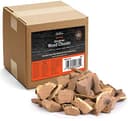
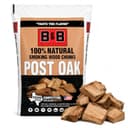
B&B Charcoal Post Oak Wood Smoking Chunks

B&B Charcoal Post Oak Wood Smoking Chunks

Genuine post oak in a box big enough to matter — 549 cubic inches is several briskets' worth. Post oak is the Central Texas standard for a reason: it is mild enough to run for twelve hours without turning bitter, which almost no other wood manages.

Best value in bulk
$33.73 · View on Amazon

Price as of September 6, 2026. #ad How we’re funded

3
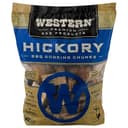
Western Premium BBQ Hickory Wood Chunks

Western Premium BBQ Hickory Wood Chunks

Hickory is the bolder brisket wood — a stronger, bacon-y smoke that some pitmasters prefer or blend with oak. Use it a little more sparingly than oak so it doesn't overpower a long cook. Widely available, cheap, and a reliable heat-treated chunk.

Best hickory
$22.01 · View on Amazon

Price as of September 6, 2026. #ad How we’re funded

4
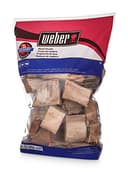
Weber Hickory Wood Chunks

Weber Hickory Wood Chunks

A small, cheap bag of consistently sized hickory chunks — the right buy for a bullet smoker or kettle where you are adding two or three chunks, not building a wood fire. Hickory hits harder than oak, so on brisket use it sparingly or blend it.

Best small bag
$10.99 · View on Amazon

$13.9921% off

Price as of September 6, 2026. #ad How we’re funded

5
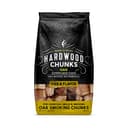
Fire & Flavor Oak Wood Chunks

Fire & Flavor Oak Wood Chunks

The cheapest way to try oak smoke before committing to a bulk box. It is generic oak rather than named post oak, so the flavor is a shade less refined, but on a first brisket the difference between oak and no oak dwarfs the difference between oaks.

Best budget
$8.99 · View on Amazon

$14.9540% off

Price as of September 6, 2026. #ad How we’re funded

The picks in full

#1Best overall

Camerons Products Post Oak Smoking Wood Chunks

Post oak is the wood of Central Texas brisket for a reason: a clean, medium smoke that flavors the beef without turning it bitter or acrid over a long cook. Chunks (not chips) are what you want in a charcoal or offset smoker — they smolder slow and steady.

Strengths

  • Post oak — the traditional, forgiving brisket smoke
  • Chunks smolder longer than chips for low-and-slow
  • Kiln-dried natural hardwood, no additives

Trade-offs

  • Chunks suit charcoal/offset, not most pellet grills
  • Milder than hickory or mesquite if you want a big punch
Fuel / powerSmoking wood (chunks)
WoodPost oak
FormChunks
Best inCharcoal / offset smokers
TreatmentKiln-dried, natural

Specs read from the manufacturer listing, on July 22, 2026. “Not published” means the maker does not state that figure.

#2Best value in bulk

B&B Charcoal Post Oak Wood Smoking Chunks

Genuine post oak in a box big enough to matter — 549 cubic inches is several briskets' worth. Post oak is the Central Texas standard for a reason: it is mild enough to run for twelve hours without turning bitter, which almost no other wood manages.

Strengths

  • Real post oak — the Central Texas brisket standard
  • 549 cu in box (stated) lasts several cooks
  • Mild enough to run the whole cook without bitterness

Trade-offs

  • Costs more than generic 'oak' chunks
  • Chunk sizing varies within the box
Fuel / powerSmoking wood (chunks)
WoodPost oak
FormChunks
Volume549 cu in (stated)
Best inCharcoal / offset smokers

Specs read from the manufacturer listing, on August 10, 2026. “Not published” means the maker does not state that figure.

#3Best hickory

Western Premium BBQ Hickory Wood Chunks

Hickory is the bolder brisket wood — a stronger, bacon-y smoke that some pitmasters prefer or blend with oak. Use it a little more sparingly than oak so it doesn't overpower a long cook. Widely available, cheap, and a reliable heat-treated chunk.

Strengths

  • Stronger, classic Southern BBQ smoke
  • Great blended 50/50 with post oak
  • Cheap and easy to find

Trade-offs

  • Easy to over-smoke a brisket if you use too much
  • Chunks, so best for charcoal/offset not pellets
Fuel / powerSmoking wood (chunks)
WoodHickory
FormChunks
Best inCharcoal / offset smokers
TreatmentHeat-treated, natural

Specs read from the manufacturer listing, on July 22, 2026. “Not published” means the maker does not state that figure.

#4Best small bag

Weber Hickory Wood Chunks

A small, cheap bag of consistently sized hickory chunks — the right buy for a bullet smoker or kettle where you are adding two or three chunks, not building a wood fire. Hickory hits harder than oak, so on brisket use it sparingly or blend it.

Strengths

  • Consistent chunk sizing — no splitting required
  • Small 4 lb bag stores easily and stays dry
  • Cheap enough to keep several woods on hand

Trade-offs

  • Hickory can turn acrid on a 12-hour cook if overused
  • Small bag is poor value if you cook every weekend
Fuel / powerSmoking wood (chunks)
WoodHickory
FormChunks
Bag weight4 lb (stated)
Best inCharcoal / bullet smokers

Specs read from the manufacturer listing, on August 10, 2026. “Not published” means the maker does not state that figure.

#5Best budget

Fire & Flavor Oak Wood Chunks

The cheapest way to try oak smoke before committing to a bulk box. It is generic oak rather than named post oak, so the flavor is a shade less refined, but on a first brisket the difference between oak and no oak dwarfs the difference between oaks.

Strengths

  • Lowest-cost entry into oak smoke
  • All-natural with no additives (stated)
  • Mild profile that is hard to overdo

Trade-offs

  • Generic oak, not specifically post oak
  • Small bag — a long cook can use most of it
Fuel / powerSmoking wood (chunks)
WoodOak
FormChunks
CompositionAll-natural (stated)
Best inCharcoal / offset smokers

Specs read from the manufacturer listing, on August 10, 2026. “Not published” means the maker does not state that figure.

Why post oak became the Texas standard

It is not romance, it is chemistry and geography. Post oak grows abundantly across Central Texas, so it was the wood at hand — but it stayed the wood of choice because of how it behaves over a long cook. Post oak produces a mild, clean smoke with relatively low concentrations of the harsher phenolic compounds that build up in stronger woods. That means you can run it as the only wood for twelve or fourteen hours and the brisket tastes of smoke rather than of ash.

Try that with mesquite and the result is genuinely unpleasant — mesquite is excellent for a fast, hot steak sear and terrible for a long low-and-slow cook. Hickory sits in between: assertive, good on beef, but better used as a component than as the whole fire. This is why post oak is the answer for brisket specifically, in a way it isn’t for other meats.

How much wood does a brisket actually need?

Less than most people use. On a charcoal smoker like a bullet or a kettle, three to five chunks over the course of the cook is typically plenty — and they should go on early. The widely repeated idea that meat “stops taking smoke” at a particular temperature is an oversimplification, but the useful version of it is true: the first few hours, while the surface is still cool and damp, are when smoke deposits most effectively. Adding wood in hour ten contributes far less than adding it in hour two.

On an offset you are burning wood as the fuel itself, so the calculus is different — you are managing a fire, not dosing smoke, and the rule becomes keeping that fire clean and hot enough to burn thin and blue rather than thick and white. Thick white smoke is the single most common cause of bitter brisket, and it comes from a smoldering, oxygen-starved fire, not from too much wood.

Do you need to soak wood chunks?

No. This is one of barbecue’s most persistent myths. Soaked wood does not smoke for longer; it spends the first portion of its time on the fire boiling off the surface water it absorbed — wood is not very absorbent, so soaking wets little more than the outer layer — and producing steam. Steam is not smoke. Once the water has gone, the chunk behaves exactly as a dry chunk would have, only later.

What you actually want is seasonedwood, meaning wood that has been dried down to roughly 20 percent moisture content, which is what the bagged chunks here are. Green, unseasoned wood is genuinely bad — it smolders wet and produces exactly the thick, dirty smoke that ruins brisket. Buy seasoned, keep it dry, and put it on the fire dry.

Storing chunks

Keep them somewhere dry and off a concrete floor, which wicks moisture upward. Wood that has been rained on or stored damp will have to dry out again on your fire, and it will smoke badly while it does. A sealed tub or a bag in a garage is entirely sufficient — this is not demanding storage, it just needs to not be outdoors under a tarp. Chunks do not really expire; a well-stored bag is as good in three years as it was on day one.
Frequently asked questions

What is the best wood for smoking brisket?

Post oak, for a traditional Central Texas result. It produces a mild, clean smoke with fewer harsh compounds than stronger woods, which means it can run as the only wood for a full twelve-hour cook without the flavor accumulating into bitterness. Hickory is the main alternative — stronger and genuinely good on beef, but better used as part of the fire than as all of it.

Do I need to soak wood chunks before smoking?

No — this is a myth. Wood is not very absorbent, so soaking wets little more than the surface, and all that water does is boil off as steam before the chunk starts smoking properly. You get a delay, not a longer smoke. What matters is that wood is seasoned (dried to roughly 20% moisture) rather than green. Use it dry.

How many wood chunks do I need for a brisket?

On a charcoal or bullet smoker, three to five chunks across the cook is usually plenty, added early rather than late. The first few hours — while the meat's surface is cool and damp — are when smoke deposits most effectively, so wood added in hour ten does far less than wood added in hour two. On an offset you are burning wood as fuel, so the question becomes fire management rather than chunk count.

Chunks or chips for brisket?

Chunks, if your smoker can use them. A fist-sized chunk smolders for an hour or more; a handful of chips is gone in fifteen minutes, which on a twelve-hour cook means constant refilling. Chips exist for the chip trays in electric and gas smokers, where a chunk won't fit or won't ignite properly. Match the form to the smoker, not to preference.

Can I mix different woods for brisket?

Yes, and it is a good way to use hickory without overdoing it. A common approach is an oak base for the bulk of the smoke with a chunk or two of hickory for depth, or a fruit wood like cherry for color. What you want to avoid is running an aggressive wood like mesquite for the whole cook — it is excellent for a fast hot sear and genuinely harsh over ten-plus hours.

Why does my brisket taste bitter or like ash?

Almost always dirty smoke rather than too much wood. Thick white or gray billowing smoke comes from a smoldering, oxygen-starved fire and deposits harsh compounds on the meat. You want thin smoke that is barely visible and slightly blue, which means a hot fire with enough airflow. Green or damp wood causes the same problem. More air and dry seasoned wood fixes it.

Sources

Keep reading