Finishing a Brisket in the Oven
This is treated as cheating, and it is not. Once the bark has set and the wrap has gone on, the smoker is doing nothing an oven cannot do — and an oven does it more accurately, in any weather, while you sleep.
How this is funded: we earn a commission if you buy through our links, at no extra cost to you. It never changes which product we recommend, and we’ll tell you plainly when we’d skip one. Full disclosure.
There is a persistent belief that a brisket which touches an oven is no longer real barbecue. It is worth taking apart, because the technique it discourages is one of the most useful things available to a home cook.
The question is simple: what is the smoker actually doing at each stage of the cook?
The two things a smoker does that an oven cannot
It deposits smoke. Combustion compounds land on the meat surface and are absorbed. This process depends on a moist surface, and it slows dramatically once the exterior dries and crusts — which happens in roughly the first four to six hours.
It builds bark. The dark crust that forms as the surface dries and the seasoning, proteins, rendered fat and smoke compounds set together. This is covered in building bark, and it too is largely complete by the time the internal temperature reaches the stall.
Both are early-cook processes. Both are essentially finished by the time you are thinking about wrapping.
What happens after the wrap
Once you wrap a brisket, you have physically sealed the meat away from the smoke. No further smoke lands on it. That is not a side effect of the wrap — it is unavoidable, and it is one of the reasons the wrap is a trade-off rather than a free win.
So from that moment, the smoker is doing exactly one job: holding the parcel at around 250°F while collagen converts to gelatin.
A kitchen oven does that job. It does it with a thermostat, in any weather, without fuel, without tending, and generally with better temperature accuracy than a backyard smoker manages.
There is no meaningful difference in the result. There is a substantial difference in what the next six hours ask of you.
Why you would actually want to
Sleep. The most common and most legitimate reason. An overnight brisket means either setting alarms to tend a fire or trusting a pit unattended for hours. Wrapping at midnight and handing over to an oven removes the problem entirely.
Weather. Wind and cold are brutal on thin-steel offsets and bullets. If the forecast turns during a cook, the oven is a reliable escape route rather than a defeat.
Fuel. Running low at hour eight, with the meat wrapped and six hours to go, is an entirely solvable problem if you have a kitchen.
Precision at the end. The back half of a brisket cook is where consistency matters most, and an oven holds a set temperature far more tightly than a fire does.
How to do the handover
Wait for the bark. This is the only rule that really matters. The bark must be dark, firm and set — press it and it should not smudge. If it is still tacky, the surface has not finished drying and you are leaving smoke absorption and crust on the table. Rushing this is the one way to get a genuinely worse brisket.
Pre-heat first. Get the oven fully to temperature before the brisket leaves the smoker. A cold interval in the handover is unnecessary and slows the cook.
Wrap outside. Wrap at the smoker so the meat spends as little time uncovered as possible, then carry the parcel in.
Use a tray. A rimmed baking tray under the wrapped brisket catches anything that escapes and makes a fifteen-pound parcel much easier to handle in and out of an oven.
Match the temperature. Whatever you were running — usually 250°F, per 225 vs 250 — keep it. Changing mid-cook only makes your timing less predictable.
Finish on feel. Probe tenderness decides it, not the clock and not the appliance. See what temp is brisket done.
What you genuinely lose
Very little, and it is worth being precise rather than reassuring.
You lose the small amount of additional smoke that would have landed on the exterior of the wrap and, over hours, worked slightly into the outermost layer. This is a real effect and it is a small one.
You do not lose bark quality — that is determined by the wrap material, which is why paper versus foil matters far more here than smoker versus oven. And if your bark has gone soft, the diagnosis in why is my brisket bark soft will point at foil, not at the oven.
What it will not fix
An oven cannot add smoke to a brisket that never got any, and it cannot build bark on a surface that never dried. If the first phase went wrong, moving indoors will produce a tender, unremarkable piece of beef.
The technique is a handover, not a rescue. Get the first six hours right on the fire, and the rest can happen wherever is most convenient.
That logic is strongest on a cooker that is expensive or awkward to run for twelve hours straight, which is why it is the backbone of our guide to smoking a brisket on a gas grill— propane does the smoke phase, the oven does everything after the wrap.
What the handover actually needs
Nothing here is specific to ovens. It is the same gear the standard method uses, which is rather the point of this technique. Prices are live and refresh daily.
The wrap
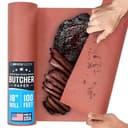
Bryco Goods Pink Butcher Paper 18" x 100 ft
Unwaxed pink paper travels indoors unchanged. Wrap on the smoker, carry it in wrapped, and the oven never touches bare meat.
Read the reviewThe probe that follows it
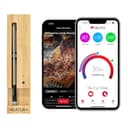
MEATER Plus Wireless Smart Thermometer
A wireless leave-in probe keeps reading through the move, so the transfer does not create a gap in what you know about the cook.
Read the reviewThe hold
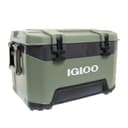
Igloo BMX 52 QT Cooler
Finishing early is the point. An insulated box keeps the brisket above 140°F until people eat, which is what buys you the fixed serving time.
$149.99 · View on AmazonRead the reviewPrice as of October 20, 2026. #ad How we’re funded
Frequently asked questions
Can you finish a brisket in the oven?
Yes, and once the brisket is wrapped there is very little difference between an oven and a smoker. Meat stops absorbing smoke meaningfully once the surface has dried and the bark has set, and a wrap physically excludes smoke anyway — so from the wrap onward the smoker is functioning purely as a 250°F box. An oven is a more accurate 250°F box, and it does not need feeding.
When should you move a brisket to the oven?
At the wrap, not before. The right moment is when the bark is dark, firm and does not smudge under a fingertip, which typically coincides with the internal temperature reaching roughly 165-170°F. Moving it earlier costs you real smoke absorption and a properly set crust. Moving it at the wrap costs you essentially nothing, because those two processes are already finished.
Does finishing in the oven ruin the bark?
No — the wrap decides what happens to the bark, not the appliance. Butcher paper is porous and lets steam escape, so bark stays comparatively firm; foil traps it and softens the crust. That is true in a smoker and equally true in an oven. If your bark went soft after an oven finish, the wrap material is the cause, and our soft-bark diagnosis covers it.
What temperature should the oven be for finishing a brisket?
The same temperature you were running on the smoker, which for most people is 250°F. There is no reason to change it — the meat does not know which box it is in, and switching temperature mid-cook only makes your timing harder to predict. Pre-heat the oven fully before the brisket leaves the smoker so there is no cold interval in the handover.
Is it cheating to finish a brisket in the oven?
Only if you tell people it never left the smoker. The technique is used in plenty of serious kitchens and it solves real problems — running out of fuel overnight, weather that will not let a pit hold temperature, or simply wanting to sleep. What it will not do is rescue a brisket that never developed bark or smoke in the first place, because the oven cannot add either.
Can you cook a whole brisket in the oven from the start?
You can cook it, and it will be tender, but it will not be barbecue. Without smoke there is no smoke flavor and no smoke ring, and oven bark is thinner and less complex because there are no combustion compounds contributing to it. It is a genuinely good braise-adjacent piece of beef and it is not the thing this site is about. If a smoker is available for the first phase, use it.
Sources
- USDA FSIS — Smoking Meat and Poultry — USDA on safe smoking practices, thermometer use and approved smoker materials (accessed July 22, 2026)
- USDA FSIS — Cooking Guideline for Meat and Poultry (Appendix A) — USDA reference on lethality — why long low-temperature cooks are safe despite being below 145°F for hours (accessed July 22, 2026)
- ThermoWorks — Smoked Brisket: A How-To Primer — ThermoWorks on brisket internal temperature, probe tenderness and the stall (accessed July 22, 2026)
- Meathead's AmazingRibs.com — What Causes The BBQ Stall — Documentation (citing Greg Blonder's research) that the stall is evaporative cooling, not fat or collagen (accessed July 22, 2026)
Keep reading
Wrapping a Brisket
The step this technique depends on — when to wrap and what to wrap in.
Read the guideSmoking a Brisket Overnight
The cook where handing over to an oven is most obviously worth it.
Read the guideBuilding Bark on a Brisket
Why bark has to set before the handover, and how to tell that it has.
Read the guideWhat Time Should You Start a Brisket?
Planning backwards from dinner, with the oven absorbing the overnight hours.
Read the guide