How to Smoke a Brisket on a Kamado
A ceramic cooker will hold 250°F for fourteen hours on one load of charcoal without you touching a vent. It will also, on most models, refuse to accept a whole packer lying flat — and how you solve that is the whole story of this cook.
How this is funded: we earn a commission if you buy through our links, at no extra cost to you. It never changes which product we recommend, and we’ll tell you plainly when we’d skip one. Full disclosure.
A ceramic kamado is, on paper, close to the ideal brisket cooker. Thick ceramic walls give it enormous thermal mass and superb insulation, which means it holds a set temperature for twelve hours with a stability that metal smokers cannot approach, on a single load of charcoal, in weather that would have you fighting an offset all day.
And then you try to put a whole packer in one.
The fit problem, first
Kamado grates are round. Briskets are long. A trimmed packer commonly runs sixteen to twenty inches, and even on the larger models a round grate does not offer a straight run of that length with clearance at both ends.
There are three real solutions, and you should choose one before you light anything.
Roll the flat. The thin end of the flat is the part that overcooks anyway, so folding it back under itself solves two problems at once. It shortens the footprint and it insulates the thinnest section against cooking unevenly. This is the simplest answer and it works on a genuinely borderline fit.
Separate the muscles. Split the point from the flat before cooking and run them side by side. This is the answer for a small kamado and a big packer, and it has real advantages beyond fit — the two muscles want slightly different cooks anyway, and separating them is covered in separating the point and the flat.
Buy a smaller brisket. Unglamorous, entirely valid, and worth considering if you are feeding four people rather than fourteen.
What you cannot do is let the brisket touch the ceramic wall. That is a direct-contact conduction path to a very hot surface, and it will scorch.
The deflector is not optional
Straight out of the box, a kamado is a direct-heat cooker with an intense radiant fire immediately below the grate. It is superb at searing steaks for exactly that reason.
Putting a brisket over that produces a burnt underside and a raw middle. The heat deflector — plate setter, deflector stone, whatever your manufacturer calls it — sits between fire and food and converts the cooker into a convection oven with smoke in it.
Fit it with the grate above it, and leave a gap so air can move. Some cooks add a drip pan on the deflector, which catches rendering fat and makes cleanup considerably easier; if you do, leave it dry rather than filling it with water, since a kamado does not need the humidity a water pan provides on a bullet smoker.
Load the fuel for the whole cook
On most cookers, adding fuel mid-cook is routine. On a kamado it means removing a hot grate, a hot deflector and a fifteen-pound brisket to reach a firebox at the bottom of a ceramic well.
So do not plan to. Fill the firebox to the top with lump before you light it. A kamado burns so efficiently at low airflow that a full load will comfortably outlast a brisket.
Use lump, not briquettes. Briquette binders and fillers produce substantially more ash, and ash accumulating in a firebox you cannot easily reach is exactly the wrong problem to have at hour ten. This is one of the clearest cases for lump over briquettes anywhere in barbecue.
Bury your smoke wood chunks through the pile rather than laying them on top, so they catch progressively as the fire burns down rather than all at once.
Come up slowly, and use less wood than you think
The ceramic that makes a kamado so stable also makes it stubborn. If you overshoot 250°F and end up at 320°F, closing the vents does not bring it down quickly — you are waiting for a very large thermal mass to cool.
So light one small spot, open the vents partially, and let it climb. It is far easier to open a vent than to un-heat a ceramic.
The same sealing works on smoke. Because a kamado runs at low airflow, smoke lingers in the chamber instead of being drawn through and out as it is on an offset. Three or four chunks go further here than five or six would elsewhere.
That low airflow has a downside worth naming: a smoldering, oxygen-starved fire is exactly the condition that produces the compounds behind bitter, acrid brisket. Let the fire establish properly and run genuinely clean before the meat goes in.
Then leave it alone
Every lid lift on a kamado feeds oxygen to a fire that has been running starved. The temperature spikes hard and takes a long time to settle, because ceramic.
Which means the discipline of this cook is simply not opening it. No spritzing — see spritzing a brisket for why it is optional anyway, and on this cooker it is a net negative. No peeking. Use a leave-in probe and read the numbers rather than the meat.
Burp the lid before opening it fully: crack it an inch, wait a moment, then lift. A sealed kamado full of hot unburnt gases can produce a flashback when you open it quickly, and that is a genuine safety point rather than a technique preference.
Wrap, rest, slice
From here the cook is the standard method. Run to the stall around 165-170°F, wrap in butcher paper, and continue until the probe slides in with no resistance.
Rest properly — at least an hour, longer is better, and a held brisket is better still. Then slice each muscle against its own grain.
The kamado’s reward for the fit awkwardness is that the middle ten hours of this cook are the least demanding of any charcoal method. Once it is settled, it simply runs.
What a kamado cook specifically needs
Still choosing the grill itself? Our kamado grill roundup compares six on grate size and shape, and on whether a heat deflector ships in the box. Below is what goes inside it. Prices are live and refresh daily.
The fuel
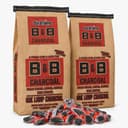
B&B Charcoal Oak Lump Charcoal
A kamado burns lump only — briquette binders and fillers foul a ceramic and leave far more ash in a firebox you cannot easily reach mid-cook.
Read the reviewThe smoke wood
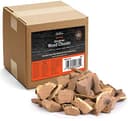
Camerons Products Oak Smoking Wood Chunks
Chunks buried in the lump, not on top. A kamado is so airtight that smoke lingers, so you want a forgiving wood and fewer chunks than you would use elsewhere.
$34.95 · View on AmazonRead the reviewPrice as of October 22, 2026. #ad How we’re funded
The grate probe
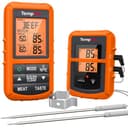
TempPro TempSync CORE TP20B Wireless Dual-Probe Thermometer (the ThermoPro TP20)
The dome thermometer on a kamado sits a long way above the meat and reads high. A probe at grate level is the only honest number.
See thermometer picks
Frequently asked questions
Can you cook a whole brisket on a kamado?
On the larger models, yes, but it is the main constraint of the cooker. A trimmed packer commonly runs 16 to 20 inches long and most kamado grates are round and considerably smaller than that. The usual solutions are to roll the thin end of the flat under itself, to cook the brisket on a rack turned at an angle, or to separate the point from the flat and cook them as two pieces side by side. What you must not do is let meat touch the ceramic wall.
What temperature should I smoke a brisket at on a kamado?
250°F at grate level, measured with your own probe rather than the dome thermometer. The dome sits well above the meat and typically reads higher than the grate, which is how people end up cooking at 225°F while believing they are at 250°F. Once a kamado is settled it will hold that temperature with remarkable stability, which is the cooker's greatest strength on a long cook.
Do I need a heat deflector for brisket on a kamado?
Yes, without exception. A kamado without a deflector is a direct radiant cooker with the fire immediately below the grate, and a brisket sat over that will have a burnt underside long before the interior is anywhere near done. The plate setter, deflector stone or whatever your model calls it is not optional equipment for this cook — it is what converts the kamado into a smoker.
How much charcoal does a kamado brisket cook need?
Fill the firebox. This is the one cooker where over-loading fuel is the correct approach, because a kamado burns so efficiently that a full load will comfortably outlast a brisket, and refueling mid-cook means lifting out a hot grate, a hot deflector and a brisket to reach the fire. Load it full at the start, light one small spot, and let it burn through the pile slowly.
Why does my kamado temperature spike when I open the lid?
Because a sealed, oxygen-starved fire suddenly gets air. A kamado runs at low airflow with a fire that is burning slowly for lack of oxygen, so opening the lid is a burst of fuel to a hot bed. The temperature climbs sharply and takes a long time to settle back down, since ceramic holds heat. The practical answer is to open it as rarely as possible, and to burp the lid — cracking it slightly before opening fully — to avoid a flashback.
Do you get enough smoke flavor from a kamado?
Yes, and if anything the risk runs the other way. A kamado is very well sealed with low airflow, so smoke lingers in the chamber rather than being drawn through and out as it is on an offset. That means fewer wood chunks go further, and it also means a smoldering, oxygen-starved fire has more opportunity to deposit acrid compounds on the meat. Use less wood than you would on a charcoal smoker and make sure the fire is genuinely clean before the brisket goes on.
Sources
- USDA FSIS — Smoking Meat and Poultry — USDA on safe smoking practices, thermometer use and approved smoker materials (accessed July 22, 2026)
- ThermoWorks — Smoked Brisket: A How-To Primer — ThermoWorks on brisket internal temperature, probe tenderness and the stall (accessed July 22, 2026)
- Meathead's AmazingRibs.com — What Causes The BBQ Stall — Documentation (citing Greg Blonder's research) that the stall is evaporative cooling, not fat or collagen (accessed July 22, 2026)
Keep reading
On a Charcoal Grill
The kettle and bullet method — the closest relative to this cook.
Read the guideSeparating the Point and the Flat
The technique that solves a packer that will not fit the grate.
Read the guideClassic Joe vs Big Joe
Whether the grate in front of you is the problem: 18 inches against 24, on the maker's figures.
Read the comparisonBrisket Fire Management
Vents, airflow and the thin blue smoke a sealed cooker makes easy to get wrong.
Read the guideBest Charcoal for Smoking
Why a ceramic cooker wants lump rather than briquettes.
See charcoal picks