Peach Paper vs Pink Butcher Paper
These are two names for the same product, and the brands use them interchangeably. Here is where the color actually comes from, what genuinely does differ between rolls, and the one line on the label that matters.
How this is funded: we earn a commission if you buy through our links, at no extra cost to you. It never changes which product we recommend, and we’ll tell you plainly when we’d skip one. Full disclosure.
Peach paper and pink butcher paper are the same product. Buy whichever 18-inch, unwaxed, uncoated, food-grade roll is cheapest per foot. Our default is the Bryco 18" x 100 ft pink roll, and the fact that Oklahoma Joe’s sells an 18-inch, 100-foot, unwaxed, uncoated roll and calls it peach is the clearest evidence available that the distinction is marketing rather than material.
That is the whole answer, and it is worth saying at the top because this query exists precisely because so many pages dress the two names up as two products. What follows is why the color varies, which specs actually do differ, and the one thing on the label that would genuinely disqualify a roll.
Where the color comes from
Butcher paper for meat counters is unbleached kraft paper. Kraft pulp leaves the mill a brownish-pink, and paper destined to be wrapped around red meat is generally left unbleached — partly because bleaching costs money for no functional benefit here, partly because the warm tone flatters beef in a display case.
That shade is a property of the pulp batch, not a dye matched to a specification. Which is why one roll looks distinctly salmon, the next looks greyer, and a third looks almost apricot. Mills and brands reach for whichever word describes the batch in front of them: pink, peach, rose, salmon. None of those words is a grade, a standard or a performance claim.
The one thing the color does usefully tell you is what the paper is not. A bright white butcher paper has been bleached, and a glossy or slightly waxy-feeling paper has been coated. Neither is what the Texas crutch wants.
Side by side, on the specs the makers publish
| Bryco — sold as “pink” | Oklahoma Joe’s — sold as “peach” | PerkHomy — sold as “pink” | |
|---|---|---|---|
| Stated type | Unwaxed pink/peach butcher paper | Unwaxed peach butcher paper | Unwaxed pink butcher paper |
| Width | 18 inches | 18 inches | 18 inches |
| Length | 100 feet | 100 feet | 200 feet |
| Coating | None (uncoated) | None (uncoated) | None (uncoated) |
| Food-grade status | FDA-compliant (stated) | Not stated in those words on the listing | Stated food-grade |
| Dispenser | No (a separate Bryco roll is boxed) | Boxed with cutter | No |
Every figure is the maker’s or the listing’s own, read on the date in each product’s spec table. Read the first four rows across: the roll sold as peach and the rolls sold as pink are the same specification. The only differences in this table are length, packaging and the exact wording each brand uses about food-grade status. We publish no weight in pounds per ream, because none of these three listings states one.
What genuinely does differ between rolls
Four things, none of which is the color.
1. Width, and it is the only spec that can ruin a wrap.An 18-inch roll takes a full packer across its width, so you wrap in one continuous sheet and fold the ends in. A narrower roll — and plenty of butcher paper is sold at 15 or even 12 inches — means a seam along the length of the brisket, which is where juice escapes and where the wrap comes apart when you lift it. Our wrapping guide explains the fold order that depends on having that overhang.
2. Coating, which is pass or fail. Wax or poly-coated paper exists to keep moisture outof a wrapped sandwich. The Texas crutch wants a wrap that holds moisture in while still breathing, which is precisely what uncoated kraft does — and melting wax has no business inside a cooker. Every roll above states uncoated. If a label does not say so, assume it is coated — which is also the whole argument in butcher paper against parchment, where the coating is the only real difference and the heat rating is a red herring.
3. Cost per foot. This is the honest basis for choosing between rolls that are otherwise identical, and it is why the 200-foot PerkHomy roll wins on value while the 100-foot rolls win on storage. Both prices are live below.
4. Whether it comes in a box with a cutter. Worth a few dollars and nothing more. Tearing a straight sheet off a loose roll with greasy hands at 2am is genuinely irritating, and a dispenser edge fixes it.
The two things that actually change a wrapped brisket
Since the paper is the same, it is worth redirecting the attention this question gets onto the decisions that do matter.
Paper against foil. This is the real material choice, and it is a genuine trade rather than a naming convention: foil is a vapor barrier and will push you through the stall faster while softening the bark, paper breathes and preserves the crust at the cost of some speed. We give it a page of its own, including the foil-boat compromise.
When you wrap, and how tightly. Wrapping too early costs you bark that was still forming; wrapping loosely lets steam sit between the paper and the meat instead of against it. Both are worth far more attention than the color of the roll. The bark guide covers the first and the wrapping guide the second.
If you came here expecting us to find a difference and declare a winner, we understand the disappointment. But a page that invented one would be the same page that tells you a 932°F glove rating means you can hold a coal. The useful answer is that you have one fewer decision to make than you thought.
Three rolls that all pass the test above
One sold as pink, one sold as peach, one bought on cost per foot — all three are 18 inches wide, unwaxed and uncoated. Every figure is the maker’s or the listing’s own, read on the date in each product’s spec table. Prices are live and refresh daily.
The default roll
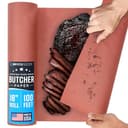
Bryco Goods Pink Butcher Paper 18" x 100 ft
18 in wide, 100 ft, unwaxed and uncoated, and stated FDA-compliant food-grade. The width is the spec that matters: 18 in wraps a whole packer in one sheet, with enough overhang to fold the ends properly. This is our top pick in the butcher paper roundup.
See all paper picksSold as peach, same paper

Oklahoma Joe's Peach Butcher Paper 18" x 100 ft
A useful test of this whole page: Oklahoma Joe's markets this as peach butcher paper, and its stated specs are 18 in, 100 ft, unwaxed and uncoated - functionally identical to the pink roll above. What you are paying extra for is the dispenser box with a cutter, which is genuinely nicer to tear a clean sheet from.
Read the wrapping guideBest value per foot

PerkHomy Pink Butcher Paper 18" x 200 ft
Same 18 in unwaxed pink paper, 200 ft instead of 100 - roughly double the roll for far less than double the price, and the lowest cost per foot we carry. Buy this one if you cook often and have somewhere to keep a large roll; the paper itself is no different.
$14.98 · View on AmazonCompare on specsPrice as of October 20, 2026. #ad How we’re funded
Frequently asked questions
Is peach paper the same as pink butcher paper?
Yes. They are two names for the same product: uncoated, unwaxed, unbleached kraft butcher paper. The color is simply what unbleached kraft pulp looks like - a pale salmon that some mills and brands call pink and others call peach. Our registry contains rolls sold under both names with effectively identical stated specs: 18 inches wide, 100 feet long, unwaxed, uncoated. If a page tells you peach paper breathes differently or holds moisture better than pink, ask which spec on which label says so.
Why is butcher paper pink?
Because it is unbleached. Kraft pulp comes out of the process a brownish-pink, and paper intended for meat counters is typically left that way rather than bleached white - partly cost, partly because the color flatters red meat on display. That is also why the shade varies between rolls and between brands: it is the natural color of the pulp batch, not a dye matched to a standard. A roll that is noticeably more orange or more gray than the last one is not a different product.
What should I actually check on a butcher paper label?
Three things, in order. First, that it is unwaxed and uncoated - a wax or poly coating is designed to keep moisture out of a wrapped sandwich, which is the exact opposite of what the Texas crutch wants, and wax does not belong in a 250 degrees F cooker. Second, the width: 18 inches wraps a full packer in one sheet, and anything narrower means seams. Third, that it states food-grade or FDA-compliant, which not every craft or shipping kraft roll does.
Can you use regular kraft paper or shipping paper instead?
No, and this is the one place where a cheaper roll of the same color is genuinely not the same thing. Brown kraft paper sold for packaging is not manufactured or certified for food contact, and it may carry sizing agents, recycled content or inks that nobody intended to be heated against meat. The cost difference between a packaging roll and a food-grade butcher roll is a few dollars across an entire brisket season. Buy the one that says food-grade on it.
Does the brand of butcher paper change the brisket?
Not in any way we can find a specification to support. All five rolls in our registry are uncoated, unwaxed, 18-inch paper, and the differences between them are length, price per foot, and whether they come in a dispenser box. What changes a wrapped brisket is the choice of paper over foil, when you wrap, and how tightly - not whose logo is on the roll. We would rather say that plainly than invent a performance difference to justify a ranking.
Is a dispenser box worth paying for?
It is worth a few dollars and nothing more. Tearing a straight 30-inch sheet off a loose 18-inch roll with greasy hands, in the dark, next to a hot smoker, is more annoying than it sounds, and a box with a cutter edge solves it. Oklahoma Joe's peach roll and one of the Bryco rolls are both boxed. If you cook a brisket twice a year, skip it; if you wrap something most weekends, it is the one convenience feature in this category that earns its money.
How much paper does one brisket use?
Plan on roughly 6 to 8 feet for a double-wrapped full packer, which is two sheets of about 3 to 4 feet each. That makes a 100-foot roll somewhere around twelve to sixteen briskets, and a 200-foot roll double that. Both numbers are arithmetic from the stated roll lengths rather than a measurement of ours, and they will shrink if you are also wrapping ribs or using paper to rest on. Cost per foot is the honest way to compare rolls, which is why our roundup ranks on it.
Sources
- USDA FSIS — Smoking Meat and Poultry — USDA on safe smoking practices, thermometer use and approved smoker materials (accessed July 22, 2026)
- USDA FSIS — Beef From Farm to Table — USDA on safe handling, cooking and resting of beef, including brisket (accessed July 22, 2026)
Keep reading
Best Butcher Paper for Brisket
Five rolls compared on width, length, coating and cost per foot.
See the roundupButcher Paper vs Foil
The wrap decision that actually changes the brisket: bark, moisture and speed.
Read the comparisonWrapping a Brisket
When to wrap, how tightly, and the fold order that keeps the juices in the paper.
Read the guideBryco Pink Butcher Paper Review
Our default roll in detail, including what Bryco states about its food-grade status.
Read the reviewBuilding Bark
Why an uncoated, breathable wrap is the whole reason paper beats foil for bark.
Read the guideResting and Holding
The paper stays on for the rest - and the paper you chose decides how the bark survives it.
Read the guide