Texas vs Kansas City BBQ Sauce for Brisket
These two are usually presented as a pair of recipes. Only one of them is. Kansas City is a formula you can read off a label; Texas style is mostly a decision about where the sauce goes - and on brisket, that is the more useful distinction.
How this is funded: we earn a commission if you buy through our links, at no extra cost to you. It never changes which product we recommend, and we’ll tell you plainly when we’d skip one. Full disclosure.
For sliced brisket, buy the Texas-style bottle and put it on the table rather than on the meat. A thin, peppery, slightly acidic sauce cuts fat and sits underneath the beef. A thick Kansas City sauce coats the slice and argues with the bark. Both are good sauces; only one of them is a brisket sauce, and the other one has a job on this animal too — it is just not the sliced flat.
Now the part that makes this comparison more interesting than it looks. The two sides are not the same kind of thing.Kansas City style is a recipe you can read off a label. Texas style is mostly a decision about where the sauce goes. Once you see that asymmetry, the question “which is better on brisket” stops being a matter of taste and becomes a question about what you want to be able to taste.
Kansas City style is a formula
Thick, tomato-based, sweetened with molasses, with enough vinegar and spice behind it to stop the sugar being the only thing in the glass. You do not have to take our word for the definition: KC Masterpiece, the brand most people treat as the template for the modern style, describes its own sauce as “kettle-cooked to produce rich layers of sweet, smoky flavor” from “the perfect blend of tomato, onion, molasses and spices.”
That is a real, repeatable specification, and it is why the style traveled. A thick sweet sauce is forgiving: it clings, it looks glossy on camera, it makes an average piece of meat taste like a treat, and it is the flavor most Americans mean when they say barbecue sauce. Walk down a supermarket aisle and the great majority of what you see is a variation on it.
It is also worth being precise about what the sweetness is doing. Sugar in a sauce has three effects, and all three are load-bearing: it tastes sweet, it thickens the body, and under heat it caramelizes and tacks up into a glaze. The first two happen in the bowl. The third only happens on the meat, and that is the one that matters most for brisket — in both directions.
Texas style is mostly a decision
Texas does not have a single codified sauce the way Kansas City effectively does. What it has is a direction and a convention. For the direction, here is Black’s BBQ in Lockhart — about as close to the source as a written description gets — on the regional style: sauces here are “thinner, peppery, and balanced with a touch of acidity,”and “a typical Texas-style BBQ sauce has a little sweetness, a hint of vinegar, and plenty of black pepper.” On the Kansas City contrast, the same page is blunt: there, “you’ll find thick, sweet sauces made with tomato and molasses.”
For the convention, the same source: “it’s almost always on the side — ready if you want it, waiting if you don’t.” Some of the best-known Central Texas joints historically did not put sauce out at all. That is the part that actually defines the style, and it is a position about the meat rather than a recipe: if the brisket is right, the sauce is an option, and a sauce that has to be there is covering for something.
Which means a bottle labeled “Texas style” is naming a direction rather than following a standard. Read the label and you can check it in about five seconds: is the body thin enough to run, is black pepper doing real work, is vinegar high on the list, and is sugar somewhere below the halfway mark. Our sauce roundup ranks six bottles on exactly that basis.
Why it matters on brisket specifically
Brisket is the cut where this argument has consequences, for a reason that has nothing to do with regional loyalty: brisket’s best flavors are quiet ones.
Twelve hours of smoke produces a bark whose character is salt, coarse black pepper, rendered fat and smoke compounds. The classic Texas rubis salt and pepper and nothing else, which is not minimalism for its own sake — it is an acknowledgement that the meat and the fire are supplying the flavor and the seasoning’s job is to frame them. Sugar is not a quiet flavor. Put a tablespoon of molasses-sweetened sauce on a slice and the sweetness is what you taste first, second and third.
There is a texture argument too, and it is the one people notice without being able to name. A thick sauce coats. The whole point of a well-made bark is that it is dry, firm and slightly crunchy at the edges, and the fastest way to undo that is to lay a wet film over it. A thin sauce pools under the slice instead, so the first thing your teeth meet is still the crust.
And then fat. The fatty end of a packer’s point is extraordinarily rich. What rich fat wants next to it is acid, which is why vinegar-forward sauces work on chopped brisket and why a sweet sauce on the point can tip into cloying by the third bite. If you are serving both halves — and our slicing guidehas you doing exactly that — a thin acidic sauce is the one bottle that suits both.
Where Kansas City style is right, and not grudgingly
Burnt ends.This is not a concession, it is a genuine win. Burnt ends are cubes of fatty point tossed in sauce and put back in the heat so the sugar caramelizes into a sticky shell — the one preparation on a brisket that is designed around sugar doing its third job. A thin Texas-style sauce cannot do it; it will not tack up. Our burnt ends guide has the timing, and the short version is that the sauce goes on in the last 30 to 45 minutes. Longer than that on a hot grate and caramelized becomes burnt in the uncharitable sense.
Sandwiches and leftovers.Day-three chopped brisket on a soft bun is a different dish from a slice of hot flat off the cutting board, and a thick sauce belongs on it — it holds together, it does not soak the bread, and by then the bark is a memory anyway. Our page on leftover brisket leans on sauce deliberately for that reason.
The people at your table.Worth saying plainly, because barbecue writing has a snobbery problem. Plenty of guests want sweet sauce, they are not wrong to, and a host who serves brisket with no sauce as a statement is prioritizing a position over the people eating. Put both bottles out. That is what “on the side” was always for.
The two styles side by side
| Texas style | Kansas City style | |
|---|---|---|
| Body | Thin, runs off a slice | Thick, coats and clings |
| Base | Tomato or ketchup, generously cut with vinegar | Tomato, sweetened with molasses (maker stated) |
| Dominant note | Black pepper and acidity (source stated) | Sweet and smoky (maker stated) |
| How it is served | On the side, often not at all | On the meat, frequently as a glaze |
| Best on a brisket | Sliced flat and point, straight off the board | Burnt ends, chopped sandwiches, leftovers |
| Is it a defined recipe? | No - a direction and a convention | Effectively yes |
The last row is the one worth keeping. It explains why “Texas style” on a label tells you less than “Kansas City style” does, and why you should read the ingredient list on the first and can mostly trust the second.
The sauce that beats both of them
It is in the paper. When you unwrap a rested brisket there is a pool of rendered fat and concentrated beef juice in the bottom of the butcher paper, and it is the single best thing you will ever serve alongside brisket. Skim most of the fat, loosen what is left with a splash of vinegar and a lot of coarse black pepper, warm it, and put it on the table in a jug.
No tomato, no molasses, no bottle. It is also closer to old Central Texas practice than anything sold as Texas style, and it costs nothing. Keep the fat you skimmed, too — that is tallow, and a spoon of it over reheated slices restores what the refrigerator took out far better than a sauce can.
Everything above is a preference argument built on published descriptions and on what sugar and acid do to fat and bark. The only part of it that is not a preference is the food-safety side: sauce goes on cooked meat, brushes that touched raw meat do not go back into a sauce bowl, and the USDA guidance cited below is the authority for both. Beyond that, the right bottle is the one your table reaches for — and the right place for it is in a bowl, beside the brisket.
One bottle from each side, and the one for burnt ends
Every figure below is the maker’s or the listing’s own, read on the date in each product’s spec table. Prices are live and refresh daily.
The Texas-style pick
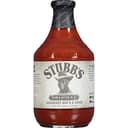
Stubb's Original Bar-B-Q Sauce
McCormick describes it as tangy tomato, vinegar, molasses and black pepper - the pepper-and-vinegar spine that sits beside beef instead of on top of it. Thin enough to run off a slice, which is the point. No high-fructose corn syrup, and the 36 oz bottle is the best value per ounce we carry.
$5.32 · View on AmazonSee all sauce picksPrice as of October 25, 2026. #ad How we’re funded
The Kansas City pick
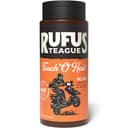
Rufus Teague Touch O' Heat BBQ Sauce
Smoky, sweet and tomato-based with chipotle behind it, and the maker's own heat summary is the most honest on the shelf: “kinda hot, kinda not.” Warm rather than hot, which is the right calibration if you want a sweet sauce that does not bury a twelve-hour smoke. Certified gluten free, non-GMO, no HFCS.
$9.99 · View on AmazonCompare the bottlesPrice as of October 25, 2026. #ad How we’re funded
The glaze for burnt ends
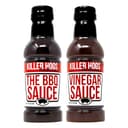
Killer Hogs The BBQ Sauce
Brown sugar is the first ingredient, which tells you what it is for: it tacks up into a real glaze instead of staying wet. That is the wrong thing to do to a sliced flat and exactly the right thing to do to a pan of burnt ends. Published list includes HFCS, and it contains anchovies via Worcestershire.
Read the burnt ends guide
Frequently asked questions
What is the difference between Texas and Kansas City BBQ sauce?
Kansas City style is a recipe: thick, tomato-based and sweetened with molasses. KC Masterpiece, the brand most people treat as the template, describes its own sauce as 'kettle-cooked to produce rich layers of sweet, smoky flavor' from 'the perfect blend of tomato, onion, molasses and spices.' Texas style is thinner and more savory - Black's BBQ in Lockhart describes the regional style as 'thinner, peppery, and balanced with a touch of acidity,' with 'a little sweetness, a hint of vinegar, and plenty of black pepper.' The bigger difference is not in the bottle at all. In Central Texas the sauce goes on the side, and often nowhere near the meat.
Which sauce is better on brisket, Texas or Kansas City?
Texas style, if you have built a peppery bark and want to taste it. A thin pepper-and-vinegar sauce cuts the fat and sits under the beef; a thick sweet sauce coats the slice and competes with the bark you spent twelve hours making. That is a structural argument rather than a taste preference - sugar is a loud flavor and smoke is a quiet one. Kansas City style earns its place at the same table on a chopped sandwich, on the fatty end of the point, for the people who simply like sweet sauce, and above all on burnt ends, where sugar is a feature.
Is there an official Texas barbecue sauce?
No, and that is the honest complication in this comparison. Texas does not have a single codified sauce recipe the way Kansas City effectively does; what it has is a tradition of restraint - thinner sauces, more black pepper, more acidity, and a strong convention of serving it on the side. Some of the most famous Central Texas joints historically did not offer sauce at all. So when a bottle says 'Texas style,' it is naming a direction (less sweet, more pepper, thinner) rather than following a standard.
Do you put BBQ sauce on brisket at all?
Not during the cook, and not over the bark if you can help it. Sugar in a sauce will scorch at any temperature high enough to set it, which is why glazes go on in the last half hour of a burnt-end pan and not at hour four. For sliced brisket, put the sauce in a bowl on the table and let people use it: that is both the Central Texas convention and the practical answer, because the slices from the lean flat and the slices from the fatty point want different amounts of it.
Which sauce should I use for burnt ends?
A Kansas City-style sweet sauce, and this is the one place on a brisket where thick and sugary is the correct choice. Burnt ends are cubes of fatty point tossed in sauce and returned to the heat so the sugar caramelizes into a sticky shell. Our pick for that is the Killer Hogs bottle, where brown sugar is the first ingredient - it tacks up instead of staying wet. Keep it to the last 30 to 45 minutes, because sugar on a hot grate for longer than that turns bitter rather than glossy.
Is Sweet Baby Ray's Kansas City style?
It is in that family - thick, tomato-based and very sweet - and high-fructose corn syrup is the first ingredient on the published label. It is also the bottle already in most American refrigerators, which is a perfectly good reason to use it on a sandwich. What it is not is a brisket sauce: it is pitched at pork ribs, and its sweetness flattens the pepper in a Texas-style bark. Our sauce roundup carries it for exactly that honest reason, and ranks it accordingly.
What about vinegar sauce - is that Texas style?
Thin vinegar sauces are the Carolinas' and Tennessee's signature rather than Texas's, though Texas sauces lean acidic and the lines blur more in bottles than in articles. The practical use on brisket is specific: a thin vinegar-forward sauce is the best thing you can put on chopped brisket for sandwiches, because it cuts the richness of the fatty point instead of adding to it. The Blues Hog Tennessee Red in our roundup is there for that job - apple cider vinegar is the first ingredient on its label.
Can I make a Texas-style sauce from the brisket drippings?
Yes, and it is the best sauce you will ever serve with a brisket. Skim the fat off what collects in the paper or the pan, then loosen it with a little vinegar and black pepper - no tomato needed. That is closer to the old Central Texas practice than anything in a bottle, it costs nothing, and it tastes like the meat it came from. Keep the rendered fat too: a spoon of beef tallow over reheated slices does more for them than any sauce.
Sources
- Black's BBQ (Lockhart, Texas) — Why BBQ Sauce in Texas Is Different — A Central Texas institution's own account of the regional style: Texas sauces are “thinner, peppery, and balanced with a touch of acidity” and “a typical Texas-style BBQ sauce has a little sweetness, a hint of vinegar, and plenty of black pepper”, against Kansas City where “you’ll find thick, sweet sauces made with tomato and molasses”; on service, “it’s almost always on the side — ready if you want it, waiting if you don’t” (accessed October 25, 2026)
- KC Masterpiece — Original Barbecue Sauce — The brand most often treated as the template for the modern Kansas City style, in its own words: “kettle-cooked to produce rich layers of sweet, smoky flavor” from “the perfect blend of tomato, onion, molasses and spices”; the page names no meat the sauce is intended for and states no thickness (accessed October 25, 2026)
- USDA FSIS — Grilling Food Safely — USDA guidance on safe outdoor cooking, thawing and holding (accessed July 22, 2026)
- USDA FSIS — Beef From Farm to Table — USDA on safe handling, cooking and resting of beef, including brisket (accessed July 22, 2026)
Keep reading
Best BBQ Sauce for Brisket
Six bottles ranked on what they do to beef and bark - the full comparison behind the two picks here.
See the sauce roundupBrisket Burnt Ends
The one place on a brisket where a thick, sweet Kansas City sauce is the right answer.
Read the guideTexas Brisket Rub Recipe
Salt, pepper and the restraint this whole argument rests on - the seasoning a sweet sauce buries.
Get the recipeHow to Build Bark on a Brisket
What the crust is, how it forms, and why sugar on top of it is a decision rather than a garnish.
Read the guideWhat to Do With Leftover Brisket
Chopped sandwiches, tacos and the dishes where a sauce finally gets to be the loud ingredient.
Read the guideBest Beef Tallow for Brisket
The other thing you can spoon over a slice - and the one that replaces what reheating took out.
See tallow picks