The two-glove system, explained
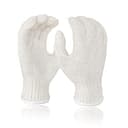
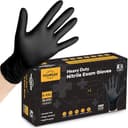
If you have watched competition cooks work, you have seen them wearing what looks like a thin black glove and moving hot meat with apparent indifference. That is two gloves: a cotton liner against the skin for heat, and a disposable nitrile glovepulled over the top for grease and hygiene. Together they cost pennies per cook and give you something no gauntlet can — the ability to feel what you are doing.
The limitation is real and worth stating plainly: this system is for briefcontact. It will let you grip a 200°F brisket for the ten seconds it takes to move it, tuck a wrap, or pull a probe. It will not let you hold something hot indefinitely, and it offers no protection at all against a flame or a hot grate. For lifting a heavy packer out of a deep smoker, where your forearms will pass close to hot metal, you want a gauntlet. The two are complementary, not competing.
Reading the heat ratings honestly
Gloves are advertised at 932°F, 700°F, and similar figures. These numbers describe the temperature the material can be exposed to for a brief, specified contact period under test conditions — they are not a promise that you can hold a 932°F object comfortably. In practice, any glove here comfortably exceeds what brisket demands, because brisket work involves 200°F meat and a 225-275°F cooker, not molten metal.
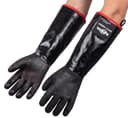
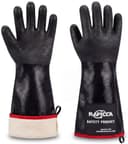
Which means the rating is rarely the deciding spec. Length is more useful: a 17-inch gauntlet covers the forearm, and the forearm is what actually contacts a hot smoker door frame when you reach in for a brisket on a lower rack. Waterproofingis more useful still, because the realistic burn risk in brisket cooking is not radiant heat — it is hot rendered fat soaking through fabric and sitting against your skin. Coated neoprene sheds it; a fabric mitt absorbs it and holds it there.
Where gloves fit in the cook
Trimming: nitrile alone. No heat involved, and you want maximum feel for the knife. See trimming a brisket and our trimming knife picks.
Loading and the wrap: gauntlets for getting in and out of the smoker, liners plus nitrile for the actual folding of the butcher paper, which is fiddly and needs feel.
The pull and the hold:gauntlets. This is the heaviest lift of the cook and the one where dropping the brisket is a real possibility — a 15-pound packer in a wet paper wrap is genuinely awkward. Both hands, both forearms covered, and move it in one deliberate motion to the cooler for the rest and hold.
A note on washing
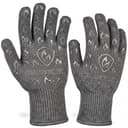
Coated neoprene gauntlets wipe clean and should never go in a washing machine — the coating is the thing keeping grease off your skin, and agitation degrades it. Fabric five-finger gloves are typically machine washable and should be washed, because a grease-saturated fabric glove has lost most of its insulating value and become a wick. Cotton liners wash with the towels. Nitrile gloves are disposable; use them once and bin them, which is the point of them.