The four things that decide a combo cooker for brisket
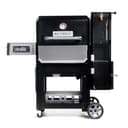
1. The bottom of the published range, not the top.Read the minimum temperature on the spec sheet before anything else. Masterbuilt publishes 225-700°F for the Gravity 800 and 250-650°F for the AutoIgnite 545, and those 25 degrees are the difference between a true overnight brisket cooker and a hot-and-fast one. Pit Boss publishes 180-500°F for the 850 Navigator, which is comfortably low enough. Kamado Joe publishes 225-750°F for the Classic Joe I. A cooker whose stated minimum is above 250°F is not a low-and-slow machine, whatever else it does well, and our 225 versus 250 comparison covers what you actually give up.
2. Whether searing and smoking use the same fire, or two different ones. There are three mechanisms here and they behave differently. A gravity-fed cabinet changes its own fire: more air, more charcoal, more heat, all from the controller, so the same machine does both without you rebuilding anything. A slide-plate pellet grillopens a hatch to expose the fire pot for direct flame — genuinely useful, but it is a small aperture, so you are searing over part of the grate rather than all of it. A charcoal cooker— the kamado and the offset — needs you to physically reconfigure it: add or remove the heat deflector, move the coals, open the vents. That is not worse, it is just a job, and it means switching modes is a twenty-minute operation rather than a button.
3. Where the deflector is, and whether it came in the box.This is the detail that trips up kamado and AKORN buyers specifically. To smoke on a ceramic or insulated-steel kamado you need a heat deflector between the coals and the meat, because without one the fire is directly under the brisket and you are grilling it. On the Classic Joe I, Kamado Joe states a halved deflector is included as part of its Divide & Conquer system — good. On the Char-Griller AKORN the listing puts no deflector in the box and the Smokin’ Stone is sold separately, which is why that cooker leads our cold-weather page rather than this one. Primo lists heat deflectors as required for indirect cooking and does not include them in the Oval XL 400 All-In-One package. Check this before you buy, not after.
4. What you are giving up versus two separate cookers. Be honest with yourself about the trade. A dedicated offset makes better brisket than any combo on this page, and a dedicated gas or charcoal grill sears better than any of them too. What you buy with a combo is one footprint, one purchase and one thing to clean. If your patio is the constraint, read our small-patio roundup alongside this one, because several cookers appear on both lists for exactly that reason.
How the five compare
| Cooker | Published temp range | True 225°F brisket cook? | How it sears | Cooking area (stated) |
|---|
| Masterbuilt Gravity 800 | 225-700°F | Yes, at the stated minimum | Same fire, turned up by the controller | 800 sq in |
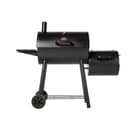
| Char-Griller Smokin’ Pro | Not published | Yes, with fire management | Charcoal directly under the main grate | 1,130 sq in total; primary not published |
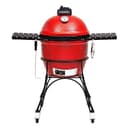
| Kamado Joe Classic Joe I | 225-750°F | Yes, with the deflector in | Deflector out, coals close to the grate | 250 sq in |
| Pit Boss 850 Navigator | 180-500°F | Yes | Slide-plate flame broiler over the fire pot | 849 sq in |
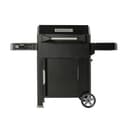
| Masterbuilt AutoIgnite 545 | 250-650°F | No — 250°F stated minimum | Cast-iron sear plate | 545 sq in |
Every figure above is the maker’s or the listing’s own published number, read on the date shown in each product’s spec table below. “Not published” means the maker does not state it — Char-Griller publishes neither a temperature range nor a primary cooking area for the Smokin’ Pro, which on an offset you light yourself is less surprising than it sounds.
The 250°F minimum, and why we kept that cooker on the list
The AutoIgnite 545 states a 250°F floor. Taken literally that rules out the classic 225°F overnight brisket, and we are not going to pretend otherwise. It stays on this page for two honest reasons. First, 250°F is a perfectly good brisket temperature — our own comparison of the two concludes the difference is a few hours of cook time rather than a difference in quality, and plenty of celebrated Texas pits run hotter than 250. Second, it is the cheapest route into gravity-fed charcoal there is, with a cast-iron sear plate and app control, and for someone whose realistic cook is a Saturday-daytime brisket rather than an overnight one it does both jobs for less money than anything else here.
What you should not do is buy it expecting a true low-and-slow and then fight the controller. If the overnight 225°F cook is the whole point, spend the extra on the Gravity 800, or read the gravity roundup for the model whose published hopper time is the longest in the range.
The budget offset: what “combo” really means there
The Char-Griller Smokin’ Pro is a different kind of combo from everything else here, and it is worth being clear about how. It is a charcoal barrel grill with an offset firebox attached to one end. In grill mode you put coals under the main grate and cook over them. In smoke mode you build the fire in the side box and the main chamber becomes an indirect oven. That is the most flexible arrangement on this page and the most demanding: it is thin steel, the seams leak out of the box, and it runs hot near the firebox until you tune it with a water pan and a baffle.
For brisket specifically, read our offset roundup for the honest assessment and our fire management guide for the skill it asks of you. If you enjoy running a fire, this is the most cooker per pound you can buy and brisket from it is as good as brisket gets. If you want to set a number and walk away, buy one of the other four.
A note on the kamado, because the area figure is small
The Classic Joe I is on this page for its range — Kamado Joe states 225-750°F, the widest here — and it has the smallest grate: 250 stated square inches on an 18-inch circle. A whole packer will not lie flat on it. That is a real constraint, not a quibble, and the answers are the ones on our small-patio page: roll the flat, separate the point from the flat, or cook a flat on its own. If you want ceramic with room for a packer, the 24-inch grills on the kamado roundupare where to look, and Primo’s oval grid is the longest straight run of any of them.
What we did not pick, and why
The Masterbuilt Gravity 1050.Same controller, same 225-700°F range, more grate. It is our top pick on the large-capacity page. It is not here because this page is about fitting both jobs into one cooker and one footprint, and the 1050 is a big appliance; if you have room for it, buy it instead.
Gas grills with a smoker box. A smoker box on a gas grill will put some smoke into some food, and it will not cook a brisket. The problem is not flavor, it is the inability to hold a genuine low temperature across a wide chamber for twelve hours while something smolders. We would rather say that than sell you a cooker that disappoints at the one job you bought it for.
Kettle grills with a slow-cook attachment.A kettle can cook a brisket — our charcoal-grill method covers the snake and Minion arrangements in detail, and they work. We did not feature one here because the whole premise of this page is a cooker that does both jobs well, and on a kettle the brisket is the hard job you are working around rather than the one the cooker is good at.
Pellet grills without direct flame. Most pellet grills, including two excellent ones on our pellet roundup, have no searing mode at all — Camp Chef dropped direct-flame searing on the Woodwind Pro specifically. They are superb brisket machines and they are not combos, so they are not on this page.