The four things that decide a smoker for a small space
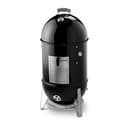
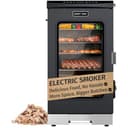
1. Footprint is a different number from cooking area, and vertical cookers break the link between them.A barrel offset puts its grate in a horizontal cylinder with a firebox bolted to one end, so cooking area and floor space grow together — that is why the offset roundupis full of cookers that need five feet of patio. Stack the same area vertically and the arithmetic changes completely. The 18-inch Weber is 19 inches wide and 21 inches deep (Weber’s stated lid-closed dimensions) and gets 481 square inches by using two grates, one above the other. The EAST OAK cabinet gets 725 square inches out of four racks in a box narrower than a kitchen chair. Whenever you see a cooking-area figure, check how many levels it is spread over before you compare it to anything.
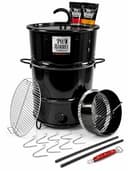
2. Whether a whole packer fits — and what you do when it doesn’t. A trimmed 14-pound packer is roughly 18 to 20 inches long, which is longer than the grate diameter of every charcoal cooker on this page. There are four honest answers to that and all four are fine. You can roll the thin end of the flat up against itself, which is what most small-cooker owners do. You can separate the point from the flat and cook them as two pieces, which also lets each come off when it is ready. You can cook a flat on its ownand accept that you are not making burnt ends this weekend. Or you can hang the brisket vertically, which is the Pit Barrel’s entire argument — Pit Barrel states that two full 14-to-16-pound packers hang at once inside an 18.5-inch barrel, and that is the highest brisket-per-square-foot figure anywhere on this site.
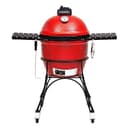
3. Where the heat and the ash go, because a wall is close.On a small patio the cooker is near something flammable, and that changes which features matter. A ceramic or insulated cooker keeps its heat inside, so the outside stays cooler and the cook is less fuel-hungry; a thin-steel cooker radiates in every direction. Ash is the other half: the AKORN’s EasyDump pan and the Kamado Joe’s slide-out ash drawer (both maker stated) exist so that cleanout is not a matter of tipping a hot barrel over on a surface you have to live with. And on a balcony, where the smoke goes is somebody else’s business as well as yours. Anything that burns charcoal and wood produces a lot of smoke for ten to fourteen hours, and there is no version of brisket that does not.
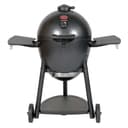
4. Can one person move it, and does it need to go away afterwards?This is the question small-space buyers forget and then resent. The 18-inch Weber comes apart into three pieces and has no wheels — it is a lift-and-set-up cooker, which is good if it lives in a shed between cooks and bad if your back is the limiting factor. The AKORN ships with 8-inch locking casters and folding side shelves (listing stated), so it rolls into a corner. The Kamado Joe Classic Joe I is 227.7 pounds (maker stated); once it is placed, it is placed forever — and its 24-inch sibling is 131 pounds heavier again, which our Classic Joe against Big Joe comparison weighs against the brisket it can actually fit. None of those is a defect. They are just different lives.
How the six compare
| Cooker | Published cooking area | Grate size / format | Fuel | Will a whole packer lie flat? |
|---|
| Weber Smokey Mountain 18" | 481 sq in, two grates (stated) | 18 in round × 2 | Charcoal + wood | No — roll, fold or split |
| Pit Barrel Premier 18.5" | Not published | Hangs from rods; grate included | Charcoal + wood | Hangs vertically — two packers, 14-16 lb each (stated) |
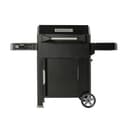
| Masterbuilt AutoIgnite 545 | 545 sq in (stated) | Single level, gravity hopper | Charcoal (gravity-fed) | One packer; 250°F stated minimum |
| EAST OAK 30" Electric | 725 sq in (stated) | 4 racks, vertical cabinet | Electric + wood chips | No — a 30 in cabinet needs the packer trimmed or folded |
| Char-Griller AKORN 20" | 445 sq in incl. warming rack (stated) | 20 in cooking diameter | Charcoal + wood | Borderline — usually roll the flat |
| Kamado Joe Classic Joe I | 250 sq in (stated) | 18 in round | Lump charcoal + wood | No — flats, half packers, or point and flat split |
Every figure above is the maker’s or the listing’s own published number, read on the date shown in each product’s spec table below. “Not published” means we could not find the maker stating it — we have not substituted an estimate. The packer-fit column is our reading of the published grate dimension against a trimmed 14-pound packer at roughly 18-20 inches long; measure your own brisket, because they vary.
The capacity number that actually matters
Cooking area in square inches is the figure every listing leads with and the least useful one for brisket. A brisket is not an area problem; it is a length problem. Four hundred and eighty-one square inches sounds generous until you notice it is two 254-square-inch circles, neither of which has a straight run longer than 18 inches in it. This is the same reading we applied on the kamado roundup, where an 18-inch ceramic grill with a perfectly respectable area still cannot lay a packer down.
So when you compare these six, read the grate dimension first and the area second. And notice that the cooker with the smallest published area — the Classic Joe I at 250 square inches — is on this list honestly, as the right cooker for a flat or a half packer rather than as a packer machine we are pretending it is.
What about running two briskets?
It can be done on a small patio, and only one cooker here does it without an argument. The Pit Barrel hangs the meat from rods rather than laying it on a grate, which means the constraint becomes barrel depth rather than grate diameter, and Pit Barrel states two whole packers at once. Everything else on this page is a one-packer cooker, and if two briskets at a time is a regular requirement rather than a Thanksgiving one, read our two-brisket guide and then our large-capacity roundup instead, with the tape measure still in your hand.
The Pit Barrel comes with its own trade, and it is a real one: it runs hot by design, with a single intake vent and very little adjustment. That is not a 225°F overnight smoker, it is a 275-300°F cooker that finishes in eight hours or so. Whether that suits you is the subject of our hot-and-fast guide, and on a small patio there is a genuine argument that a shorter cook is the more neighbourly one.
Electric, charcoal, or gravity-fed?
Charcoal gives you the most flavor and the most control and asks for the most attention, and on a small patio it has one extra cost: a chimney of lit coals has to be started somewhere, and that somewhere needs to be a non-combustible surface clear of everything. Our chimney starter roundup covers the tool and our fire management guide covers the burn.
Electric is the only answer if open flame is prohibited where you live, and the EAST OAK is here because it has the one feature that matters on a long cook — a side chip loader, so you top up smoke without opening the door and dumping your heat. Be clear-eyed about what you are getting: an element and a chip tray produce the lightest smoke and the softest bark of anything on this page, which is exactly the complaint our not-enough-smoke-flavor page exists to answer, and a smoke tube is the usual fix.
Gravity-fed charcoal is the newest option and the AutoIgnite 545 is the cheapest way into it. Read its one brisket caveat carefully, because it is published and it is decisive: Masterbuilt states a 250°F minimum. That is a hot-and-fast brisket machine and a poor true low-and-slow one. If an overnight 225°F cook is the whole point for you, the gravity roundup covers the larger models that go lower.
What we did not pick, and why
The 22-inch Weber Smokey Mountain. It is our top pick on the charcoal smoker roundup and it is the cooker we would tell almost anyone with the space to buy. On a small patio the extra four inches of diameter is exactly the thing you do not have. If your measurements come back more generous than you feared, buy the 22.
The Oklahoma Joe’s Bandera.A vertical offset is a genuinely clever answer to a floor-space problem — 992 stated square inches in something about 40 inches wide — and it appears on our large-capacity page and in a full review for that reason. It is not here because 40 inches wide is still much wider than anything above, and a side firebox needs clear air around it.
Portable and tabletop cookers. There are plenty of 14-inch bullets, kettle-sized drums and camping smokers that would fit on a balcony beautifully and cannot cook a brisket at all. We did not feature one, because a cooker that needs you to cut the brisket into thirds is not a brisket smoker with a small footprint, it is a different appliance.
Pellet grills generally. Not because they are bad — our pellet rounduprates them highly — but because the small ones get their compactness by shrinking the chamber, and the ones with a packer-sized grate are among the widest cookers on the site. A pellet grill also needs a power outlet, at which point the vertical electric cabinet beats it on area per square foot of patio.