Brisket & Bark

The Best Smoker for Beginners

Your first smoker shouldn't make good brisket possible. It should make good brisket likely. That's a different specification, and it rules out some cookers that experienced pitmasters love.

By Stephen V.Last updated How we pick

The advice a beginner usually gets is to buy a cheap offset smoker, because that is what real barbecue is cooked on. It is well-meant and it is bad advice. A budget offset is the hardestcooker on this page to run — thin steel, leaky seams, a hot end and a cold end, and a fire that needs feeding every forty-five minutes for twelve hours. Learning fire management and learning brisket simultaneously, on a fifteen-pound cut that costs real money, is how people conclude they are bad at barbecue.

A better first smoker minimizes the number of things that can go wrong while you learn the thing that actually matters: reading the meat. So the ranking below is by how hard it is to get a bad result, weighted by whether the cooker can fit a whole packer and whether it will still satisfy you in three years. Every one of these will make good brisket in the hands of someone following our method guide.

How this is funded: we earn a commission if you buy through our links, at no extra cost to you. It never changes which product we recommend, and we’ll tell you plainly when we’d skip one. Full disclosure.

Quick picks

Ranked on the published specs and how each one fits a brisket cook. Select a row to jump to the full write-up. We have not run this gear in a lab — here is exactly what we do instead.

#ProductBest forPrice
1
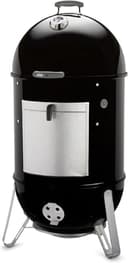
Weber Smokey Mountain Cooker 22"

Weber Smokey Mountain Cooker 22"

The bullet smoker that has produced more competition brisket than anything at its price. Charcoal and a water pan hold a rock-steady 225-250°F for a full overnight cook, and the 22" fits a whole packer flat without folding it.

Best overall first smoker
$549.00 · View on Amazon

Price as of September 6, 2026. #ad How we’re funded

2
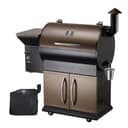
Z Grills 700-Series Wood Pellet Grill

Z Grills 700-Series Wood Pellet Grill

The budget pellet grill that keeps showing up on 'best value' lists for a reason: a PID controller and roughly 700 sq in for well under the big brands. No WiFi on the base model, but for a set-it-at-225 brisket you don't strictly need it.

Easiest to get right
$540.55 · View on Amazon

$609.0011% off

Price as of September 6, 2026. #ad How we’re funded

3
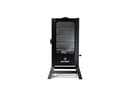
Masterbuilt 40" Digital Electric Vertical Smoker

Masterbuilt 40" Digital Electric Vertical Smoker

The electric cabinet with enough room to stop folding briskets. 970 square inches over four racks swallows a full packer laid flat, and the side chip loader means you top up smoke without opening the door and dumping your heat. If an electric smoker is the right answer for you, this is the size to buy.

Best for no fire management
$349.99 · View on Amazon

$399.9913% off

Price as of September 6, 2026. #ad How we’re funded

4
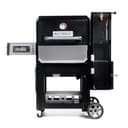
Masterbuilt Gravity Series 800 Digital Charcoal Smoker

Masterbuilt Gravity Series 800 Digital Charcoal Smoker

The best of both worlds if you want real charcoal-and-wood flavor without babysitting a fire: a gravity-fed hopper drops charcoal automatically while a digital fan holds your set temperature. It gives you stick-burner flavor with pellet-grill convenience, and it can sear too.

Best charcoal without the babysitting
$749.00 · View on Amazon

$899.9917% off

Price as of September 6, 2026. #ad How we’re funded

5
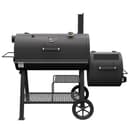
Oklahoma Joe's Highland Reverse Flow Offset Smoker

Oklahoma Joe's Highland Reverse Flow Offset Smoker

A real stick-burner you can actually afford. The reverse-flow baffles pull heat and smoke evenly across the chamber, which is exactly the weakness cheap offsets usually have, and you can pull them to run it as a traditional offset once you learn the fire.

Best first offset, if you insist
$729.00 · View on Amazon

Price as of September 6, 2026. #ad How we’re funded

The picks in full

#1Best overall first smoker

Weber Smokey Mountain Cooker 22"

The bullet smoker that has produced more competition brisket than anything at its price. Charcoal and a water pan hold a rock-steady 225-250°F for a full overnight cook, and the 22" fits a whole packer flat without folding it.

Strengths

  • Two 22" grates hold a full packer and then some
  • Water pan makes 225-250°F genuinely easy to hold overnight
  • Porcelain-enameled steel that lasts a decade-plus with basic care

Trade-offs

  • You manage the fire and vents yourself — no thermostat
  • No wheels; it is a lift-and-set-up smoker, not a roll-around
Fuel / powerCharcoal + wood
FuelCharcoal + wood chunks
Total cooking area726 sq in (two grates)
Temperature controlManual vents + water pan
BodyPorcelain-enameled steel
Diameter22 inches

Specs read from the manufacturer listing, on July 22, 2026. “Not published” means the maker does not state that figure.

#2Easiest to get right

Z Grills 700-Series Wood Pellet Grill

The budget pellet grill that keeps showing up on 'best value' lists for a reason: a PID controller and roughly 700 sq in for well under the big brands. No WiFi on the base model, but for a set-it-at-225 brisket you don't strictly need it.

Strengths

  • PID temperature control at a genuinely low price
  • ~700 sq in fits a full packer
  • Simple, well-supported, easy to live with

Trade-offs

  • Base model has no WiFi — you monitor with a separate probe
  • Lighter build than premium pellet grills
Fuel / powerWood pellets
FuelWood pellets
Total cooking area697 sq in (stated)
Temperature controlDigital PID
Temp range180-450°F (stated)
ConnectivityNone on base model

Specs read from the manufacturer listing, on July 22, 2026. “Not published” means the maker does not state that figure.

#3Best for no fire management

Masterbuilt 40" Digital Electric Vertical Smoker

The electric cabinet with enough room to stop folding briskets. 970 square inches over four racks swallows a full packer laid flat, and the side chip loader means you top up smoke without opening the door and dumping your heat. If an electric smoker is the right answer for you, this is the size to buy.

Strengths

  • 970 sq in over four racks — a packer fits without folding
  • Side wood-chip loader adds smoke without opening the door
  • Digital thermostat holds a set temperature unattended

Trade-offs

  • Chip trays produce lighter smoke than charcoal or a stick fire
  • Costs as much as a capable pellet grill
Fuel / powerElectric + wood chips
FuelElectric element + wood chips
Total cooking area970 sq in (stated)
Temperature controlDigital thermostat
Chip loadingSide loader (no door opening)
ElementNot published

Specs read from the manufacturer listing, on August 10, 2026. “Not published” means the maker does not state that figure.

#4Best charcoal without the babysitting

Masterbuilt Gravity Series 800 Digital Charcoal Smoker

The best of both worlds if you want real charcoal-and-wood flavor without babysitting a fire: a gravity-fed hopper drops charcoal automatically while a digital fan holds your set temperature. It gives you stick-burner flavor with pellet-grill convenience, and it can sear too.

Strengths

  • Gravity-fed charcoal + digital fan = real smoke, held temps
  • Reaches 225°F for brisket and 700°F for searing
  • WiFi/Bluetooth control and a wood chamber for smoke wood

Trade-offs

  • More moving parts (fan, hopper) than a manual smoker
  • Depends on power; charcoal cost per cook is higher than pellets
Fuel / powerCharcoal + wood (gravity-fed)
FuelLump/briquette charcoal + wood
Total cooking area800 sq in
Temperature controlDigital fan + hopper (WiFi/BT)
Temp range225-700°F (stated)
ConnectivityWi-Fi + Bluetooth

Specs read from the manufacturer listing, on July 22, 2026. “Not published” means the maker does not state that figure.

#5Best first offset, if you insist

Oklahoma Joe's Highland Reverse Flow Offset Smoker

A real stick-burner you can actually afford. The reverse-flow baffles pull heat and smoke evenly across the chamber, which is exactly the weakness cheap offsets usually have, and you can pull them to run it as a traditional offset once you learn the fire.

Strengths

  • Reverse-flow baffles even out the notorious hot-spot problem
  • Removable baffles + optional smokestack location = two airflow setups
  • Heavy enough to hold heat, light enough for one person to move

Trade-offs

  • Thinner steel than a custom pit — needs fire tending in wind and cold
  • Some seam-sealing and a seasoning cook are expected out of the box
Fuel / powerCharcoal + wood
FuelCharcoal + wood (offset firebox)
Total cooking area900 sq in
Primary cooking area619 sq in
AirflowReverse flow, removable baffles
Steel gaugeNot published

Specs read from the manufacturer listing, on July 22, 2026. “Not published” means the maker does not state that figure.

What makes a smoker beginner-friendly

Temperature stabilityis first, by a distance. Brisket is forgiving of a lot, but it punishes wild temperature swings, and a beginner chasing a swinging pit temperature with the vents will usually overcorrect and make it worse. A cooker that holds 250°F on its own removes the single largest source of first-cook failure.

Capacity for a whole packer is second. Cooking a folded brisket because the cooker is too small teaches you bad habits and produces uneven results, and it is a genuinely common problem on small cabinets and kettles.

Ceilingis third and gets ignored. Some beginner cookers are things you outgrow in a season; others are things competition cooks still use. A Weber Smokey Mountain is on this list at number one partly because nobody ever outgrows one — it is a genuine competition cooker that happens to be beginner-friendly, which is a rare combination.

The case against starting on an offset

To be clear about the bias: offsets make the best brisket. A well-run stick burner produces smoke flavor nothing else matches, and our offset roundup exists because they are worth owning. The argument is about sequence, not merit.

Running an offset well means managing a live fire for twelve hours: splits every thirty to forty-five minutes, reading the smoke color, adjusting the intake to keep combustion clean, and knowing the pit’s hot spots well enough to rotate the meat. That is a real skill, and it takes several cooks to acquire. Acquiring it on your first brisket means the brisket is a casualty of the learning process. Learn the meat first on a stable cooker; then, if you want the flavor ceiling, buy the offset and learn fire management on cheaper cuts.

Buy the thermometer before you buy the upgrade

The most common beginner mistake is not the cooker. It is trusting the dial thermometer mounted in the smoker’s lid. Those bimetallic dials are frequently 20 to 30°F out, and they measure air temperature at the lid rather than at the grate where the meat is — two separate errors that can compound to a genuinely misleading number.

A leave-in probe thermometer that reports both grate temperature and meat temperature costs a fraction of any smoker here and will improve your brisket more than any cooker upgrade. Buy it at the same time as the smoker, not after your first disappointing cook. Then learn to distrust the number in favor of probe tenderness, which is what actually tells you a brisket is done.

A realistic first-cook plan

Buy a whole packer, Choice grade — there is no reason to risk a Prime brisket on a first attempt, and the difference is smaller than the price gap suggests, as covered in Prime vs Choice. Trim it, season it with coarse salt and pepper, run the pit at 250°F, and put it on early enough that you have several hours of slack before you need to serve. Wrap when the bark is set and the temperature stalls. Pull when it probes like soft butter, not when it hits a number. Rest it for at least an hour.

Then expect it to be imperfect, because it will be, and expect the second one to be significantly better. Brisket is a cut where the learning curve is steep and short — most people are producing genuinely good brisket by their third or fourth attempt, provided the cooker is not fighting them the whole way.
Frequently asked questions

What is the best smoker for a beginner?

A Weber Smokey Mountain 22-inch, for most people. It holds a low temperature very steadily thanks to its water pan, fits a whole packer without folding, costs far less than a good pellet grill, and is a genuine competition cooker you will never outgrow. If you want to remove fire management entirely, a pellet grill or an electric cabinet is easier still — at the cost of some smoke flavor.

Should I start with an offset smoker?

Generally no, despite the common advice. Offsets make the best brisket, but a budget offset is the hardest cooker to run — thin steel, leaky seams, uneven heat, and a fire needing attention every 45 minutes for twelve hours. Learning fire management and brisket simultaneously, on an expensive cut, is how beginners get discouraged. Learn the meat on a stable cooker first, then buy the offset.

Is a pellet grill cheating?

No, and the question says more about barbecue culture than about cooking. A pellet grill automates fire management, which is a skill, but it does not automate trimming, seasoning, knowing when to wrap, judging probe tenderness or resting properly — and those decide whether brisket is good. The honest trade is smoke flavor: pellet grills produce less than a live fire. That is a real cost, not a moral one.

How much should I spend on my first smoker?

Less than you think, and reserve part of the budget for a thermometer. A capable first smoker that fits a whole packer is available well below the price of a mid-range pellet grill, and a leave-in probe thermometer costs a small fraction of either and will improve your brisket more than spending the same money on a better cooker. Buy the thermometer at the same time, not after a disappointing first cook.

What size smoker do I need for a whole brisket?

Enough grate length to lay a trimmed packer flat, which means roughly 18 to 20 inches. A 22-inch bullet smoker or a 40-inch electric cabinet handles it comfortably; 30-inch cabinets and small kettles usually mean folding the brisket, which makes the doubled section cook unevenly. If your cooker is small, separating the point from the flat before cooking is a better answer than folding.

How many times will it take to get brisket right?

Most people produce genuinely good brisket by the third or fourth attempt. The learning curve is steep but short — the fundamentals are trimming, steady temperature, wrapping at the right point, judging doneness by feel rather than a number, and resting properly. A stable cooker shortens the curve considerably, because it removes fire management from the list of things you are learning at once.

Sources

Keep reading