What you give up at the bottom of the market
Thermal mass. This is the real difference between a $300 smoker and a $3,000 one, and it is physics rather than marketing. Heavy steel stores heat and releases it slowly, which smooths out every disturbance — opening the lid, a gust of wind, a cold snap at 3 a.m. Thin steel stores almost nothing, so every disturbance shows up immediately in the chamber temperature and you are the one who has to correct it. On a twelve-hour cook that is the difference between checking in occasionally and tending constantly.
Sealing. Budget smokers leak — around doors, at the firebox joint, past the lid. Leaks mean uncontrolled airflow, and uncontrolled airflow means you cannot damp the fire down when you need to. This is the most fixable problem on the list: high-temperature gasket tape and a few dollars of aluminum foil close most of the gaps on a cheap offset, and it is the single most effective upgrade you can make to one.
Instrumentation. The dome thermometer on an inexpensive smoker is frequently wrong, sometimes by thirty degrees or more, and it reads air near the lid rather than at grate level where the brisket sits. Treat it as decorative. A cheap leave-in probe clipped at grate height gives you the number that matters, and it costs a fraction of the smoker.
Longevity. Thin steel rusts. Keep a cover on it, keep it dry, and empty the ash after every cook — wet ash is corrosive and will eat a firebox floor in a couple of seasons. A well-kept budget smoker lasts years; a neglected one lasts two.
Which budget type suits which cook
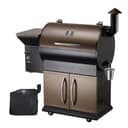
A budget pellet grill is the most forgiving thing on this page. The controller holds your set temperature whether or not you are paying attention, which removes the single biggest cause of failed budget brisket. What you give up is smoke depth — pellets burn very cleanly, and clean combustion produces less of the aromatic material that makes barbecue taste like barbecue. You will make good brisket on your first attempt and you may find yourself wanting more smoke by your tenth.
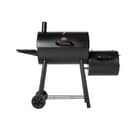
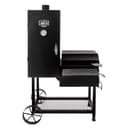
A budget offset gives you the most flavor per dollar and asks for the most work. It also asks for the most modification: seal the leaks, add a grate-level thermometer, and expect to learn how to run a small clean fire rather than a large smoldering one. Our fire management guide is genuinely required reading if this is your route — the difference between a good and bad cheap-offset brisket is almost entirely fire technique.
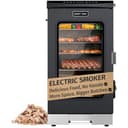
A budget electric is the least glamorous and the most predictable. It is an insulated box with a heating element and a chip tray. It will hold 250°F through a cold night with no attention whatsoever, and it will produce the mildest smoke of anything here. For someone who wants tender, sliceable brisket without learning fire, it is an entirely legitimate answer.
The upgrades that matter more than the smoker
On a tight budget, spend in this order. First, a reliable instant-read — it is the cheapest item on this list and the one that most often decides whether a brisket is tender or tough, because brisket is finished by feel and temperature, not by the clock. Second, a leave-in probe so you can watch the pit and the meat without opening anything. Third, butcher paper for the wrap, which costs very little and reliably shortens the cook. Fourth, a cooler for the hold, which turns an unpredictable finish time into a controlled one.
Everything else — injectors, boutique rubs, premium charcoal — is optional. A brisket seasoned with salt and pepper over ordinary briquettes and a few oak chunks, cooked patiently and rested properly, beats an expensively equipped brisket cooked carelessly. That is not a consolation; it is the actual hierarchy.
Buy once, or buy twice?
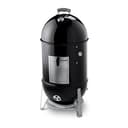
There is a real argument for buying the cheapest capable smoker now, learning on it, and upgrading in two years once you know what you actually want. There is an equally real argument for stretching to something like a 22-inch bullet, which will still be in service in fifteen years. Both are defensible.
What is not defensible is buying something too small for a packer or too flimsy to hold heat, because that buys you neither the learning nor the longevity. Every pick above clears that bar. If your budget cannot reach any of them yet, wait a month rather than buying below them — and read the method in the meantime, because that is free and it matters more than the machine.