Brisket & Bark

The Best Meat Injector for Brisket

Injecting is the most divisive step in brisket. Competition cooks do it almost universally; Central Texas barbecue joints almost never do. Here's the honest case for each — and the injectors worth owning if you decide to.

By Stephen V.Last updated How we pick

Start with the question before the gear. Injecting a brisket means pushing a liquid — usually beef broth, sometimes with phosphates or a commercial injection blend — deep into the flat before it goes on the smoker. The argument for it is straightforward: the flat is the lean muscle, it is the part that dries out, and injecting adds moisture and seasoning where a surface rub can never reach.

The argument against is equally straightforward: the great Texas brisket houses don’t inject, and their brisket is not dry. Good trimming, a properly managed fire and pulling at the right moment solve the moisture problem at its source. Injection is insurance against a cook going wrong, and competition teams use it because a single dry slice loses a contest. Our position: fix the fundamentals first.If your brisket is still coming out dry after that, inject — and the two specs that decide an injector are barrel material(stainless survives, plastic doesn’t) and capacity (a 2-ounce barrel means a lot of refills in a 15-pound packer).

How this is funded: we earn a commission if you buy through our links, at no extra cost to you. It never changes which product we recommend, and we’ll tell you plainly when we’d skip one. Full disclosure.

Quick picks

Ranked on the published specs and how each one fits a brisket cook. Select a row to jump to the full write-up. We have not run this gear in a lab — here is exactly what we do instead.

#ProductBest forPrice
1
Ofargo Stainless Steel Meat Injector Syringe Kit

Ofargo Stainless Steel Meat Injector Syringe Kit

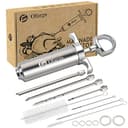
All-stainless barrel and four needles at a price where most injectors are plastic. The barrel material is the whole decision here: plastic barrels cloud, crack and seize after a few hot washes, while a steel one is still working in five years.

Best overall
$27.99 · View on Amazon

Price as of September 6, 2026. #ad How we’re funded

2
SpitJack SHOT XL Marinade Injector (70ml)

SpitJack SHOT XL Marinade Injector (70ml)

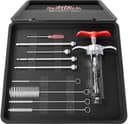
70 milliliters is more than double a standard 2-ounce barrel, and on a 15-pound packer that is the difference between six refills and two. If you inject regularly, capacity is the upgrade that actually changes the job — not needle count.

Best large capacity
$49.00 · View on Amazon

Price as of September 6, 2026. #ad How we’re funded

3
SpitJack PULSE Meat Injector Gun

SpitJack PULSE Meat Injector Gun

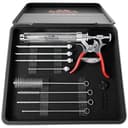
A pistol grip converts injecting from a two-handed wrestling match into a one-handed job, which matters more than it sounds when you are putting forty shots into a cold packer. This is a genuine luxury rather than a necessity — but it is the one people who inject often end up buying.

Best for frequent use
$85.00 · View on Amazon

Price as of September 6, 2026. #ad How we’re funded

4
Bayou Classic 5030 2-oz Seasoning Injector

Bayou Classic 5030 2-oz Seasoning Injector

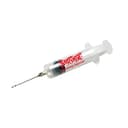
The cheap one that keeps working. It is a simple 2-ounce barrel with a stainless needle and no accessories to lose, and if you inject one brisket a year it is all the injector you will ever need. Buy the fancy one only when you outgrow this.

Best budget
$11.84 · View on Amazon

Price as of September 6, 2026. #ad How we’re funded

The picks in full

#1Best overall

Ofargo Stainless Steel Meat Injector Syringe Kit

All-stainless barrel and four needles at a price where most injectors are plastic. The barrel material is the whole decision here: plastic barrels cloud, crack and seize after a few hot washes, while a steel one is still working in five years.

Strengths

  • Fully stainless barrel — survives repeated hot washing
  • Four needle types cover thin marinades and thick slurries
  • Priced well below the pistol-grip guns

Trade-offs

  • 2 oz barrel means several refills for a full packer
  • Manual plunger tires your hand over a big injection
Fuel / powerNot published
BarrelStainless steel
Needles4 included (stated)
TypeManual syringe
CapacityNot published

Specs read from the manufacturer listing, on August 10, 2026. “Not published” means the maker does not state that figure.

#2Best large capacity

SpitJack SHOT XL Marinade Injector (70ml)

70 milliliters is more than double a standard 2-ounce barrel, and on a 15-pound packer that is the difference between six refills and two. If you inject regularly, capacity is the upgrade that actually changes the job — not needle count.

Strengths

  • 70ml barrel — roughly 2.4x a standard 2 oz injector
  • Four needles for different marinade thicknesses
  • Built heavier than the budget syringes

Trade-offs

  • A full barrel is heavy and awkward one-handed
  • Costs several times a basic syringe
Fuel / powerNot published
Capacity70 ml (stated)
Needles4 included (stated)
TypeManual syringe
BarrelNot published

Specs read from the manufacturer listing, on August 10, 2026. “Not published” means the maker does not state that figure.

#3Best for frequent use

SpitJack PULSE Meat Injector Gun

A pistol grip converts injecting from a two-handed wrestling match into a one-handed job, which matters more than it sounds when you are putting forty shots into a cold packer. This is a genuine luxury rather than a necessity — but it is the one people who inject often end up buying.

Strengths

  • Pistol grip makes dozens of injections effortless
  • One-handed operation frees your other hand for the meat
  • Purpose-built for brisket and pork shoulder (stated)

Trade-offs

  • By far the most expensive injector here
  • More parts to clean and more to go wrong
Fuel / powerNot published
TypePistol-grip injector gun
NeedlesKit included (stated)
CapacityNot published
BarrelNot published

Specs read from the manufacturer listing, on August 10, 2026. “Not published” means the maker does not state that figure.

#4Best budget

Bayou Classic 5030 2-oz Seasoning Injector

The cheap one that keeps working. It is a simple 2-ounce barrel with a stainless needle and no accessories to lose, and if you inject one brisket a year it is all the injector you will ever need. Buy the fancy one only when you outgrow this.

Strengths

  • Cheapest genuinely functional injector here
  • Stainless needle and a simple design with little to break
  • Long-standing kitchen-supply brand

Trade-offs

  • One needle only — thick rubs and slurries will clog it
  • 2 oz barrel means a lot of refills on a packer
Fuel / powerNot published
Capacity2 oz (stated)
Needles1 stainless (stated)
TypeManual syringe
BarrelNot published

Specs read from the manufacturer listing, on August 10, 2026. “Not published” means the maker does not state that figure.

Barrel material is the spec that decides longevity

Most cheap injectors have a clear plastic barrel, and most cheap injectors fail the same way: the barrel clouds, the plunger seal stiffens, and after a handful of hot washes the whole thing seizes or cracks. Marinades are acidic and the washing is hot, and plastic tolerates neither well over time.

A stainless barrel removes that failure mode entirely. The trade is that you cannot see the liquid level, which sounds like a real loss and turns out not to be — you learn the feel of a full barrel within one cook. If you expect to own an injector for more than a season, stainless is the buy. The one exception is the genuine occasional user: if you inject one brisket a year, a simple cheap syringe is honestly enough, which is why one is on this list.

Capacity: why 2 ounces is annoying

The standard injector barrel holds 2 fluid ounces. A 15-pound packer injected properly takes somewhere in the region of 10 to 16 ounces of liquid, distributed across a grid of injection sites roughly an inch apart through the flat. That is five to eight refills, each requiring you to put the injector down, draw more liquid, and find your place again — with cold raw beef and wet hands.

A 70ml barrel — roughly 2.4 ounces — cuts that meaningfully, and a pistol-grip gun with a feed tube removes refilling almost entirely. Whether that justifies the price depends entirely on how often you inject. Once a year: no. Monthly: absolutely.

Needles, and the clogging problem

Injector kits come with several needles, and the difference between them is the hole pattern. A single end-hole needle delivers all the liquid at one point and clogs least. A multi-hole side-portneedle distributes liquid along the needle’s length as you withdraw it, which gives a much more even spread through the muscle — and clogs constantly if your injection liquid has any solids in it.

The practical answer is to strain your injection liquid before it goes anywhere near the injector. If you are using a rub-based or broth-with-aromatics mixture, run it through a fine sieve or a coffee filter first. Almost every injector review complaining about clogging is describing unstrained liquid rather than a defective needle.

How to inject a brisket, briefly

Inject cold, before seasoning, with the brisket sitting in a deep tray to catch what escapes — and a great deal escapes, which is normal and not a sign you are doing it wrong. Work a grid across the flatonly, roughly an inch between sites, going in with the grain rather than across it so the holes close up more cleanly. Push slowly and withdraw as you push, so the liquid spreads along the needle track rather than forming a single pocket. Skip the point — it has plenty of intramuscular fat and doesn’t need help, as covered in point vs flat.

Then season as normal. Injecting does not replace a surface rub— the two do different jobs, one inside the meat and one building bark on the outside. And it does not change the cook: same temperatures, same wrap decision, same reliance on probe tenderness rather than the clock.
Frequently asked questions

Should I inject a brisket?

Only if your fundamentals are already solid. Injection adds moisture and seasoning inside the lean flat, which is real insurance against a dry brisket — but the great Texas barbecue houses don't inject, and their brisket isn't dry. Trimming properly, holding a steady fire and pulling at probe tenderness solve the moisture problem at its source. Fix those first; inject if you are still getting dry results, or if you are competing and cannot afford a single dry slice.

What should I inject brisket with?

Beef broth or beef stock is the standard base, sometimes with a commercial injection blend added. Whatever you use, strain it before it goes in the injector — unstrained liquid with solids in it is the cause of nearly every clogged-needle complaint. Keep it simple: the injection is there to carry moisture and salt into the flat, not to be the flavor of the brisket.

How much injection does a brisket need?

Roughly 10 to 16 fluid ounces for a 15-pound packer, distributed across a grid of sites about an inch apart through the flat. A lot will run back out as you inject — that is normal, not a mistake, which is why you do it in a deep tray. With a standard 2-ounce barrel that is five to eight refills.

Do I inject the point as well as the flat?

Just the flat. The point is the fatty muscle and it has ample intramuscular fat to keep itself moist through a long cook — that is exactly why it becomes burnt ends. The flat is the lean muscle that dries out, so it is the one that benefits. Injecting the point is mostly wasted liquid.

Stainless or plastic barrel?

Stainless, if you plan to keep it. Plastic barrels cloud, stiffen and crack after repeated hot washes and contact with acidic marinades — it is the standard failure mode for cheap injectors. Stainless removes that entirely; you just lose the ability to see the liquid level, which you stop needing after one cook. Plastic is fine only for genuinely occasional use.

Why does my injector needle keep clogging?

Almost always unstrained liquid. Multi-hole side-port needles have small openings that catch any solids — rub particles, herbs, pepper — and block immediately. Strain your injection through a fine sieve or coffee filter before loading it. If you need to inject something with body to it, use the single end-hole needle instead, accepting a less even spread.

Sources

Keep reading