Brisket & Bark

Beef Tallow Alternatives for Brisket

Wagyu tallow in a jar is a convenience product, and the thing it is a convenient substitute for is sitting on your cutting board. Four alternatives, starting with the free one.

By Stephen V.Last updated How we pick

The best alternative to buying beef tallow is rendering your own from the brisket trimmings, which is free, and all you need for it is a pan. A packer gives up one to two pounds of hard fat during a trim, and that fat is the same substance you are being sold in a jar. The TLAPS foil pans below are our pick for the job: trim, cube the fat, render it low in the smoker alongside the brisket, strain, done.

If you want a jar and not a project, buy the Fatworks organic grass-fed tallow — plain beef tallow rather than wagyu, certified organic and non-GMO on the listing, and it does the brisket job identically. The budget pick is the First Light 14 oz wagyu jar, which currently carries the lowest live price of any tallow on this site.

Prices come from our live price layer and each button reads the current number when the page loads, as of November 22, 2026.

How this is funded: we earn a commission if you buy through our links, at no extra cost to you. It never changes which product we recommend, and we’ll tell you plainly when we’d skip one. Full disclosure.

Quick picks

Ranked on the published specs and how each one fits a brisket cook. Select a row to jump to the full write-up. We have not run this gear in a lab — here is exactly what we do instead.

#ProductBest forPrice
1
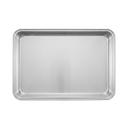
TLAPS Half-Size Aluminum Foil Steam Table Pans, 9 x 13 in, 20-pack

TLAPS Half-Size Aluminum Foil Steam Table Pans, 9 x 13 in, 20-pack

Twenty disposable 9 by 13 foil pans, and the pick for anyone who would rather throw a pan away than scrub rendered beef fat out of one. These do three jobs on a brisket cook: water pan, drip pan under the meat to catch tallow worth saving, and the pan the brisket rests in after the wrap. At well under a dollar each the case for stainless gets thin.

Best way to render your own - the free route
$33.99 · View on Amazon

Price as of November 22, 2026. #ad How we’re funded

2
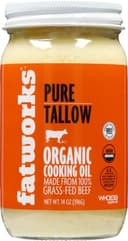
Fatworks Organic Grass-Fed Beef Tallow, 14 oz

Fatworks Organic Grass-Fed Beef Tallow, 14 oz

The certified-organic option, and the one jar here not sold on a wagyu claim at all. For a wrap that is close to irrelevant - rendered beef fat is rendered beef fat at 275 degrees F - which is exactly why it belongs on this page. If organic certification is what you want in your kitchen generally, you lose nothing on the brisket by buying this instead of a wagyu tub.

Best jar that is not wagyu
$23.99 · View on Amazon

Price as of November 22, 2026. #ad How we’re funded

3
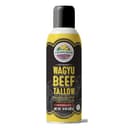
Cornhusker Kitchen Wagyu Beef Tallow Spray, 10 oz

Cornhusker Kitchen Wagyu Beef Tallow Spray, 10 oz

A spray is a different job from a tub, not a more convenient version of one. You cannot put four tablespoons of fat into a wrap with it, but you can coat a sheet of butcher paper evenly in two seconds, mist a grate, or put a thin film on a lean flat before the rub goes on. Buy it alongside a tub if you like the idea; buy it instead of a tub only if coating is all you want.

Best if you only want it for the wrap
$18.99 · View on Amazon

Price as of November 22, 2026. #ad How we’re funded

4
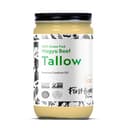
First Light Farms Grass-Fed Wagyu Beef Tallow, 14 oz

First Light Farms Grass-Fed Wagyu Beef Tallow, 14 oz

The pick for anyone who wants the wagyu claim and grass fed in the same jar, which almost nothing else in this category offers. The listing states 100% grass-fed and finished and Certified Humane, both of which are claims about the animal rather than specifications of the fat - and that distinction is worth keeping straight, because nothing published here tells you how this tallow behaves at 275 degrees F any more than the others do.

Budget pick
$15.18 · View on Amazon

$18.9820% off

Price as of November 22, 2026. #ad How we’re funded

The picks in full

#1Best way to render your own - the free route

TLAPS Half-Size Aluminum Foil Steam Table Pans, 9 x 13 in, 20-pack

Twenty disposable 9 by 13 foil pans, and the pick for anyone who would rather throw a pan away than scrub rendered beef fat out of one. These do three jobs on a brisket cook: water pan, drip pan under the meat to catch tallow worth saving, and the pan the brisket rests in after the wrap. At well under a dollar each the case for stainless gets thin.

Strengths

  • 20 pans (listing stated) at well under a dollar each - disposable by design
  • 9 x 13 in half-size footprint fits most smoker grates and standard racks
  • Doubles as the drip pan that collects tallow worth rendering and saving

Trade-offs

  • Foil buckles when you lift it full - support it with a sheet pan or a grate
  • Shallow, so as a water pan it needs topping up more often than stainless
  • The listing states no gauge or thickness beyond heavy-duty
Fuel / powerNot published
SizeHalf size, 9 x 13 in (listing stated)
Count20 (listing stated)
MaterialAluminum foil, heavy-duty (listing stated)
ReusableNo - disposable (listing stated)
Foil gauge or thicknessNot published
Capacity in quartsNot published

Specs read from the manufacturer listing, on November 21, 2026. “Not published” means the maker does not state that figure.

#2Best jar that is not wagyu

Fatworks Organic Grass-Fed Beef Tallow, 14 oz

The certified-organic option, and the one jar here not sold on a wagyu claim at all. For a wrap that is close to irrelevant - rendered beef fat is rendered beef fat at 275 degrees F - which is exactly why it belongs on this page. If organic certification is what you want in your kitchen generally, you lose nothing on the brisket by buying this instead of a wagyu tub.

Strengths

  • Certified organic, non-GMO and pasture-raised per the listing - the only certified-organic pick here
  • Honest positioning: sold as a cooking fat rather than on a breed claim
  • Small jar suits a kitchen that uses tallow for more than brisket

Trade-offs

  • No smoke point published by the maker; we could not reach a Fatworks product page for this jar on the date we checked
  • Price per ounce is high next to a 42 oz tub
  • No wagyu claim, if that is what you came for
Fuel / powerNot published
Net weight14 oz (listing stated)
Source claim100% grass-fed, pasture-raised beef tallow (listing stated)
CertificationsCertified organic, non-GMO (listing stated)
Smoke pointNot published
Shelf life / refrigerationNot published

Specs read from the manufacturer listing, on October 25, 2026. “Not published” means the maker does not state that figure.

#3Best if you only want it for the wrap

Cornhusker Kitchen Wagyu Beef Tallow Spray, 10 oz

A spray is a different job from a tub, not a more convenient version of one. You cannot put four tablespoons of fat into a wrap with it, but you can coat a sheet of butcher paper evenly in two seconds, mist a grate, or put a thin film on a lean flat before the rub goes on. Buy it alongside a tub if you like the idea; buy it instead of a tub only if coating is all you want.

Strengths

  • Even, thin coverage with no spoon and no warming - the one thing a tub is bad at
  • Doubles as a release spray for grates and pans, so it gets used between brisket cooks
  • Gets tallow onto a lean flat before seasoning without the mess of hand-rubbing a solid fat

Trade-offs

  • Cannot deliver the volume a wrap wants; this is a film, not a few tablespoons
  • Costs more per ounce of fat than any tub here
  • Listing states no smoke point, no propellant detail and no shelf life
  • An aerosol near a live fire needs the same care as any other pressurized can
Fuel / powerNot published
Net size10 oz spray (listing stated)
FormatAerosol cooking spray (listing stated)
Source claimWagyu beef tallow (listing stated)
Smoke pointNot published
PropellantNot published

Specs read from the manufacturer listing, on October 25, 2026. “Not published” means the maker does not state that figure.

#4Budget pick

First Light Farms Grass-Fed Wagyu Beef Tallow, 14 oz

The pick for anyone who wants the wagyu claim and grass fed in the same jar, which almost nothing else in this category offers. The listing states 100% grass-fed and finished and Certified Humane, both of which are claims about the animal rather than specifications of the fat - and that distinction is worth keeping straight, because nothing published here tells you how this tallow behaves at 275 degrees F any more than the others do.

Strengths

  • Only pick here stating both wagyu and 100% grass-fed and finished
  • Listing states Certified Humane, an audited third-party program rather than a marketing word
  • 14 oz is a sensible middle size between the test jar and the big tub

Trade-offs

  • No smoke point, melting point or shelf life published
  • Grass fed is a sourcing claim, not a cooking spec - it does not tell you the fat performs differently in a wrap
  • Smaller brand presence than the tubs above, so stock can be less predictable
Fuel / powerNot published
Net weight14 oz (listing stated)
Source claimWagyu, 100% grass-fed and finished (listing stated)
CertificationsCertified Humane, gluten free, dairy free (listing stated)
Smoke pointNot published
Shelf life / refrigerationNot published

Specs read from the manufacturer listing, on October 25, 2026. “Not published” means the maker does not state that figure.

What tallow actually does, so you can judge the substitutes

Tallow gets used at three points in a brisket cook, and only one of them is hard to replace.

  1. In the wrap. A few spoonfuls of melted tallow on the butcher paper before the brisket goes in. It keeps the bark from drying as the meat finishes and it adds beef fat back to a lean flat. This is the use that made tallow famous, and it is the one worth doing.
  2. As a binder before the rub.Thin smear on the raw meat so the rub sticks. Replaceable with nothing at all — see do you need a binder, where the answer is no.
  3. On the slices at service, or in the rest. A gloss on a cut face, or a little in the pan while the brisket holds. Nice, optional.

Notice what tallow is not: a fix for a brisket that was overcooked or undercooked. Juiciness comes from rendered collagen and from not pushing past the point where the muscle gives up its water, which is a temperature and probe-feel question. Tallow in the wrap helps the surface. It does not rescue the inside, and a dry brisket needs a different rescue.

Alternative 1: render your own, for free

This is the honest top answer and the reason this page exists. When you trim a packeryou remove the hard fat cap, the deckle seam fat and whatever you take off the edges — one to two pounds of it on a typical brisket. Cube it, put it in a foil pan, and set the pan on a lower rack while the brisket cooks. By the time you wrap, you have a pan of clear liquid tallow and some crisp bits. Strain it into a jar.

That is it. The full method, including the stovetop version and how long it keeps, is on beef tallow for brisket, and what to do with brisket trimmings covers the other uses for the same fat. The only piece of equipment involved is a pan you do not mind throwing away, which is why a 20-pack of foil pans is the first pick on this page rather than a jar of anything.

The honest caveat: it is not free in attention. You have to remember to put the pan in, remember to take it out before it scorches, and strain hot fat. If that is a chore rather than a pleasure, buy a jar and do not feel bad about it.

Alternative 2: buy plain beef tallow instead of wagyu

The wagyu label on a tallow jar is doing less work than the price suggests. Rendered fat is rendered fat: once it has been melted and strained, the marbling pattern that makes wagyu beef special is gone, and what remains is beef fat. There may be small differences in fatty-acid profile and therefore in how soft it is at room temperature. There is nothing about it that a brisket wrap can detect.

So the Fatworks jar is the pick here: plain beef tallow, stated 100% grass-fed and pasture-raised, certified organic and non-GMO on the listing, 14 oz. If your reason for buying tallow is the wrap, this is the rational purchase and the wagyu jars are the indulgence. Our tallow roundup ranks all six jars on merit, and makes the same point in more detail.

Alternative 3: a spray, if the wrap is the only job

A 10 oz aerosol of wagyu tallow is a different product from a jar, not a worse one. It coats paper, grates and a lean flat before the rub in a couple of seconds and with no melting step, which is genuinely the easiest way to get fat onto butcher paper. What it cannot do is give you a few tablespoons in the wrap, or go in the holding pan, because an aerosol does not deliver volume.

Buy it if your use case is “a film of fat on things”. Buy a jar if your use case is “a couple of spoonfuls in the paper”. The listing states no propellant and no smoke point, which is a gap worth knowing about rather than a reason to avoid it.

Alternative 4: use nothing

Worth saying plainly, because plenty of extremely good brisket has never met a jar of tallow. Central Texas brisket as it was cooked for most of the last century was salt, pepper, post oak and time. Tallow in the wrap is a modern refinement, popularized in the last decade, and it is an improvement at the margin — not a requirement.

If you are wrapping in butcher paper and your flat is drying out, the first things to change are the cooker humidity and the wrap timing, not the addition of fat. A water pan and an earlier wrap will do more than tallow will. And if you are not wrapping at all, there is nowhere for tallow to go.

The four side by side

Every figure below is the listing’s own, read on the date in each product’s spec table. Not one tallow product on this site publishes a smoke point, which is the single figure you would want if you were choosing a cooking fat for high heat, so those rows say “Not published” rather than carrying a number from somewhere else.

AlternativeFormatStated sizeStated claimPrice
TLAPS foil pans, 20-packPan for rendering your own9 x 13 in, 20 pansHeavy-duty aluminum foil
$33.99 · View on Amazon

Price as of November 22, 2026. #ad How we’re funded

Fatworks Organic Beef TallowJar, plain beef tallow14 ozGrass-fed, certified organic, non-GMO
$23.99 · View on Amazon

Price as of November 22, 2026. #ad How we’re funded

Cornhusker Wagyu Tallow SprayAerosol spray10 ozWagyu beef tallow
$18.99 · View on Amazon

Price as of November 22, 2026. #ad How we’re funded

First Light Wagyu TallowJar, wagyu14 oz100% grass-fed and finished, Certified Humane
$15.18 · View on Amazon

$18.9820% off

Price as of November 22, 2026. #ad How we’re funded

One substitution we will not recommend: butter. It is 15 to 20 percent water and it contains milk solids that scorch, and in a wrap at 250°F for three hours those solids are a liability rather than a flavor. If you have no beef fat and you want something in the paper, a little beef broth is a better idea than butter.
Frequently asked questions

What can I use instead of beef tallow for brisket?

The trimmings off the brisket you are about to cook. A packer gives up one to two pounds of hard fat during a trim, and rendering it is the same substance you are being sold in a jar - cube it, put it in a foil pan on a lower rack while the brisket cooks, and strain it when you wrap. If you want a jar without the work, buy plain beef tallow rather than wagyu: Fatworks organic grass-fed does the brisket job identically for less.

Is wagyu beef tallow worth it over regular beef tallow?

For a brisket wrap, no. Once fat has been rendered and strained, the marbling pattern that makes wagyu beef special is gone and what remains is beef fat. There may be small differences in fatty-acid profile and therefore in firmness at room temperature; nothing a wrapped brisket can detect. Buy the wagyu jar because you want to, not because it will show up in the result.

Can you use butter instead of tallow in a brisket wrap?

We would not. Butter is 15 to 20 percent water and it carries milk solids that scorch, and three hours in a wrap at 250 degrees F gives those solids plenty of time to go bitter. If you have no beef fat at all and you want something in the paper, a splash of beef broth is a better idea. Better still, render the trimmings you already have.

How much tallow does a brisket trim give you?

One to two pounds of hard fat off a typical packer, between the fat cap, the deckle seam and the edges you tidy up. Rendered down that is comfortably more than you will use in one wrap, which means a single brisket can supply itself and leave you a jar for the next one. The method is on our beef tallow page, and the other uses for the same fat are on our brisket trimmings page.

Do you actually need tallow for brisket?

No. Central Texas brisket as it was cooked for most of the last century was salt, pepper, post oak and time. Tallow in the wrap is a modern refinement from the last decade and it improves things at the margin - it keeps bark from drying as a lean flat finishes. If your flat is drying out, cooker humidity and wrap timing are bigger levers than adding fat, and if you are not wrapping at all there is nowhere for tallow to go.

Is tallow spray as good as a jar?

It is a different tool. A 10 oz aerosol puts a film of fat on butcher paper, a grate or a lean flat in seconds with no melting step, which is the easiest version of that job. What it cannot do is deliver the couple of tablespoons you want sitting in the wrap, or go into a holding pan, because an aerosol does not give you volume. Buy the spray for coating, the jar for volume.

What is the smoke point of beef tallow?

Not one tallow product on this site publishes one, so we are not going to print a figure. It is also close to irrelevant for the brisket use case: tallow in a wrap sits at 250 to 275 degrees F, nowhere near the smoke point of any rendered animal fat. Smoke point would matter if you were searing in it, which is not what this page is about.

Sources

Keep reading