Who each of these is for, in one line
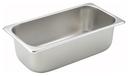
- Winco 1/3 size, 4 in deep— for anyone with the headroom: holds the most water, so it runs the longest unattended.
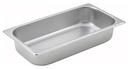
- Winco 1/3 size, 2.5 in deep— for a cabinet smoker, a kettle or any under-grate position where the deep pan will not go in.
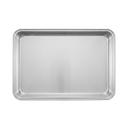
- TLAPS half-size foil pans, 20-pack— for the cook who would rather throw a pan away than scrub rendered beef fat out of one.
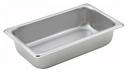
- Winco 1/4 size, 2.5 in deep— for a kamado diffuser gap, a small cabinet, and the tightest budget.
What a water pan actually does, and what it does not
Two real effects and one myth, and it is worth being precise because the myth is the reason people buy the wrong pan.
It adds thermal mass. A gallon of water takes a great deal of energy to heat and gives it back slowly, which smooths out the temperature swings a fire makes. That is the main benefit on a thin-steel cooker and the reason the Weber bulletis as forgiving as it is. It is also a ceiling: water will not go above 212°F at sea level, so the pan caps the radiant heat coming off that part of the cooker.
It raises humidity. A humid chamber slows surface evaporation, which slows the flat drying out and keeps the surface tacky enough to take smoke. It also lengthens the stall, because the stall is evaporative cooling and you have just made evaporation harder.
What it does not do is “add moisture to the meat”. Water vapor does not travel into muscle. A brisket is juicy because the collagen rendered and you did not overcook it, which is a temperature and feel question, not a humidity one. If you want the full argument, it is on do you need a water pan for brisket, including the cases where we would leave it out.
Why depth is the spec, and footprint is the constraint
A pan that boils dry at hour five has stopped being a water pan and started being a drip tray. Depth is the only thing standing between you and that, which is why the 4-inch pan is the pick wherever it fits. It is also why we would rather you bought one deep pan than two shallow ones.
Footprint is the constraint that overrides depth. Steam-table pans come in standard fractions of a full hotel pan, and the three that matter for smokers are:
- Half size (roughly 12.75 x 10.5 in)— the disposable foil pans here. Fits most grates as a drip pan directly under the meat.
- Third size (12.75 x 7 in)— the sweet spot for a bullet grate or an offset chamber: long enough to sit across the width, narrow enough not to block the whole airway.
- Quarter size (roughly 10.5 x 6.4 in)— the one that fits in a kamado under the deflector, or beside a bank of coals in a kettle.
Measure before you buy. The gap between a grate and a deflector, or between a grate and a cabinet floor, is the dimension that decides whether 4 inches or 2.5 inches is the right answer, and no page can know it for your cooker.
The four side by side
Every figure below is the listing’s own, read on the date in each product’s spec table. None of the four states a capacity in quarts, and the foil pans state “heavy-duty” without a gauge, so those rows say “Not published”.
| Pan | Size | Stated depth | Material | Price |
|---|
| Winco 1/3 size, deep | 12.75 x 7 in | 4 in | Stainless, NSF certified | |
| Winco 1/3 size, shallow | 1/3 size | 2.5 in | Stainless | |
| TLAPS foil pans, 20-pack | 9 x 13 in, half size | Not published | Aluminum foil, heavy-duty | |
| Winco 1/4 size | 1/4 size | 2.5 in | Stainless | |
Stainless or disposable?
This is a genuine decision and it is about labor, not performance.
Stainless lasts forever, holds more water per inch of footprint, and will be black with soot after two cooks and stay that way. Scrubbing rendered beef fat out of a steam pan is the worst twenty minutes of a brisket day. The fix most people arrive at eventually is to line the stainless pan with foil, which is the best of both worlds and costs nothing.
Disposable foil costs well under a dollar a cook and you throw it away. It buckles when you lift it full, so support it on a grate or a sheet pan, and it is shallower so it needs topping up. Its real advantage is that it does three jobs: water pan, drip pan catching tallow worth saving, and the pan a wrapped packer rests in afterwards.
If you only buy one thing from this page, buy the 20-pack of foil pans. If you only buy one thing you will still own in five years, buy the 4-inch Winco.
Filling, topping up, and when to leave it empty
- Fill with hot water, not cold.Cold water in a cooker you have just brought to temperature will drop the chamber by 30 to 50°F and cost you half an hour.
- Fill it most of the way, not to the brim. You want it to still hold water after you have carried it, and you want room for fat dripping in.
- Top up through the door, not by lifting the pan. This is what the stream setting on a spritz bottle is genuinely for.
- Leave it empty, or out, if you want harder bark. An empty pan still works as a heat deflector and a drip tray without the humidity. That is the standard move on a stick burner running hot and fast, and a perfectly legitimate choice.