Who each of these is for, in one line
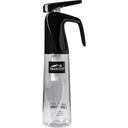
- Traeger BBQ Spritzer— for the cook who wants one bottle that does the one thing right: a continuous fine mist, nothing else.
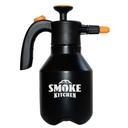
- Smoke Kitchen 50 oz— for a twelve-hour packer, two briskets, or anyone who hates refilling with sticky hands.
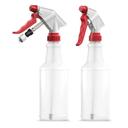
- Bar5F 16 oz two-pack— for the cook who wants one bottle for the spritz and one for thinned sauce, and who wants to know what the plastic is.
Mist or stream: the only spec that decides this
Bark is a crust of rendered fat, dried rub and set protein. It is physically fragile while it is forming, and a jet of liquid will lift it off in sheets — which is why the first bark question we get is almost always why is my bark softand the answer is sometimes “you hosed it”.
A continuous fine mist deposits a thin film that evaporates in seconds, cooling the surface slightly and keeping it tacky enough to catch more smoke. That is the entire mechanism. A stream or jet deposits ten times as much liquid in one place, washes rub into a stripe down the flat, and takes color with it.
So the buying rule is simple: if a bottle cannot do a fine mist, it is not a spritz bottle regardless of what the box says. Of the three here, the Traeger leads on it, the Smoke Kitchen bottle is adjustable between mist and stream, and the Bar5F pair are plain trigger sprayers whose listings do not state a continuous-mist mechanism.
The three side by side
Every figure below is the listing’s own, read on the date in each product’s spec table. The gaps are real and they are worth naming: the Traeger bottle does not state a capacity, two of the three do not state a material, and none of the three states a temperature rating.
| Bottle | Stated capacity | Spray pattern | Stated material | Price |
|---|
| Traeger BBQ Spritzer | Not published | Continuous fine mist | Not published | |
| Smoke Kitchen 50 oz | 50 oz | Adjustable mist or stream | Not published | |
| Bar5F 16 oz, 2-pack | 16 oz each | Trigger sprayer, mechanism not stated | Food-grade BPA-free HDPE | |
Read the capacity column against how you cook. A packer spritzed every 45 minutes from the three-hour mark to the wrap is roughly eight to twelve passes, and a 16 oz bottle will see you out on one brisket. Two briskets, or a long overnight cook, and 50 oz starts looking like the right call — not because you need that much liquid at once, but because you will not be filling a bottle at 3 a.m.
What to put in it
In order of how often we would use them:
- Water. Boring, free, and does the whole job. Cooling and tack are physics, not flavor.
- Half water, half apple cider vinegar. The common Central Texas spritz. The acid does very little to the meat in the time available; it is there because it is what people have always used.
- Beef stock or thinned tallow.A richer spritz. If you are going to spray fat, warm it first — cold tallow will not go through a mist nozzle.
- Nothing with sugar in it.Apple juice sprayed over hours of 250°F radiant heat is a scorch risk, and a sugar glaze belongs on burnt ends at the end, not on a flat in hour four.
Whatever goes in, rinse the bottle out after the cook. The Bar5F pair earn their place partly on this: with two bottles you can keep one for plain water and one for anything with solids in it, so a clogged nozzle never stops the cook.
A word on material, since only one listing states it
You are putting acidified liquid in a plastic container and leaving it in the sun next to a fire. HDPE is the right plastic for that, and Bar5F is the only maker here that says on the listing that is what you are getting. The other two bottles are sold by barbecue brands for barbecue use, which is a reasonable basis to assume food-safe plastic, but it is an assumption and we would rather say so than present it as a spec.
None of the three publishes a temperature rating either. The practical implication is small — a spritz bottle lives on the table and not on the cooker — but do not leave any of them on a hot lid, and do not fill one with hot liquid.