Brisket & Bark

The Best Vacuum Seal Bags for Brisket

Two specs decide this purchase and neither is thickness. The first is width, because a brisket is long and thin. The second is whether the bag is embossed or smooth - get that wrong and your sealer will not pull air out of it at all.

By Stephen V.Last updated How we pick

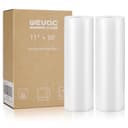
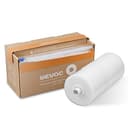
For most brisket cooks, buy the Wevac 11-inch rolls — two 50-foot rolls, cut to whatever length the meat is. Eleven inches takes a trimmed flat lengthwise with room on both sides, a roll is as long as you want it to be, and the listing states freezer safe, sous vide and BPA free, which covers the in-bag reheat that is the whole reason to own a sealer.

Now the mistake this category is built on, and it costs people a bag of brisket. Clamp sealers — the FoodSaver-style machines almost everyone owns — can only pull air out through an embossed or channeled bag. Smooth bags are for chamber sealers. Smooth film is noticeably cheaper per square foot because it has no channel to extrude, so it looks like the bargain of the page, and it will do nothing in a clamp machine but hiss. The MAGIC SEAL rolls below are here precisely because they state the incompatibility in their own listing title, which most brands do not.

The second thing worth knowing before you buy: length is free and width is not.A roll is infinitely long, so no bag is ever “too short” if you buy a roll and cut it. Width is fixed at purchase. A trimmed packer flat runs roughly eight to ten inches across and eighteen to twenty long, which is an 11-inch roll cut long. An untrimmed whole packer laid flat needs 15 inches, and only one machine in our vacuum sealer roundup states it will seal that wide. Everything below follows from those two facts.

How this is funded: we earn a commission if you buy through our links, at no extra cost to you. It never changes which product we recommend, and we’ll tell you plainly when we’d skip one. Full disclosure.

Quick picks

Ranked on the published specs and how each one fits a brisket cook. Select a row to jump to the full write-up. We have not run this gear in a lab — here is exactly what we do instead.

#ProductBest forPrice
1
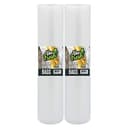
Wevac 11 in x 50 ft Vacuum Sealer Bag Rolls (2-pack)

Wevac 11 in x 50 ft Vacuum Sealer Bag Rolls (2-pack)

Buy the machine, then buy wide rolls, because a sealer is only as useful as the widest bag you own. Two 11-inch by 50-foot rolls is a hundred feet of bag you cut to the length of the meat rather than to the length of a pre-cut pouch - which is the whole trick with brisket, where the piece is long and thin. The listing states BPA-free, sous vide capable and freezer safe.

Best overall
$20.99 · View on Amazon

Price as of November 1, 2026. #ad How we’re funded

2
Wevac 11 in x 150 ft Vacuum Sealer Bag Roll (with keeper and cutter)

Wevac 11 in x 150 ft Vacuum Sealer Bag Roll (with keeper and cutter)

The same 11-inch width as our top pick in one 150-foot roll with a cutter box, which is the cheapest way to buy bag material per foot if you cook often. Nothing about the plastic is different - you are buying quantity and a dispenser. The listing states commercial grade, heavy duty, freezer safe, sous vide and BPA free, and like every bag listing here it states no thickness in mil.

Best value per foot
$31.99 · View on Amazon

Price as of November 1, 2026. #ad How we’re funded

3
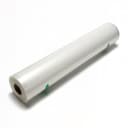
Vac Fresh 15 in x 50 ft Embossed Vacuum Sealer Roll, 3.5 mil

Vac Fresh 15 in x 50 ft Embossed Vacuum Sealer Roll, 3.5 mil

The bag for the one job an 11-inch roll cannot do: an untrimmed whole packer, laid flat, in a single bag. The listing states 15 inches wide, 50 feet long, 3.5 mil and embossed - and the embossing is the part that matters, because it is what lets a clamp sealer pull air out at all. Buy it only if your machine will seal across 15 inches; the Weston Pro-2300 is the one in our roundup that states it will.

Best for an untrimmed whole packer
$42.70 · View on Amazon

Price as of November 1, 2026. #ad How we’re funded

4
Wevac 11 x 16 in Precut Gallon Vacuum Sealer Bags, 100 count

Wevac 11 x 16 in Precut Gallon Vacuum Sealer Bags, 100 count

Precut bags are the honest answer for most brisket leftovers, because most brisket leftovers are portions rather than slabs. 11 by 16 inches takes a few pounds of sliced flat or a tub's worth of chopped point, there is no cutting and no second seal, and you are not standing at the counter measuring plastic at eleven at night. The listing states sous vide, freezer safe, BPA free and commercial grade.

Best precut for portions
$24.99 · View on Amazon

Price as of November 1, 2026. #ad How we’re funded

5
Avid Armor 11 x 16 in Gallon Vacuum Sealer Bags, 100-pack

Avid Armor 11 x 16 in Gallon Vacuum Sealer Bags, 100-pack

The precut bag to buy if your sealer struggles with wet brisket. The listing states a deep embossed airtight suction pattern plus heat resistance and an easy tear notch, and a deeper channel is exactly what helps a clamp machine keep pulling when there is rendered fat on the plastic. Avid Armor also makes the chamber sealer in our roundup, so it is a brand with both sides of this argument on its shelf.

Best for wet, fatty brisket
$25.99 · View on Amazon

Price as of November 1, 2026. #ad How we’re funded

6
MAGIC SEAL 15 in x 50 ft Smooth Chamber Vacuum Sealer Rolls

MAGIC SEAL 15 in x 50 ft Smooth Chamber Vacuum Sealer Rolls

Only buy this if you own a chamber sealer - and the listing says so itself, in the title: “Not Compatible with FoodSaver-Type Vacuum Sealers.” Smooth bags are the cheapest material per square foot in the whole category because they have no embossed channel to extrude, which is also precisely why a clamp machine cannot pull air through them. For a chamber owner sealing brisket juice and tallow at 15 inches wide, this is the bargain of the page.

Best for a chamber sealer only
$19.99 · View on Amazon

Price as of November 1, 2026. #ad How we’re funded

The picks in full

#1Best overall

Wevac 11 in x 50 ft Vacuum Sealer Bag Rolls (2-pack)

Buy the machine, then buy wide rolls, because a sealer is only as useful as the widest bag you own. Two 11-inch by 50-foot rolls is a hundred feet of bag you cut to the length of the meat rather than to the length of a pre-cut pouch - which is the whole trick with brisket, where the piece is long and thin. The listing states BPA-free, sous vide capable and freezer safe.

Strengths

  • 11 in wide - the widest roll the FoodSaver and NESCO machines here state they accept
  • Rolls, not pre-cut pouches, so bag length is whatever the meat needs
  • Listing states sous vide capable and freezer safe, which covers the brisket reheat
  • A hundred total feet across two rolls is a long time between reorders

Trade-offs

  • Listing does not state a thickness in mil, so you cannot compare it on gauge
  • Still not wide enough for an untrimmed whole packer laid flat
  • Channel-embossed rolls cost more per foot than smooth chamber pouches
  • Cutting your own bags means two seals per bag instead of one
Fuel / powerNot applicable (bags)
Roll size11 in x 50 ft, 2 rolls (listing stated)
ConstructionCommercial grade, heavy duty (listing stated)
Food safetyBPA-free (listing stated)
Rated forSous vide, freezer (listing stated)
CompatibilityStated to fit FoodSaver and other clamp sealer machines
ThicknessNot published
Embossed channelNot published

Specs read from the manufacturer listing, on October 11, 2026. “Not published” means the maker does not state that figure.

#2Best value per foot

Wevac 11 in x 150 ft Vacuum Sealer Bag Roll (with keeper and cutter)

The same 11-inch width as our top pick in one 150-foot roll with a cutter box, which is the cheapest way to buy bag material per foot if you cook often. Nothing about the plastic is different - you are buying quantity and a dispenser. The listing states commercial grade, heavy duty, freezer safe, sous vide and BPA free, and like every bag listing here it states no thickness in mil.

Strengths

  • 150 ft in one roll is the lowest cost per foot of anything here
  • Roll keeper with a built-in cutter, so you cut square bags without a ruler
  • Listing states sous vide and freezer safe, which is the in-bag reheat this site recommends

Trade-offs

  • No thickness in mil published, so you cannot compare its gauge to a 3.5 or 5 mil roll
  • 11 in takes a trimmed flat lengthwise but not an untrimmed packer laid flat
  • A 150 ft roll is a commitment: buy it because you cook often, not to save a few dollars
  • One width only - you still cut every bag to length yourself
Fuel / powerNot applicable (bags)
Roll size11 in x 150 ft, 1 roll with keeper and cutter (listing stated)
Bag typeEmbossed / channeled - fits Food Saver-type clamp machines (listing stated)
Stated claimsBPA free, commercial grade, heavy duty, freezer safe, sous vide (listing stated)
ThicknessNot published
Immersion temperature ratingNot published

Specs read from the manufacturer listing, on November 1, 2026. “Not published” means the maker does not state that figure.

#3Best for an untrimmed whole packer

Vac Fresh 15 in x 50 ft Embossed Vacuum Sealer Roll, 3.5 mil

The bag for the one job an 11-inch roll cannot do: an untrimmed whole packer, laid flat, in a single bag. The listing states 15 inches wide, 50 feet long, 3.5 mil and embossed - and the embossing is the part that matters, because it is what lets a clamp sealer pull air out at all. Buy it only if your machine will seal across 15 inches; the Weston Pro-2300 is the one in our roundup that states it will.

Strengths

  • 15 in wide is the only width here that takes a whole untrimmed packer laid flat
  • Listing states 3.5 mil and embossed - both figures, which is unusual in this category
  • Also the right roll for large-format freezing: rib racks, pork butts, bulk portions

Trade-offs

  • Useless unless your sealer's bar spans 15 in - most clamp machines top out around 11 or 12
  • Costs roughly twice the 11 in rolls per foot, for width you will rarely need
  • Same single-width constraint as any roll: you cut to length yourself
  • A cheaper sibling listing of the same 15 x 50 roll does not state whether it is embossed, so check the one you are buying
Fuel / powerNot applicable (bags)
Roll size15 in x 50 ft (listing stated)
Thickness3.5 mil (listing stated)
Bag typeEmbossed - fits clamp machines that span 15 in (listing stated)
Stated usesStoring, meal prep, sous vide cooking, bulk storage (listing stated)
Immersion temperature ratingNot published

Specs read from the manufacturer listing, on November 1, 2026. “Not published” means the maker does not state that figure.

#4Best precut for portions

Wevac 11 x 16 in Precut Gallon Vacuum Sealer Bags, 100 count

Precut bags are the honest answer for most brisket leftovers, because most brisket leftovers are portions rather than slabs. 11 by 16 inches takes a few pounds of sliced flat or a tub's worth of chopped point, there is no cutting and no second seal, and you are not standing at the counter measuring plastic at eleven at night. The listing states sous vide, freezer safe, BPA free and commercial grade.

Strengths

  • No cutting and only one seal per bag - roughly half the handling of a roll
  • 11 x 16 in suits the way brisket is actually stored: two to three pound portions
  • Listing states sous vide and freezer safe, so the bag goes straight into the reheat

Trade-offs

  • 16 in is not long enough for a whole slab of sliced flat - a roll is the answer there
  • Precut always costs more per bag than cutting your own from a roll
  • No thickness in mil published
  • Fixed size means some bags are bigger than the portion, which wastes a little plastic
Fuel / powerNot applicable (bags)
Bag size11 x 16 in gallon, 100 count (listing stated)
Bag typeEmbossed / channeled, precut - fits Food Saver-type clamp machines (listing stated)
Stated claimsSous vide, freezer safe, BPA free, commercial grade, heavy duty (listing stated)
ThicknessNot published
Immersion temperature ratingNot published

Specs read from the manufacturer listing, on November 1, 2026. “Not published” means the maker does not state that figure.

#5Best for wet, fatty brisket

Avid Armor 11 x 16 in Gallon Vacuum Sealer Bags, 100-pack

The precut bag to buy if your sealer struggles with wet brisket. The listing states a deep embossed airtight suction pattern plus heat resistance and an easy tear notch, and a deeper channel is exactly what helps a clamp machine keep pulling when there is rendered fat on the plastic. Avid Armor also makes the chamber sealer in our roundup, so it is a brand with both sides of this argument on its shelf.

Strengths

  • Listing states DEEP embossing - the channel depth is what keeps suction going on wet food
  • Easy tear notch, which matters more than it sounds when your hands are greasy
  • Listing states heat resistant and non-BPA
  • Same brand as the chamber sealer we recommend for juices and tallow

Trade-offs

  • No thickness in mil and no numeric heat rating published - 'heat resistant' is the whole claim
  • Precut, so the 16 in length caps what fits
  • Usually a little more per bag than the budget precut options
Fuel / powerNot applicable (bags)
Bag size11 x 16 in gallon, 100-pack (listing stated)
Bag typeDeep embossed, precut - fits clamp machines (listing stated)
Stated claimsAirtight suction, heat resistant, non-BPA, easy tear notch (listing stated)
ThicknessNot published
Immersion temperature ratingNot published

Specs read from the manufacturer listing, on November 1, 2026. “Not published” means the maker does not state that figure.

#6Best for a chamber sealer only

MAGIC SEAL 15 in x 50 ft Smooth Chamber Vacuum Sealer Rolls

Only buy this if you own a chamber sealer - and the listing says so itself, in the title: “Not Compatible with FoodSaver-Type Vacuum Sealers.” Smooth bags are the cheapest material per square foot in the whole category because they have no embossed channel to extrude, which is also precisely why a clamp machine cannot pull air through them. For a chamber owner sealing brisket juice and tallow at 15 inches wide, this is the bargain of the page.

Strengths

  • By far the lowest cost per square foot here, because smooth film is cheaper to make
  • 15 in wide, so a chamber owner can bag a whole packer if the chamber takes it
  • Listing states the incompatibility in the title rather than burying it - rare honesty in this category
  • Smooth film is what a chamber needs for juices, jus and rendered tallow

Trade-offs

  • WILL NOT WORK on a clamp / external sealer - no channel means no airflow
  • No thickness in mil published
  • 15 in is only useful if your chamber is big enough, which most domestic ones are not
  • Nothing published about immersion temperature, so treat the reheat as untested by the maker
Fuel / powerNot applicable (bags)
Roll size15 in x 50 ft rolls (listing stated)
Bag typeSmooth / non-textured - CHAMBER sealers only; listing states “Not Compatible with FoodSaver-Type Vacuum Sealers”
Stated claimsCommercial grade, BPA free, for meal prep and sous vide (listing stated)
ThicknessNot published
Immersion temperature ratingNot published

Specs read from the manufacturer listing, on November 1, 2026. “Not published” means the maker does not state that figure.

How we ranked these, and what we refused to rank on

Five criteria, in the order that actually decides whether a bag works for this cut.

1. Texture: embossed or smooth.This is a compatibility question, not a quality one, and it is binary. A clamp sealer grips the mouth of the bag and sucks air out through it, which requires a channel for the air to travel along — that is what the diamond or dot pattern on an embossed bag is for. A chamber sealer removes the air from the whole chamber at once, so the bag needs no channel and smooth film seals better and costs less. Buy the wrong one and nothing about the machine or the meat can save you. If you do not know which sealer you own: if it clamps shut on the bag mouth, it is a clamp machine, and you need embossed.

2. Width, which is the only dimension you cannot work around. Covered above and worth repeating because people buy by volume: a gallon bag is 11 by 16 inches, and the 16 is the part that limits a slab of sliced flat. If you want a whole slab in one bag, buy a roll and cut 24 inches of it. If you want an untrimmed packer in one bag, you need a 15-inch roll and a sealer that spans 15 inches.

3. Roll against precut.A roll is cheaper per bag and infinitely flexible, at the cost of a cut and a second seal every time. Precut is faster and tidier, at the cost of fitting the meat to the bag. For brisket specifically, the honest split is: rolls for slabs and anything long, precut gallons for portions and chopped point. Most households end up wanting both, and that is not a sales pitch — it is why two of our six picks are precut.

4. Whether the listing states sous vide use.This matters because the best thing you can do with sealed brisket is drop the bag into water at 150 to 165°F, which our guide to holding and reheating brisket treats as the gold standard reheat. Four of the six listings here state sous vide use. None of them publishes an actual temperature rating for immersion, which is a real gap and one we are not going to fill with a number we made up.

5. Cost per foot or per bag, read live. No prices are typed into this text. Every buy button reads the current price at request time, and the ordering is reliably the same: smooth chamber film is cheapest per square foot, long rolls beat short rolls, 11-inch beats 15-inch, and precut costs a premium for the convenience.

What we refused to rank on

Thickness in mil.We would have liked to. Only one of these six listings publishes a figure — the Vac Fresh 15-inch roll states 3.5 mil — and the rest say “heavy duty” or “commercial grade,” which are not measurements. Ranking six bags on a spec one of them publishes would be a ranking of marketing copy, so the thickness row says “Not published” where it is not published, and that absence is the finding.

Puncture resistance and seal-temperature ratings. Nobody publishes either. It is worth saying out loud because brisket is the cut most likely to test them: bark has hard dry edges, and a frozen brisket point has corners. A bag that fails in a freezer fails silently and you find out in March.

What actually goes wrong, and which bag fixes it

Four failure modes, in roughly the order they happen to people.

The machine will not pull a vacuum at all. Almost always smooth bags in a clamp sealer. There is no fix except the right bag. A distant second cause is a bag mouth with grease on it, which brings us to the next one.

Juice gets sucked into the machine and the seal fails.This is the brisket-specific one, because cooked brisket carries rendered fat and purge in a way that most food does not. Three things help, in order of effect: freeze the portions on a tray before bagging so there is no free liquid; fold a two-inch cuff down the outside of the bag mouth so the sealing strip stays dry; and use a deeper-channel bag, which is why the Avid Armor precut gallons are on this page. If what you are actually sealing is liquid — jus, or rendered tallow— no clamp sealer will do it properly and a chamber machine is the honest answer.

The seal lets go in the freezer.Usually fat contamination at the seal line that looked fine when it was warm. Run a second seal half an inch inside the first: it costs two seconds and the machines that advertise a “double seal,” including the Anova Precision Vacuum Sealer Pro, are doing exactly this for you.

The bag is punctured by the meat.Bark edges and frozen corners. Round off the sharp corner of the portion, or double-bag the awkward ones. This is where a published mil figure would have been useful, and where the category’s silence costs you.

The six bags side by side

Every figure is the listing’s own, read on the date in each product’s spec table. The empty cells are what the category declines to publish.

BagSizeTextureThicknessSealer type
Wevac 11 x 50 rolls (2)11 in x 50 ft, 2 rollsEmbossed / channeledNot publishedClamp
Wevac 11 x 150 roll11 in x 150 ft, 1 rollEmbossed / channeledNot publishedClamp
Vac Fresh 15 x 50 roll15 in x 50 ftEmbossed3.5 milClamp, if it spans 15 in
Wevac 11 x 16 precut gallon11 x 16 in, 100 ctEmbossed / channeledNot publishedClamp
Avid Armor 11 x 16 gallon11 x 16 in, 100 pkDeep embossedNot publishedClamp
MAGIC SEAL 15 x 50 rolls15 in x 50 ft rollsSmooth / non-texturedNot publishedChamber ONLY

Read the last two columns together and the page is done for you. Five of six are clamp-compatible; one is explicitly not. One publishes a thickness; five do not. Nothing else in this category is a real difference, whatever the box says.

How much to buy, and how to bag a brisket properly

Work from one cook. A 14-pound packer yields somewhere around six to eight pounds of cooked meat, and a sensible freezer portion is two to three pounds, so a cook that is fully put away is three or four bags plus whatever you keep in the refrigerator for the week. At roughly two feet of roll per bag, a 50-foot roll is about twenty-five bags and a 150-foot roll is about seventy-five.

The sequence that makes all of this work, and it is mostly about temperature rather than plastic:

  1. Chill first, bag second.Get the meat out of the danger zone on the USDA’s timeline, which our guide to storing and freezing brisket turns into something you can follow with meat in your hands at midnight. Warm brisket in a sealed bag is a food-safety problem no bag solves.
  2. Slice or chop before you seal, not after. Sealed slices reheat evenly; a sealed chunk reheats from the outside. Our slicing guide covers grain direction, which you cannot fix once the meat is frozen in a block.
  3. Freeze flat on a tray, then stack. Flat bags thaw faster and stack better, and freezing before sealing eliminates most of the liquid that wrecks seals.
  4. Add a spoon of tallow to the bag. Not required, genuinely effective: it is the fat that reheating costs you. Our tallow roundup covers the jars worth buying.
  5. Label with the date and the cut. Flat against point matters at dinner, and in two months a frozen bag of brisket looks like a frozen bag of brisket.

One last honest note on the thing bags cannot do. Vacuum sealing slows freezer burn dramatically and keeps brisket worth eating for months rather than weeks. It does not make food safe for longer at refrigerator temperature, and the absence of oxygen does nothing to the organisms that matter most. The USDA guidance cited below is what governs how long sealed brisket keeps, not the bag’s marketing copy.
Frequently asked questions

What size vacuum bags do I need for a brisket?

For a trimmed brisket flat, an 11-inch-wide roll cut to about 24 inches. The flat is roughly eight to ten inches across and eighteen to twenty long, so 11 inches gives you room on both sides and the length is whatever you cut. For portions and chopped point, precut 11 by 16 inch gallon bags are easier. For an untrimmed whole packer laid flat you need a 15-inch roll, and you also need a sealer whose bar spans 15 inches - the Weston Pro-2300 is the one in our roundup that states it does.

Why won't my vacuum sealer seal these bags?

Nine times out of ten you have smooth bags in a clamp sealer. A clamp machine pulls air out through the bag, which needs an embossed or channeled texture for the air to travel along; smooth bags have no channel and are made for chamber sealers, which evacuate the whole chamber instead. Run a finger over the bag: if it is textured with dots or diamonds on at least one side, it is embossed. The other common cause is grease on the bag mouth at the sealing strip, which is fixed by folding a cuff down the outside before you fill it.

Are smooth chamber bags cheaper, and can I make them work?

They are genuinely cheaper per square foot, because smooth film has no channel to extrude - and no, you cannot make them work in a clamp machine. There is no trick, no workaround and no setting. The MAGIC SEAL rolls on this page are honest enough to state it in their own title: 'Not Compatible with FoodSaver-Type Vacuum Sealers.' They are on the page because if you do own a chamber sealer, they are the best value here by a distance.

Can you sous vide or reheat brisket in these bags?

Four of the six listings here state sous vide use, and in-bag reheating at 150 to 165 degrees F is the best brisket reheat there is - the meat warms in its own fat and nothing evaporates. The honest caveat is that not one of these makers publishes an actual immersion temperature rating, so 'sous vide safe' is a claim rather than a specification. If that matters to you, buy bags from the same brand as your machine, where at least the two were sold to be used together.

How thick should vacuum bags be for brisket?

We cannot rank these bags on thickness, because only one of the six publishes a figure: the Vac Fresh 15-inch roll states 3.5 mil. Everything else says 'heavy duty' or 'commercial grade,' which are not measurements. For context, 3 to 4 mil is the normal range for home vacuum bags and some commercial rolls run to 5 mil or more. For brisket the practical concern is not gauge but shape - bark edges and frozen corners puncture bags - so round off sharp corners or double-bag the awkward pieces.

Rolls or precut bags - which is better for brisket?

Rolls for anything long, precut for portions. A roll is cheaper per bag and lets you cut 24 inches for a whole slab of sliced flat, at the cost of one extra cut and one extra seal each time. Precut gallon bags are faster and tidier but 16 inches caps what fits. Most people who cook brisket regularly end up with one roll and one box of gallons, which is why two of our six picks are precut rather than a token one.

Can I reuse vacuum seal bags?

For raw or cooked meat, no. The inside of a bag that held brisket has fat residue in the embossed channels that will not wash out, and a bag you cut open to use again is shorter by an inch each time. Reusing bags that held dry goods is fine. If the motivation is cost, buy a 150-foot roll and cut your bags closer to the size of the meat - that saves far more plastic than reuse does, and nothing goes wrong.

How long does vacuum sealed brisket last in the freezer?

Vacuum sealing is about quality rather than safety: frozen food stays safe indefinitely, and what sealing buys you is months of good eating instead of weeks before freezer burn takes it. The USDA guidance we cite below is the authority on refrigerated and frozen storage times, and it does not change because the bag has no air in it. Our storing and freezing guide puts the practical timeline in one place, including why you should chill before you seal rather than after.

Do I need special bags for a chamber sealer?

Yes, and it is the one place in this category where the cheaper bag is the correct bag. Chamber sealers want smooth, non-textured film: there is no need for a channel because the machine removes air from the whole chamber, and smooth film seals more reliably. It is also what makes a chamber machine the right tool for brisket jus, rendered tallow and sauced burnt ends, because liquid does not get dragged toward the seal bar. Our sealer roundup carries a chamber machine for exactly that job.

Sources

Keep reading