Brisket & Bark

The Best Pellet Grill Under $1,000

A thousand dollars is the whole recommendable pellet market, not a slice of it. Three grills qualify on live prices - and the more useful question is whether a pellet grill is the right cooker for brisket at all.

By Stephen V.Last updated How we pick

Buy the Traeger Woodridge Pro. It is the best pellet grill under $1,000 for a brisket cook — the most refined controller and app of the three, and the one whose temperature holding we would trust unattended overnight. The budget pick is the Z Grills 700D, which buys you the same basic mechanism — hopper, auger, fan, controller, igniter — for roughly half the money and asks you to accept a simpler controller.

All three showed a live price under $1,000 when our price layer last refreshed, as of November 22, 2026. Nothing here is hardcoded — each button reads the current price when the page loads, so if one rises above the cap you will see its real number rather than a stale claim.

Now the honest framing, because it is unusual for a price-band page. This cap does not filter anything out: all three pellet grills we recommend are under $1,000, and they are the only three. Above the cap the market is bigger hoppers, bigger grates and more brand — not better brisket. So read this page as “the pellet grills worth buying, all of which happen to be under a thousand dollars”, and read the section below on what a pellet grill trades away before you commit.

How this is funded: we earn a commission if you buy through our links, at no extra cost to you. It never changes which product we recommend, and we’ll tell you plainly when we’d skip one. Full disclosure.

Quick picks

Ranked on the published specs and how each one fits a brisket cook. Select a row to jump to the full write-up. We have not run this gear in a lab — here is exactly what we do instead.

#ProductBest forPrice
1
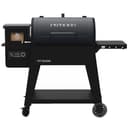
Traeger Woodridge Pro Wood Pellet Grill

Traeger Woodridge Pro Wood Pellet Grill

Traeger's current mid-tier pellet grill and the most hands-off way to a good brisket: set 225°F, let the WiFIRE controller and auger hold it, and monitor the internal temp from your phone through the stall. It is 'cheating' only if you think a thermostat is cheating — the results speak.

Best overall under $1,000
$999.00 · View on Amazon

$1,149.9913% off

Price as of November 22, 2026. #ad How we’re funded

2
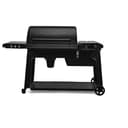
Pit Boss 850 Navigator Series Wood Pellet Grill

Pit Boss 850 Navigator Series Wood Pellet Grill

Pit Boss's value pellet grill: about 850 sq in, WiFi and Bluetooth control, and a sliding plate for direct flame, usually for noticeably less than the equivalent Traeger. The trade is a slightly less refined controller — fine for brisket, where you set it and leave it.

Most cooking area for the money
$699.99 · View on Amazon

$799.9913% off

Price as of November 22, 2026. #ad How we’re funded

3
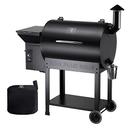
Z Grills 700-Series Wood Pellet Grill

Z Grills 700-Series Wood Pellet Grill

The budget pellet grill that keeps showing up on 'best value' lists for a reason: a PID controller and roughly 700 sq in for well under the big brands. No WiFi and no meat probes on this model, but for a set-it-at-225 brisket you don't strictly need either. The 700 series has moved on a generation since we first wrote this up — the current unit is the 7002B, which is what the button buys, and it keeps the two specs that decide a brisket: PID control and a grate long enough for a whole packer.

Budget pick
$489.00 · View on Amazon

Price as of November 22, 2026. #ad How we’re funded

The picks in full

#1Best overall under $1,000

Traeger Woodridge Pro Wood Pellet Grill

Traeger's current mid-tier pellet grill and the most hands-off way to a good brisket: set 225°F, let the WiFIRE controller and auger hold it, and monitor the internal temp from your phone through the stall. It is 'cheating' only if you think a thermostat is cheating — the results speak.

Strengths

  • PID controller + auger hold your set temp within a tight band
  • WiFIRE app monitoring is genuinely useful on a 12-hour cook
  • Pellets give clean, consistent smoke with zero fire tending

Trade-offs

  • Pellet smoke is milder than a stick-burner's — less heavy bark
  • Depends on electronics and power; a bag of pellets per long cook
Fuel / powerWood pellets
FuelWood pellets
Temperature controlDigital PID (WiFIRE app)
Cooking areaNot published
Temp range165-500°F (stated)
ConnectivityWi-Fi + app

Specs read from the manufacturer listing, on July 22, 2026. “Not published” means the maker does not state that figure.

#2Most cooking area for the money

Pit Boss 850 Navigator Series Wood Pellet Grill

Pit Boss's value pellet grill: about 850 sq in, WiFi and Bluetooth control, and a sliding plate for direct flame, usually for noticeably less than the equivalent Traeger. The trade is a slightly less refined controller — fine for brisket, where you set it and leave it.

Strengths

  • Large ~850 sq in chamber at a budget-to-mid price
  • WiFi + Bluetooth control and monitoring
  • Slide-plate flame-broiler for searing when you're not smoking

Trade-offs

  • Controller holds temp less tightly than premium PID units
  • Hopper and app quirks are common owner complaints
Fuel / powerWood pellets
FuelWood pellets
Total cooking area849 sq in (stated)
Temperature controlDigital (WiFi + Bluetooth)
Temp range180-500°F (stated)
ConnectivityWi-Fi + Bluetooth

Specs read from the manufacturer listing, on July 22, 2026. “Not published” means the maker does not state that figure.

#3Budget pick

Z Grills 700-Series Wood Pellet Grill

The budget pellet grill that keeps showing up on 'best value' lists for a reason: a PID controller and roughly 700 sq in for well under the big brands. No WiFi and no meat probes on this model, but for a set-it-at-225 brisket you don't strictly need either. The 700 series has moved on a generation since we first wrote this up — the current unit is the 7002B, which is what the button buys, and it keeps the two specs that decide a brisket: PID control and a grate long enough for a whole packer.

Strengths

  • PID temperature control at a genuinely low price
  • ~700 sq in fits a full packer
  • Simple, well-supported, easy to live with

Trade-offs

  • Z Grills publishes two different temperature ranges for it: 180-450°F in the spec table, 160-450°F in the page copy above it
  • Base model has no WiFi — you monitor with a separate probe
  • Lighter build than premium pellet grills
Fuel / powerWood pellets
ModelZPG-7002B (current 700-series unit)
FuelWood pellets
Total cooking area697 sq in — 504 lower + 193 upper (stated)
Temperature controlDigital PID
Temp range180-450°F (maker's spec table)
Hopper28 lb (stated)
ConnectivityNone on this model

Specs read from the manufacturer listing, on November 16, 2026. “Not published” means the maker does not state that figure.

Who each of these is for, in one line

  • Traeger Woodridge Pro— for the cook who wants the fewest surprises: the most mature controller and app in the category, and the one we would leave running overnight.
  • Pit Boss 850 Navigator— for the cook who needs area, and who wants a sear station as well as a smoker.
  • Z Grills 700D— for the cook who wants into pellet cooking at the lowest price and will accept a simpler controller to get there.

What a pellet grill is actually trading

A pellet grill is a wood-fired convection oven. An auger feeds compressed sawdust into a fire pot, a fan keeps it burning, and a controller decides how fast. That gives you two genuine advantages and one genuine cost, and it is worth being precise about all three because the marketing is not.

Advantage one: it holds temperature better than you can.Set 250°F and it will sit there for twelve hours in weather that would have you adjusting an offset every forty minutes. For an overnight brisket that is transformative.

Advantage two: it burns real wood.Not chips smoldering on a tray — actual wood combusting in a fire pot. That puts it ahead of an electric cabinet on flavor by a clear margin.

The cost: less smoke than a live fire.A pellet fire is small, hot and fan-assisted, which is efficient combustion — and efficient combustion produces fewer of the aromatic compounds that make heavy barbecue smoke. This is why pellet cooks ask about not enough smoke flavor more than any other group, and why a smoke tube is the standard first accessory. It is a real gap, it is not fatal, and anyone who tells you a pellet grill tastes like a stick burner is selling one.

The three under $1,000, side by side

Every figure below is the maker’s own, read on the date in each product’s spec table. Where a maker does not publish a figure the spec tables say “Not published” rather than filling in a number.

Pellet grillCooking areaHopperControllerPrice
Traeger Woodridge ProNot publishedNot publishedDigital PID, WiFIRE app, 165-500°F
$999.00 · View on Amazon

$1,149.9913% off

Price as of November 22, 2026. #ad How we’re funded

Pit Boss 850 Navigator849 sq inNot publishedDigital, WiFi + Bluetooth, 180-500°F
$699.99 · View on Amazon

$799.9913% off

Price as of November 22, 2026. #ad How we’re funded

Z Grills 700D697 sq in (504 + 193)28 lbDigital PID, no app, 180-450°F
$489.00 · View on Amazon

Price as of November 22, 2026. #ad How we’re funded

Two gaps in that table are the finding. Only one of the three publishes a hopper capacity — the Z Grills, at 28 lb — and the hopper is the one component whose failure ends a pellet cook. Traeger and Pit Boss both leave it off their stated specs, so the rows say “Not published” rather than guessing from a photograph. Traeger also publishes no total cooking area for the Woodridge Pro, which is why the biggest stated grate on the page belongs to the Pit Boss and not to our overall pick.

What to compare them on, in order: hopper capacity where it is stated, because a hopper that runs dry at 3 a.m. is the one failure mode unique to pellet; controller type, because a tight controller is the entire reason to buy this class of cooker; and cook area measured against a packer, because a whole untrimmed brisket is 18 to 20 inches long and plenty of grates are not.

The two things that go wrong on a pellet brisket

  1. The hopper runs out.A twelve-hour cook at 250°F will go through a serious quantity of pellets, and an empty hopper means a cold cooker and an error code. Fill it to the top before you go to bed, and check it when you check the meat. It is also the figure two of these three makers decline to publish, which is worth knowing before you assume a bigger grill means a bigger hopper.
  2. The smoke is thinner than you expected.Covered above. The fixes, in order of how much they help: run the first three hours at 225°F rather than 250°F, because pellet grills make more smoke at lower set points; add a smoke tube; and buy single-species oak pellets rather than a blend with filler in it.

At this money, consider a gravity cabinet instead

We would not be doing our job if this page did not say it. At the top of this band there is a cooker that burns charcoalwith a thermostat and a fan — a gravity-fed cabinet — and it gives you the hands-off control that makes a pellet grill attractive without the smoke compromise, because charcoal and wood chunks in a gravity chute burn the way a fire burns.

It is not a free win: a gravity cabinet has a hopper that also runs out, it needs ash management, and it will not do the low-and-slow-to-searing-hot range as smoothly. The gravity against pellet comparison is the honest version of that argument, and the vertical smokers under $1,000 page prices both classes against each other in the same band.

If you have already decided on pellet — and it is a perfectly good decision, especially as a first smoker — the pellet roundup has the full reviews and the pellet method page is written for exactly this cooker, including the low-first-three-hours trick.
Frequently asked questions

What is the best pellet grill under $1,000?

The Traeger Woodridge Pro. It has the most mature controller and app in the category, which is the entire reason to buy a pellet grill, and it is the one of the three we would leave running unattended overnight on a brisket. The budget pick is the Z Grills 700D, which gives you the same mechanism - hopper, auger, fan, controller, igniter - for roughly half the money with a simpler controller. Both were under $1,000 on the live price layer on the date stamped at the top of this page.

Is $1,000 enough for a good pellet grill?

It is the whole recommendable market, not a compromise within it. All three pellet grills we would send a brisket cook to are under $1,000, and above the cap what you buy is a bigger hopper, a bigger grate and more brand rather than better brisket. The price cap on this page genuinely filters nothing out, and we would rather say that than imply we had excluded something.

Can you cook a good brisket on a pellet grill?

Yes, and the two limits are both manageable. The cooker will hold 250 degrees F for twelve hours in weather that would have you fussing an offset constantly, which is a real advantage on an overnight cook. The gap is smoke: a small, hot, fan-assisted pellet fire burns efficiently and produces fewer aromatic compounds than a live wood fire. Run the first three hours at 225 degrees F, add a smoke tube and buy single-species oak pellets, and the gap narrows a long way.

What should I compare pellet grills on for brisket?

Hopper capacity first, because an empty hopper at three in the morning is the one failure mode unique to pellet cooking and it ends the cook. Then controller type, since tight temperature holding is the whole point of the category. Then cook area measured against a packer - a whole untrimmed brisket runs 18 to 20 inches long and plenty of grates cannot lay one flat. Published figures for all three are in each product's own spec table on this page.

Is a gravity smoker better than a pellet grill at this price?

For brisket specifically, it is a serious alternative. A gravity-fed cabinet burns charcoal and wood chunks under thermostat and fan control, so you get hands-off temperature holding without the pellet smoke compromise. The costs are ash management, a hopper that also empties, and less smooth range from low-and-slow up to searing heat. Our gravity-versus-pellet comparison lays out the trade, and the vertical smokers under $1,000 page prices both classes in the same band.

Why do pellet grills make less smoke?

Because efficient combustion makes less of what you taste. A pellet fire is small, hot and fan-assisted, which burns the wood cleanly - and cleanly burned wood produces fewer of the aromatic compounds that give heavy barbecue its flavor. A live fire in an offset burns less efficiently and more aromatically. That is the trade in one sentence, and it is why pellet owners ask about thin smoke more than any other group of cooks.

How many pellets does a brisket use?

Enough that the hopper is the thing to watch, and the exact figure depends on your cooker, your set point and the weather - which is why we are not going to print a number for it. The practical rule is to fill the hopper to the top before an overnight cook and check it when you check the meat. Makers publish hopper capacity, which is in each product's spec table on this page, and that is the figure to compare.

Sources

Keep reading