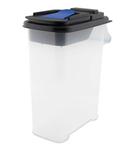
Who each of these is for, in one line
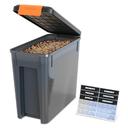
- Traeger Stay Dry bin (BAC637)— for the pellet-grill owner who buys one bag at a time and wants the bin sized to it, with labels in the box.
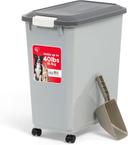
- IRIS USA 40 lb container— for the cook who buys in volume and wants the one stated airtight seal on this page, plus wheels under it.
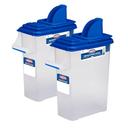
- Kingsford 20 lb container, 2-pack— for anyone running oak for beef and something milder for everything else, which is two bags that must not mix.
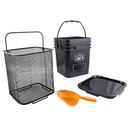
- Oklahoma Joe’s pellet bucket kit— for the cook who carries pellets to a hopper and wants something that pours rather than something you scoop from.
- Broil King 66900 bin— for the lowest spend, when the real alternative is an open bag on the garage floor.
Why pellet storage is a brisket problem, not housekeeping
A wood pellet is sawdust compressed hard enough that the lignin in the wood melts and glues it together. There is no binder, no wax, nothing else holding it in that shape. That is why pellets burn clean and it is also why they are fragile in one specific way: moisture breaks the bond. A pellet that has taken up humidity swells, softens and then crumbles into dust and fragments.
In a fire pot that mostly means less heat and more ash. In an auger it means something worse. An auger is a screw in a tube sized for whole pellets; feed it swollen pellets and sawdust and it packs rather than turns, and a jammed auger is a cold cooker with a brisket in it. That is the failure mode we named as unique to pellet cooking on the pellet grills under $1,000 page, and damp fuel is the most common cause that is entirely in your control.
The second reason to care is subtler. Dust in the hopper does not burn the way pellets do, so a hopper with a dust layer at the bottom gives you an inconsistent burn rate right when the hopper is running low — which on a twelve-hour cook is the small hours. One of the containers here states a mesh filter arrangement for separating dust; most do not, and a simple habit covers it, below.
None of this applies to a smoke tube full of pellets, which you light deliberately and which does not care much about a bit of dust. It applies to anything with an auger.
How we ranked these, and the spec the category hides
We ranked on stated capacity against a real bagfirst, because a bag of pellets is 20 lb and a container that holds “some” of one is not a system. Then on what the listing says about the seal. Then on the practical extras that decide whether a container gets used: labeling, wheels, a scoop, whether it pours.
Only one of the five publishes an airtight claim, and only three publish a capacity in pounds at all. The Oklahoma Joe’s bucket kit and the Broil King bin both state neither, which is why they sit lower on the page despite being perfectly reasonable objects. Nobody in the category publishes a gasket material, a moisture-transmission figure or a weatherproof rating, so those rows read “Not published” rather than carrying a number from somewhere else.
The five side by side
Every figure below is the listing’s own, read on the date in each product’s spec table.
| Container | Stated capacity | Stated seal | Included | Price |
|---|
| Traeger Stay Dry BAC637 | 22 lb; takes a full 20 lb bag | Locking lid; no airtight claim | 6 labeled + 6 blank flavor stickers | |
| IRIS USA container | Up to 40 lb | Airtight (stated) | Wheels, 2-cup scoop | |
| Kingsford 2-pack | 20 lb each, two containers | Not published | Second container | |
| Oklahoma Joe’s bucket kit | Not published | Not published | Lid; pours | |
| Broil King 66900 | Not published | Not published | Nothing stated | |
Read the capacity column against how you buy. If you buy one 20 lb bag at a time, the Traeger bin is sized exactly for it and nothing is wasted. If you buy two or three bags when they are cheap, the 40 lb IRIS container is the one that takes a whole bag plus most of another — and the Kingsford pair is the right answer if those bags are different species, because mixing oak and a fruitwood blend in one tub throws away the reason you bought two.
One container per species, and why that is not fussy
Our pellet picks argue that a brisket wants oak and that single-species bags beat blends with filler in them. That argument only survives contact with your garage if the oak stays separate from everything else.
Pellets all look the same. Pour a half bag of a competition blend into a tub with some oak still in the bottom and you now own an unlabeled mystery blend, and the next time a brisket tastes faintly of apple you will not know why. This is the entire reason the Traeger bin ships with flavor stickers and the reason the Kingsford 2-pack earns its place: two labeled containers is the minimum viable system for anyone who cooks more than one kind of meat.
Where to put it, and the four habits that matter more than the bin
A container helps. These cost nothing and help more:
- Store it off a concrete floor. Concrete wicks moisture and a tub sitting on a slab in a garage sweats underneath. A shelf, a pallet or the wheels that come with the IRIS container all solve it.
- Empty the hopper after a cook if the grill lives outdoors. This is the one people skip. A hopper is a vented box with a loose lid and it is the worst pellet storage you own; pellets left in it through a wet week are the ones that jam the auger next time. Pour them back into the container.
- Pour, do not scoop, when the bottom is dusty.Dust collects at the bottom of any container. Tip the last few pounds through a colander or just do not load the final dusty inch into the hopper — it burns unevenly and it is the layer most likely to pack an auger.
- Buy what you will burn in a season. Pellets do not spoil on a shelf the way food does, but every month in a damp garage is a month of slow moisture uptake. Two bags you will use is better than six bags at a discount.
If you want the diagnostic version: a pellet that snaps cleanly and feels hard is fine. A pellet you can crumble between finger and thumb, or that has visibly swollen and gone fuzzy at the ends, is a pellet that belongs in a fire pit rather than in a hopper under a brisket. The same honesty applies to the whole category as to thin smoke on a pellet cooker: fuel condition explains more complaints than people expect.
What a container cannot fix
Two things, worth saying so nobody buys a bin expecting them.
It will not make a pellet grill smokier. Dry pellets burn better than damp ones, and a small, hot, fan-assisted pellet fire is still efficient combustion, which is still less aromatic than a live wood fire. That gap is structural. The fixes are on the pellet grill page— run the first hours lower, add a tube, buy single-species oak.
It will not rescue pellets that already crumbled. Once the lignin bond has let go, the pellet is sawdust that happens to be pellet-shaped. Sealing it in an airtight tub preserves it exactly as it is. Burn that bag in a fire pit and start the next one dry.
If you are choosing fuel rather than storage, start at the wood and fuel hub, which covers chunks, chips, pellets and charcoal and when each one is the right call.