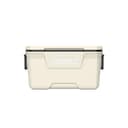
Who each alternative is for, in one line
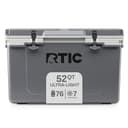
- RTIC 52 QT Ultra-Light— for the cook who wants to know a packer fits before buying: 21.25 x 12 x 12 inches published, up to 3 inches of foam.
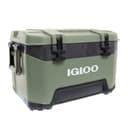
- Igloo BMX 52 QT— for the cook who wants a dual-purpose cooler at a sane price: rubberized T-latches and a stated 5 days of ice retention at 90°F in a controlled test.
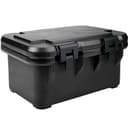
- Cambro S-Series Camcarrier (UPCS180)— for the cook who holds brisket every week: the rotomolded, gasketed, latching carrier from commercial kitchens, built around a full-size 8-inch hotel pan.
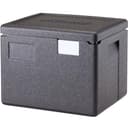
- Cambro GoBox 8"— for the cook who wants the purpose-built shape at a fraction of the price: molded EPP foam, one full-size pan, almost nothing empty.
- Coleman Classic 70 QT— the budget pick: no gasket, no latches, 70 quarts of room and a price lower than everything else here.
The spec that decides it: interior length
A whole packer is 18 to 20 inches long before it is wrapped and a little more after. A cooler’s quart rating tells you volume, which is the wrong dimension — a tall 45-quart cooler can have a 16-inch floor, and a brisket does not bend. So the question is always the same: how long is the inside?
Only one cooler in our registry answers that in its own listing. RTIC publishes 21.25 x 12 x 12 inches for the 52 QT Ultra-Light. YETI publishes a can count and no interior dimensions for the Tundra 45. Igloo publishes 52 quarts and up to 83 cans. Coleman publishes 70 quarts. The two Cambros sidestep the problem completely by being built around a standard full-size food pan — 8 inches deep, and a shape that was designed for exactly this kind of load.
If you already own a cooler, the five-minute version of this page is: measure the floor of it with a tape measure. If the longest straight run is over 20 inches, you do not need to buy anything.
Hard cooler or purpose-built carrier?
A hard cooler is the right answer for most people: it is dual-purpose, it is cheap at the Coleman end, and holding a brisket is not a demanding use. The gasket and latches are what matter, because heat escapes at the lid seam.
A Cambro-style carrier is the right answer if holding has become part of your plan rather than an emergency. The shape is correct for a wrapped brisket in a pan, the two we list are both built for a full-size 8-inch pan, and the S-Series is the rotomolded gasketed version used in commercial kitchens and behind competition trailers. The GoBox is the cheap foam version of the same idea, and at its price it is the easiest upgrade on this page to justify.
Note that neither Cambro publishes a hot-hold time either. Nobody does. What makes a hold safe is not the box — it is the temperature of the meat going in and how long it stays above 140°F, which is a thermometer question. Our overnight-cooler guide works through the USDA numbers properly, and the short version is below.
The five alternatives, side by side
Every figure is the maker’s own, read on the date in each product’s spec table. For reference, the cooler being compared with states 26 cans of capacity, up to 3 inches of PermaFrost insulation, a gasketed lid, and no interior dimensions.
| Cooler | Type | Interior (stated) | Closure | Why instead of a YETI | Price |
|---|
| RTIC 52 QT Ultra-Light | Injection-molded hard cooler | 21.25 x 12 x 12 in | Latched lid | Publishes the length a packer needs; same 3 in foam claim | |
| Igloo BMX 52 QT | Blow-molded hard cooler | Not published (52 QT / 83 cans) | Rubberized T-latches | Dual-purpose cooler at well under half the price | |
| Cambro S-Series UPCS180 | Insulated food pan carrier | One full-size pan, 8 in deep | Gasketed, latching | Built for this job, not adapted to it | |
| Cambro GoBox 8" | EPP foam pan carrier | One full-size pan, 8 in deep | Top-load lid | The purpose-built shape for cooler-money | |
| Coleman Classic 70 QT | Blow-molded hard cooler | Not published (70 QT) | Hinged lid, no gasket | Does the four-hour job for the price of charcoal | |
Three of these five publish no interior dimensions, which tells you how the category thinks about itself. The two that effectively do — the RTIC with a tape-measure answer and the Cambros with a standard pan size — are the two we would buy for this job specifically.
How to hold a brisket in any of them, safely
- Pre-warm the box. Fill it with hot tap water, close it for ten minutes, dump it and dry it. A cold cooler takes heat out of your brisket; a warm one does not. This step matters more than the brand of cooler.
- Keep the brisket wrapped and put it in with the fat side up, in a pan if you have one, so the rendered fat and jus stay with the meat.
- Fill the air space with clean towels. Air is what carries heat out; a full box holds longer than a half-empty one.
- Measure, do not guess.The brisket needs to stay above 140°F. Leave a probe in it — our thermometers under $50include a dual-probe leave-in for exactly this — and stop the hold when it approaches that line rather than when the clock says so.
- Know the limit.Below 140°F you are in the USDA danger zone, and “it was still warm” is not a food-safety standard. The resting and holding guide covers the whole window, and transporting a cooked brisket covers doing it in a car.
If you want the two brands head to head rather than a list of alternatives, our YETI against RTIC comparison is that page.