Who each of these is for, in one line
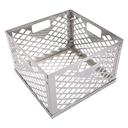
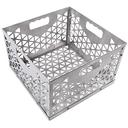
- Oklahoma Joe’s firebox basket (5279338P04)— for anyone running a Highland, a Longhorn or a Bandera, because it is the part the firebox was designed around.
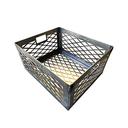
- LavaLock LASER 12 x 10 x 6— for the modder who wants a basket built like a pit component, and who accepts paying roughly double for it.
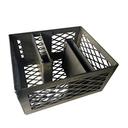
- LavaLock Minion Method basket— for the cook whose problem is duration: two maze bars let the fire eat along a channel instead of across the whole load.
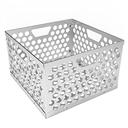
- onlyfire firebox basket— for the Oklahoma Joe’s shape at an aftermarket price, from a brand you can look up.
- foedo 12 x 12 x 7.5— for the lowest spend, with the dimensions published and side carry handles for getting it out hot.
What a charcoal basket actually does
Three things, and the third is the one people do not expect.
It gets air under the fire. A pile of charcoal sitting on a firebox floor can only draw air from the sides. Lift it into a basket with an open bottom and the intake vent feeds the fire from underneath, which is how you get a clean, hot burn instead of a sulky one. On a thin-steel offset this is the single change that makes the most difference to how the pit behaves, and it is why our fire management guide treats airflow as the first variable rather than fuel.
It gets the ash out of the way. Charcoal produces a surprising volume of ash over twelve hours, and ash is an insulator. On the floor it builds up around the burning coals and chokes them, which is the real reason a long cook on an unmodded firebox tends to fade in hour seven. A basket lets the ash fall through and keeps the live fuel in open air.
It makes the fire a shape you can control.This is the underrated one. Loose charcoal spreads. A basket confines it to one end of the firebox, which means the distance between the fire and the cook chamber stays constant, which means your temperature does not wander as the fire migrates. If you have ever had a pit creep from 250°F to 290°F over two hours with no vent change, a migrating fire is a likely culprit.
How we ranked these, and the two specs that do not exist
We ranked on stated fit first, because a basket that does not go into your firebox is worth nothing, and the fit information available ranges from a factory part number down to nothing at all. Then on published dimensions, because that is how you check fit yourself. Then on what the basket adds beyond holding coals— maze bars, carry handles, an ash pan.
We did not rank on steel gauge or charcoal capacity, because not one listing in this category publishes either. That is not a gap in our research; it is the state of the category. The same is true of weight, which is the proxy people reach for instead. Where a listing says “heavy duty” we quote it as a claim, not as a measurement.
We also did not rank on burn time, including for the Minion basket. A channel burn lasts longer than an open burn — that is the mechanism, and it is real — but how much longer depends on your charcoal, your vent setting and the weather, and nobody publishes a figure. Our charcoal guide is the better place to understand fuel duration.
The five side by side
Every figure below is the listing’s own, read on the date in each product’s spec table. Where a listing does not state a figure the table says “Not published” rather than filling one in.
| Basket | Stated fit | Stated dimensions | Build claim | Price |
|---|
| Oklahoma Joe’s 5279338P04 | Oklahoma Joe’s fireboxes (factory part) | Not published | Stainless steel | |
| LavaLock LASER LL-12106-R2 | Vertical, horizontal and UDS drums | 12 x 10 x 6 in | Laser cut, “heavy duty” | |
| LavaLock Minion Method | Vertical, horizontal and drums | 12 x 10 x 6 in | 2 maze bars included | |
| onlyfire firebox basket | Oklahoma Joe’s fireboxes | Not published | Stainless steel | |
| foedo 12 in basket | Oklahoma Joe’s offset fireboxes | 12 x 12 x 7.5 in | Stainless, side carry handles | |
Read the dimensions column against your own firebox before you read anything else. The two sizes that cover almost every cooker here are 12 x 12 x 7.5 inches, which is the Oklahoma Joe’s-shaped commodity basket, and 12 x 10 x 6 inches, which is the LavaLock size and fits a tighter firebox or sits inside a drum. If your pit is neither — a bigger Horizon or Old Country style firebox, say — LavaLock makes larger sizes than the one we have listed, and measuring is the whole job.
Does a basket fit your cooker?
Measure three things with a tape and write them down before ordering:
- Firebox floor, front to back and side to side. The basket has to sit flat with room to lift it out while hot, so take an inch off each dimension as working clearance.
- The door opening, not the firebox. This is the mistake. A basket that fits the box but not the door is a basket you assemble inside the firebox and never take out, which defeats the ash-clearing point.
- Height to the bottom of the cook-chamber throat. A tall basket that puts coals close to the throat will scorch the near end of your brisket.
Our offset picks are on the offset smoker roundup, and if you are still choosing a pit it is worth knowing that the cheap barrel offsets in the under $500 bandare exactly the cookers a basket improves most — thin steel, loose fit, a firebox floor with no grate.
The Minion basket, and when duration is the real problem
If your cooks keep ending because the fire ended, read this bit. The Minion method is simple: instead of lighting the whole load, you lay unlit charcoal in a path and light one end, so the fire works along the path rather than burning everywhere at once. The same principle drives the snake method on a kettle.
Two maze bars inside a basket turn that from a careful stacking job into a repeatable one. You load the channel, light one end, and the burn front moves at a rate airflow controls. For an overnight brisket on a charcoal pit, that is the difference between getting up twice and getting up five times.
It is the most expensive item on this page, and the honest alternative is cheaper: a standard basket plus a fan controller holds temperature more tightly than any basket geometry can, because it adjusts airflow continuously rather than hoping you set the vent right. If you are going to spend over a hundred dollars on fire duration, compare the two before you choose.
What else to do to a firebox while you are in there
A basket is the first of three cheap modifications that between them turn a budget offset into a cooker you can trust, and they are worth doing in the same afternoon:
- Seal the leaks. A barrel offset leaks at the lid and at the firebox door out of the box, and a leaking pit cannot be controlled with its vents because the air is coming in somewhere you did not choose. Self-stick high-temp gasket is a few dollars and an hour.
- Add a water pan. Thermal mass in the cook chamber smooths out everything a fire does wrong. Our water pan picks are steam-table pans, because that is what the job actually wants.
- Stop trusting the dome thermometer. It reads air near the lid, not at grate level next to the meat. A dual-probe thermometer with a grate clip is how you find out what your pit is really doing.
Do those three and most of what people dislike about a cheap offset goes away. None of them is a replacement for learning to run a clean fire, which is the offset method page.
Stainless or mild steel?
Every basket on this page states stainless except the Minion basket, whose listing describes the maze bars and the construction without naming a steel. Stainless matters less in a firebox than you might think — nothing survives sitting in a fire indefinitely, and a basket is a consumable on a long enough timeline — but it matters for the other 95 percent of a basket’s life, which it spends cold, often damp, with ash in it. Ash plus moisture is corrosive, and that is what eats baskets, not the fire.
Practical upshot: empty the basket after a cook rather than leaving yesterday’s ash sitting in it under a cover. That single habit outlasts any difference between these five on build quality, and it costs nothing.