Who each of these is for, in one line
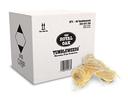
- Royal Oak Tumbleweeds— for the chimney cook, because a wool nest burns upward into the charcoal instead of sideways under it.
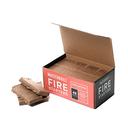
- Masterbuilt pure-paraffin squares— for a gravity-fed hopper, where you want a low steady flame in a confined space and no solvent smell at all.
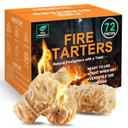
- Realcook 72-count— for the cook who lights a fire most weekends and wants a box that lasts the season.
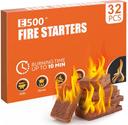
- E500 32 mini cubes— for the tightest budget, and for trying the method before committing to a big box.
Wool, wax or compressed cube?
Three shapes, three different fires, and the shape matters more than the brand.
Waxed wood wool is loose fibers held together with wax. It has enormous surface area, so it catches from a single match almost instantly and burns with a tall, ragged flame. In a chimney that is exactly right: the flame licks up through the charcoal column and lights several pieces at once rather than heating one spot. The trade is that wool compresses in the bag and sheds fibers in your hand.
Pure-paraffin wax squares are the opposite: dense, slow, and they burn low and steady rather than tall. That is a poor fit for a chimney and an excellent fit for a gravity-fed hopper, where the charcoal is stacked above a small ignition chamber and what you want is a sustained flame in one place. Paraffin is also a single refined wax with no solvent in it, which is why the odorless claim on that listing is a claim about chemistry rather than about marketing.
Compressed cubes— sawdust or wood fiber bound with wax — sit between the two. They light easily, burn flatter than wool and come in the biggest counts, which is why they win on cost per light. For briquettes, which need less persuading than big lump, they are plenty.
The four side by side
Every figure below is from the listing, read on the date in each product’s spec table. Where a listing does not state a figure — and burn time is missing from all four — the spec table says “Not published” rather than filling in a number.
| Starter | Type | Count | Stated claim | Price |
|---|
| Royal Oak Tumbleweeds | Waxed wood wool | 40 | No odor, water resistant | |
| Masterbuilt Pure-Paraffin | Paraffin wax squares | 48 | Odorless, all natural | |
| Realcook All-Weather | Compressed natural squares | 72 | Odorless, all weather | |
| E500 Firestarter Sticks | Waterproof mini cubes | 32 | Waterproof | |
Read the count column against the price button and you have the real ranking on cost per light — but read it against the type column first, because a mini cube is not one unit of the same thing as a wool nest. Plan on one nest, one wax square or two to three mini cubes under a full chimney of lump.
Why we will not recommend lighter fluid
Charcoal lighter fluid is a petroleum distillate. It lights charcoal very reliably, and the reason we do not use it on a brisket is specific rather than snobbish: it evaporates as much as it burns, and some of what evaporates condenses on cold metal and cold meat. On a twenty-minute burger cook you will never notice. On a twelve-hour cook where the entire point is a slowly built bark that you are going to eat unsauced, a solvent note is a real risk and a completely avoidable one.
A natural starter costs cents per light and removes the question. The same logic is why we are careful about what the fire is doing in the first hour — everything that goes up the chimney early is still in the room with the meat.
How to use one properly
- Starter at the bottom, charcoal loose on top. Under the chimney, not buried in it. A starter needs air as much as the charcoal does.
- One match, then leave it alone. The commonest mistake is lighting a starter, deciding it looks weak after forty seconds, and poking it. Give it two minutes.
- Use more, not bigger. If a single starter is not lighting your lump, two next to each other is the fix, not a longer flame.
- In a hopper, follow the maker. On a gravity cabinet the starter goes in the ignition chamber the manufacturer designed for it, and the paraffin squares here are the ones built for that job.
If you would rather skip starters entirely, the two tools that replace them are a propane torch and an electric hot-air starter. Both are covered, with the cost and the trade-offs, in our comparison of all four methods.